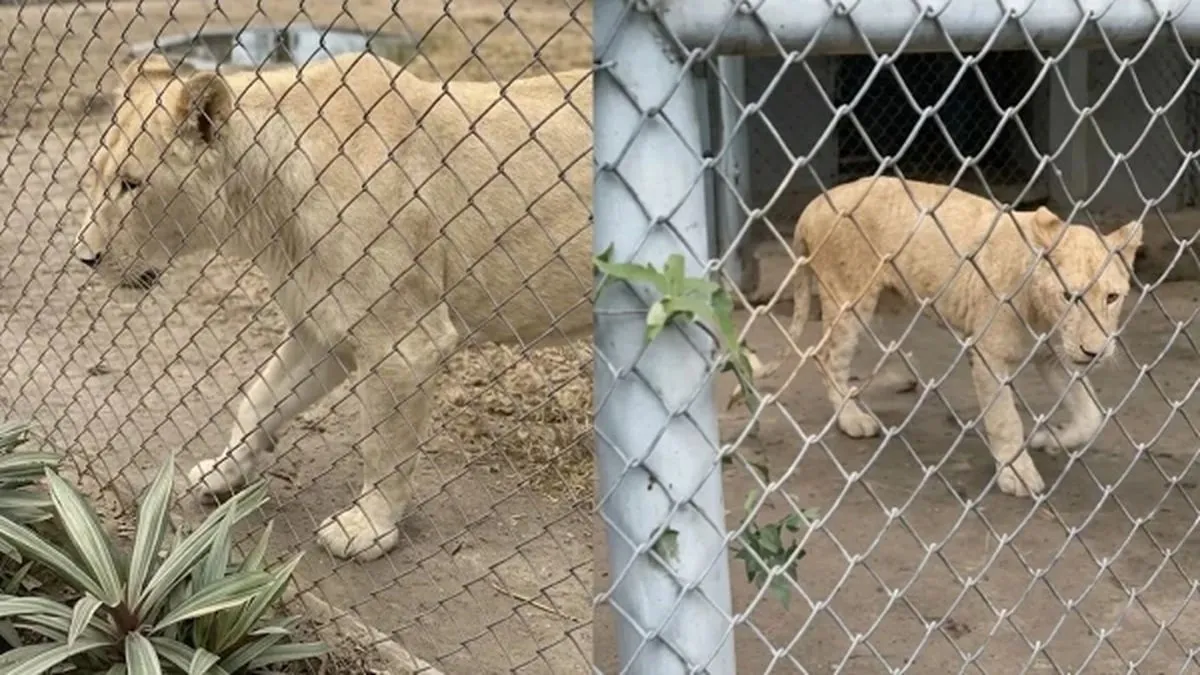
Three eight-month-old white lion cubs at Peshawar Zoo are having difficulty walking, prompting the Khyber Pakhtunkhwa government to request a detailed health report from the zoo administration.
Zoo officials say the cubs' mobility problems appeared suddenly, and a congenital or genetic disorder is being considered as a possible cause, although X-rays, blood work and mineral panels have not revealed any clear abnormalities.
What Is Known About the Cubs' Condition
The cubs, born in the zoo's white-lion breeding programme, were observed stumbling and dragging their paws during routine enclosure checks. A video of the incident quickly spread on social media, drawing public concern and media attention.
According to the zoo's veterinary section, X-ray imaging of the cubs' skeletal structures showed no fractures, dislocations or developmental deformities. Blood tests returned normal ranges for hemoglobin, white-cell count and key electrolytes. Mineral levels, including calcium and phosphorus, were also within expected limits for felids of this age.
Despite these findings, the zoo's veterinary team has not ruled out a latent genetic condition that may affect neuromuscular function. The cubs are now receiving a regimen of nutritional and mineral supplements designed to support joint health and muscle tone, and their feeding, movement and overall wellbeing are being logged daily.
Background on White Lions in Captivity
White lions are a rare colour morph of the African lion (Panthera leo) that results from a recessive gene affecting melanin production. The trait was first documented in the Timbavati region of South Africa in the 1980s and has since been propagated in captive breeding programmes worldwide.
Because the white-lion gene is recessive, breeding pairs must both carry the allele to produce white offspring. This often leads to a narrowed gene pool, raising the risk of inherited health issues such as spinal abnormalities, hip dysplasia and certain metabolic disorders.
International zoo associations, including the World Association of Zoos and Aquariums (WAZA), have issued guidelines recommending careful genetic management when breeding colour-morph animals. The guidelines advise against repeated inbreeding and call for regular veterinary screening to detect early signs of hereditary disease.
How the Khyber Pakhtunkhwa Government Is Responding
Following the viral video, the provincial government's wildlife department issued a statement that it had formally asked the zoo administration for a comprehensive health report on the cubs. The request includes a timeline for submitting diagnostic findings, treatment plans and any recommendations for long-term monitoring.
Under provincial law, any zoo operating under the Khyber Pakhtunkhwa Wildlife Protection Act must submit periodic health and welfare reports to the department. The current request is being treated as a special inquiry because the animals in question are a high-profile attraction and the public health narrative has already intensified.
If the investigation uncovers a genetic disorder, the department may require the zoo to adjust its breeding strategy, possibly halting further white-lion breeding until a genetic audit is performed.
Veterinary Procedures Being Used
The zoo's veterinary team has employed a standard diagnostic protocol for felids with locomotor complaints:
- Physical examination focusing on gait, muscle tone and joint range of motion.
- Radiographic imaging of the fore- and hind-limbs, pelvis and spine.
- Complete blood count and serum biochemistry to rule out infection, anemia or metabolic imbalance.
- Serum mineral analysis, particularly calcium, phosphorus, magnesium and trace elements.
- Neurological assessment to detect peripheral nerve or spinal cord involvement.
All results to date have been unremarkable, which is why the veterinary staff has turned to supportive care. Nutritional supplements include omega-3 fatty acids, glucosamine, chondroitin and a balanced calcium-phosphorus ratio, all aimed at promoting joint cartilage health.
Potential Implications for the Zoo and Visitors
The white-lion cubs are a major draw for the Peshawar Zoo, attracting school groups, tourists and wildlife enthusiasts. Any prolonged health issue could affect visitor numbers and, consequently, the zoo's revenue from ticket sales and merchandising.
From a welfare perspective, the zoo has a duty of care under both national legislation and international zoo standards. Continuous monitoring and transparent reporting are essential to maintain public trust and to ensure that the animals receive the best possible care.
What Experts Say About Similar Cases
Veterinarians familiar with captive big-cat populations note that mobility problems in young lions can stem from a range of factors, including:
- Congenital musculoskeletal defects that may not be visible on standard X-rays.
- Early-onset arthritis linked to genetic predisposition.
- Nutritional deficiencies during the critical growth phase.
- Environmental stressors such as inadequate substrate or enclosure design.
In a 2022 case study from a South African zoo, a pair of white-lion cubs exhibited similar gait abnormalities that were later attributed to a rare neuromuscular disorder called feline spinal muscular atrophy. Diagnosis required advanced imaging and genetic testing not yet available at many regional facilities.
What Comes Next for the Cubs
The zoo has pledged to keep the public informed as new test results become available. The next steps include:
- Repeating radiographic and neurological examinations in two weeks to track any changes.
- Consulting a specialist veterinary neurologist from a larger metropolitan zoo network.
- Considering genetic sequencing if the condition persists without clear diagnosis.
Meanwhile, the Khyber Pakhtunkhwa wildlife department will review the forthcoming health report and decide whether additional regulatory action is required.
Practical Takeaways for Readers
For visitors planning a trip to Peshawar Zoo, the white-lion exhibit remains open, and the animals are being cared for under veterinary supervision. Animal-rights groups recommend supporting zoos that demonstrate transparent health monitoring and adherence to international breeding guidelines.
For wildlife enthusiasts and breeders, the case highlights the importance of genetic diversity and regular health screening when managing rare colour morphs. Engaging with accredited breeding programmes that follow WAZA recommendations can reduce the risk of hereditary ailments.
Overall, the situation underscores the delicate balance between showcasing rare wildlife and ensuring their long-term health and welfare.