The 2026 Australian jungle edition of I'm A Celebrity... Get Me Out Of Here! has evolved into something far removed from standard reality television fare. For three glorious nights, it functioned less like a survival test and more like the most entertaining cookery programme of the year. This unexpected tonal shift arrived entirely thanks to human hand-grenade Mariella Frostrup, who proved she was not joking on day one when she delivered a stark warning about her temperament.
On the opening day of the series, Frostrup candidly admitted her flaws to viewers and campmates alike. She stated, \"I'm very difficult to live with. I'm bossy, a little intolerant and I'm very argumentative.\" She added that \"The advice my family has given me is don't get narky.\" Fortunately for television audiences, she has proven entirely incapable of following that family advice. Her refusal to stay quiet makes the show substantially better by injecting genuine, unfiltered friction into the camp.
Why Mariella Frostrup is the Antidote to Predictable Reality Television
Frostrup has established herself as a bossy, intolerant, argumentative, and delightfully narky presence in the Australian camp. Her ongoing disputes have become so intense that ITV should perhaps examine the small print on Gordon Ramsay's new Hell's Kitchen contract. Ramsay currently looks remarkably tame in comparison to the rumbling rice and beans feud that Frostrup has maintained inside the jungle.
The core appeal of reality television often hinges on manufactured harmony or predictable redemption arcs, but Frostrup disrupts this entirely. While other contestants carefully calibrate their public personas, she embraces her role as a disruptive force. Without her willingness to ruffle feathers, the entire camp risks sliding into a dreary default setting where everyone agrees too easily.
The 2026 series has reached a stage of meta-commentary where hosts Ant and Dec have even resorted to impersonating contestant Leigh Francis, who is himself famous for impersonating them. The format has grown into a parody of a television show. Most participants arrive knowing precisely how to work the system to secure public votes and potential victory.
Understanding the Mechanics of the Jungle Sympathy Game
The standard playbook for surviving deep into the jungle involves a specific set of tactical maneuvers. Contestants typically punctuate references to very real mental health struggles or past press intrusion with endearing, self-deprecating nuggets about their private lives. Mastering this formula maximizes a celebrity's chances of being crowned king or queen of the jungle.
The absolute Zen master of this approach during the current series is Wayne Rooney. Rooney is keen to let everyone know how much he loves his wife Coleen, while casually dropping anecdotes such as listening to Susan Boyle before football matches. While Rooney offers mild amusement with his casual camp stories, other contestants rely on far more tedious conversational topics to fill the hours.
Viewers are subjected to Claire Sweeney talking endlessly about her air fryer or Sharky explaining how his love of the Rubik's Cube helped him through mental health challenges. Against this backdrop of repetitive small talk, Frostrup stands out as an absolute necessity. She refuses to engage in dull pleasantries, ensuring that viewers remain wide awake during evening broadcasts.
The Rumbling Rice and Beans Feud With AJ Odudu
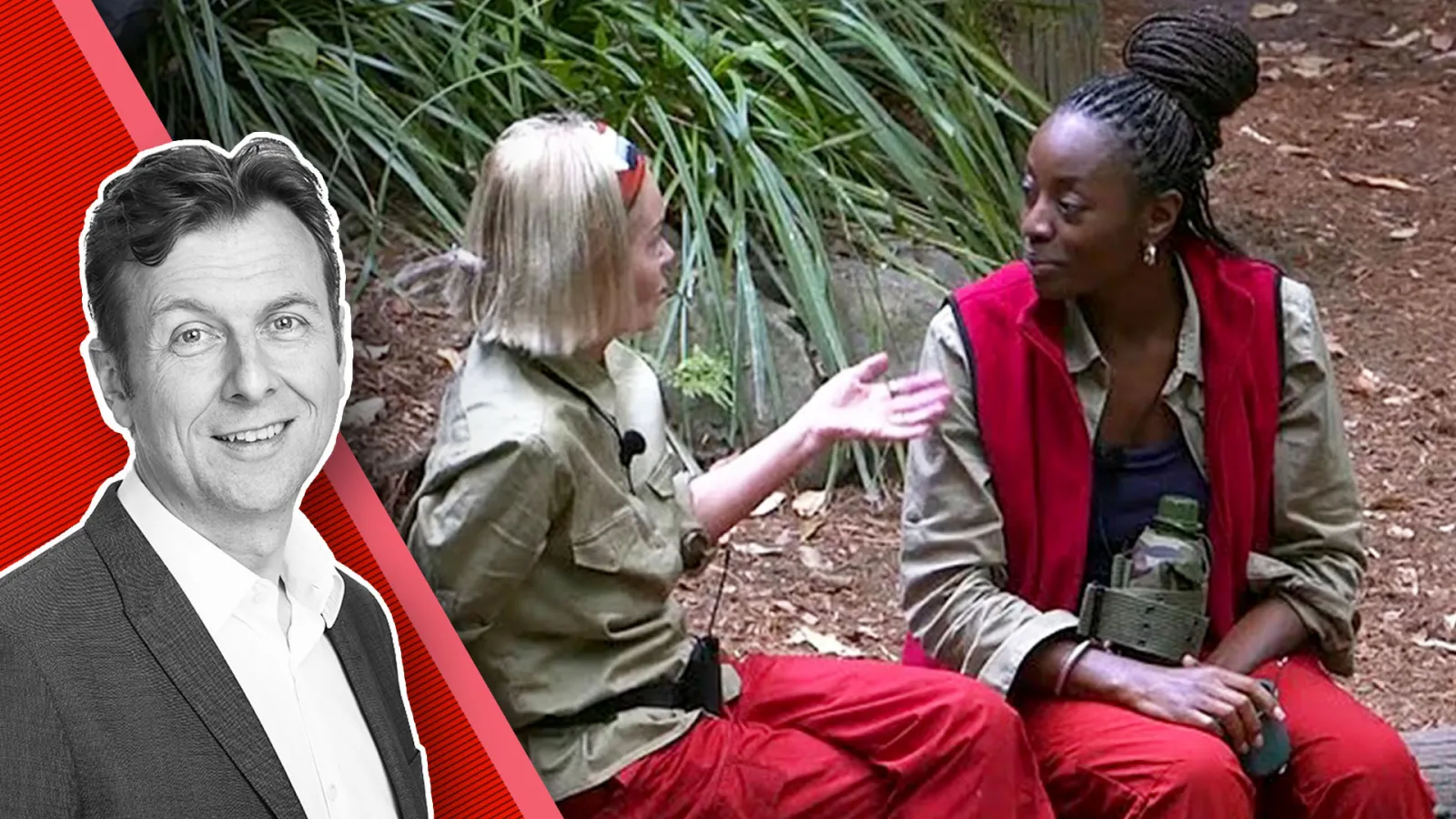
The central dramatic engine of the current series centers on the escalating tension between Frostrup and fellow contestant AJ Odudu. The origins of this grudge remain somewhat mysterious, defying a simple explanation from observers inside or outside the camp. The friction started on a Friday night, festered throughout Saturday, and finally exploded on Sunday into a full-scale argument.
During Sunday's confrontation, Frostrup accused Odudu of being \"aggressive.\" In the modern cultural climate, this accusation carries significant weight. In normal circumstances, an outside observer might rush to Frostrup's defense, noting the absurdity of weaponizing such terminology over a routine camp disagreement. However, watching someone like Frostrup experience this dynamic adds a layer of ironic entertainment.
Frostrup has spent a significant portion of her adult life lecturing others about political correctness and social etiquette. Seeing her hoisted by her own petard provides a unique brand of viewing satisfaction. Consequently, there is little incentive to rush to her defense on ideological grounds, even as her presence remains essential for the show's survival.
The Danger of Voting Out Disruptive Campmates
Past series of I'm A Celebrity demonstrate a recurring pattern where the viewing public makes the fatal error of evicting the most entertaining personalities too early. When audiences vote out disruptive elements like Darren Day, Rodney Marsh, and David Van Day, the programme invariably loses its narrative drive. The entertainment value plummets as the remaining campmates settle into harmonious, unwatchable boredom.
If viewers repeat this mistake with Mariella Frostrup, I'm A Celeb 2026 will lose its primary source of conflict. The show will revert to its dreary default setting, characterized by campmates laughing a little too loudly at everything Wayne Rooney says. Even Rooney's occasional missteps, such as his claim that people constantly tell him he is better looking in real life, met with stunned silence rather than genuine debate.
Frostrup recently found herself moved from kitchen duties to water duties following her various disputes. One must hope that being a disagreeable presence is a transferable skill that allows her to make life equally difficult in her new assignment. Assuming she does not walk away voluntarily or face accusations of microaggressions from fellow campmates like singer Beverley Knight, the public holds the ultimate responsibility for her survival.
What Happens If ITV Loses Its Most Argumentative Contestant
The fate of the current series rests entirely in the hands of the voting public. If fans allow their dislike of Frostrup's abrasive nature to override their desire for good television, the remaining episodes will suffer immensely. Reality television requires friction, disagreement, and authentic personality clashes to hold viewer attention across multiple weeks.
Without figures like Frostrup challenging the status quo, the jungle becomes an echo chamber of media-trained celebrities swapping sanitized anecdotes. The contrast between her unapologetic bluntness and the careful PR management of other contestants is what drives the narrative forward. Viewers tuning in for entertainment rather than harmony must recognize the value of keeping a disruptive force inside the camp.
Ultimately, the warning to fans is clear and direct. Consigning Mariella Frostrup to an early exit means condemning the rest of the series to a painful, predictable self-parody. Keeping her in the jungle remains the only insurance policy against a dull finish to an otherwise memorable television run.