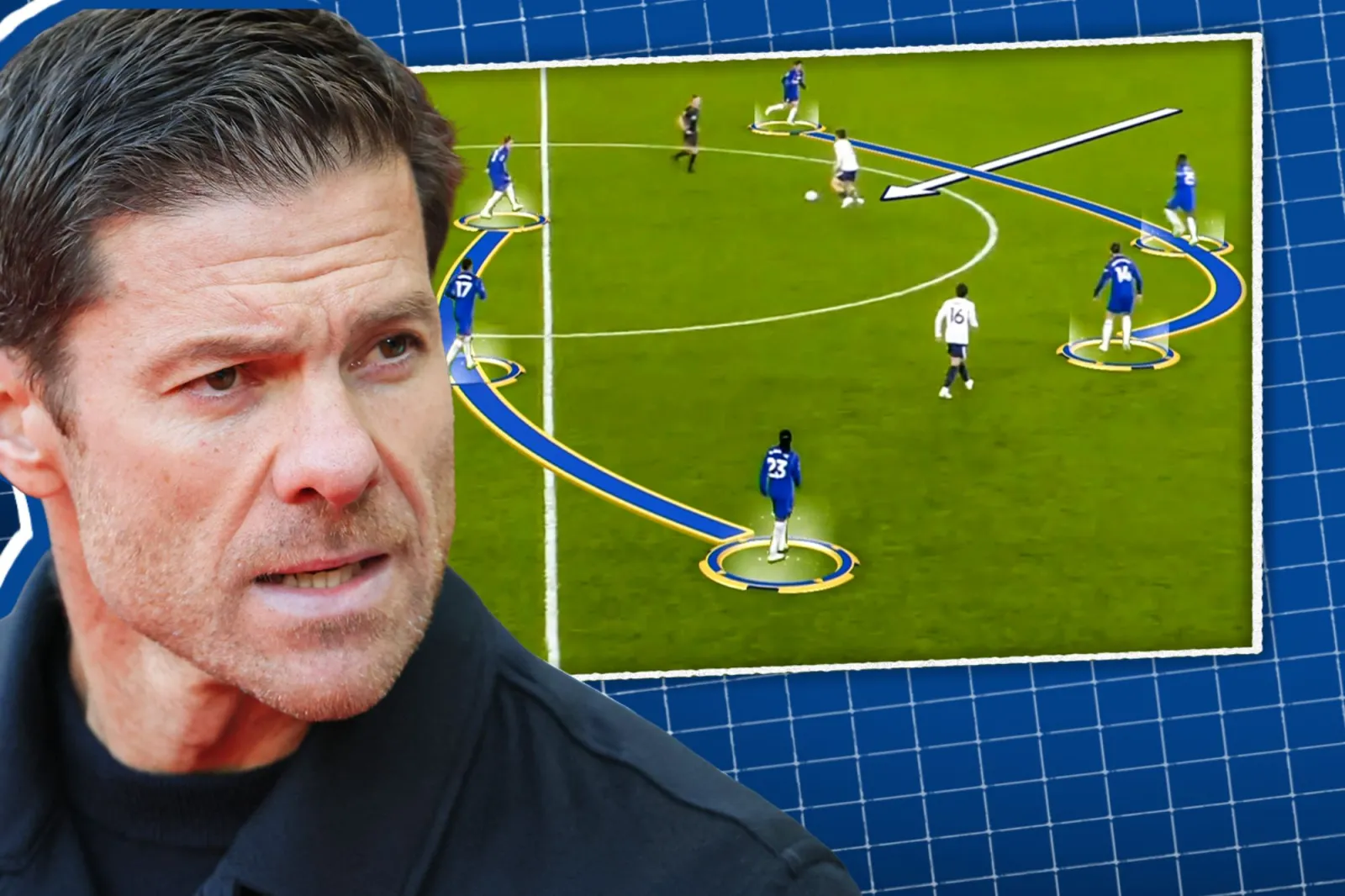
Chelsea football club has experienced a turbulent start to the Premier League season under the guidance of manager Xabi Alonso. While the team currently sits fifth in the standings, this position conceals severe structural flaws that threaten to derail their campaign. The Blues have suffered concerning defeats against Tottenham, Sunderland, and Brentford, alongside dropping crucial points at home to Hull despite dominating possession. Conceding goals in bunches has become a recurring theme, prompting intense scrutiny from analysts and supporters alike.
The core of the issue lies in a confusing transition from the established tactical blueprints that brought success elsewhere. Tactical observers note that the team is currently outperforming its underlying metrics in specific areas while lagging significantly behind in others. Understanding how these problems developed requires examining the shift in formations, the utilization of key personnel, and the physical demands of English football compared to other European leagues.
How Chelsea Moved From 3-4-3 to a Dysfunctional 4-3-3
One of the most puzzling developments of the campaign is the abrupt tactical shift away from a structured 3-4-3 formation into a dysfunctional 4-3-3 shape. Statistical analysis reveals a stark contrast in performance indicators. Chelsea currently rank third in overall goals scored and third in big chance conversion, which explains why they remain in the upper half of the table. However, other metrics paint a troubling picture, with the team ranking 11th in expected goals, 11th in total shots, and 14th in passes into the opposition penalty box.
These figures demonstrate that individual brilliance from high-quality players is currently masking tactical deficiencies. The system has suffered due to the structural hole left by injuries and a lack of regular game time for young talents like Estevao. Furthermore, squad members have been moved into unfamiliar roles, such as deploying Pedro Neto as a central forward instead of using him on the wing or as a wing-back. This reactionary chopping and changing has left the team looking disjointed on the pitch.
The Tactical Blueprint at Bayer Leverkusen Versus the Premier League
During his successful tenure at Bayer Leverkusen, Xabi Alonso predominantly relied on a 3-4-2-1 system. That setup featured a double pivot forming a tight defensive box alongside two attacking midfielders, or number tens. When Leverkusen lost possession, this structure effectively smothered immediate counter-attacks by opponents. The physical and fast-paced nature of the English top flight, however, punishes any looseness in midfield structure much more severely.
At Chelsea, attacking midfielders Morgan Rogers and Cole Palmer operate with much more freedom, leaving massive spaces behind them when possession is surrendered. Opposing teams quickly exploit these half-spaces to launch dangerous transitions. Observers suggest that Alonso panicked slightly after conceding early goals, leading to hasty system changes that disrupted the team's defensive equilibrium. Full-backs are overlapping into central midfield areas haphazardly, creating a confused shape that makes defending significantly harder when the ball is lost.
Why Cole Palmer and Morgan Rogers Are Struggling for Space
The positioning of key creative outlets like Palmer and Rogers has heavily impacted Chelsea's offensive output. Rather than receiving passes in dangerous areas near the edge of the opposition box, these players are forced to drift wide to collect the ball. Moving outward away from the danger zone reduces their effectiveness in breaking down stubborn defences.
The primary objective for any possession-based system is to feed creative players in the central corridor directly in front of the penalty area. Because the current setup lacks cohesion between the forward line and the midfield, Palmer and Rogers must expend energy tracking backward or searching for touches in harmless zones. Rectifying this issue requires restoring a stable midfield foundation that allows these playmakers to operate in spaces where they can hurt opponents.
The Missing Focal Point in the Centre-Forward Position
Another major obstacle for the team is the absence of a traditional, physical centre-forward who can act as a tactical anchor. At Leverkusen, Alonso benefited from the presence of Victor Boniface, who functioned as a reliable target man capable of holding up the ball, occupying opposition central defenders, and linking play through precise short passes.
Chelsea currently lack a similar focal point in attack, leading to questions regarding team selection. Experts frequently question why alternative options with proven Premier League experience, such as Danny Welbeck, are not used when primary choices are unavailable. Without a player capable of holding up possession and bringing attacking midfielders into the game, the entire offensive structure struggles to maintain sustained pressure.
The harsh reality of English football is that pure tactical theory alone cannot guarantee success if the personnel do not match the required profile. Unless structural adjustments are made to stop leaking chances every week, the demanding environment of the Premier League will continue to punish tactical experiments.