Pakistan aims to boost farm output and food security, but experts say better health, hygiene and safety for women farm workers could shape the sector's future.
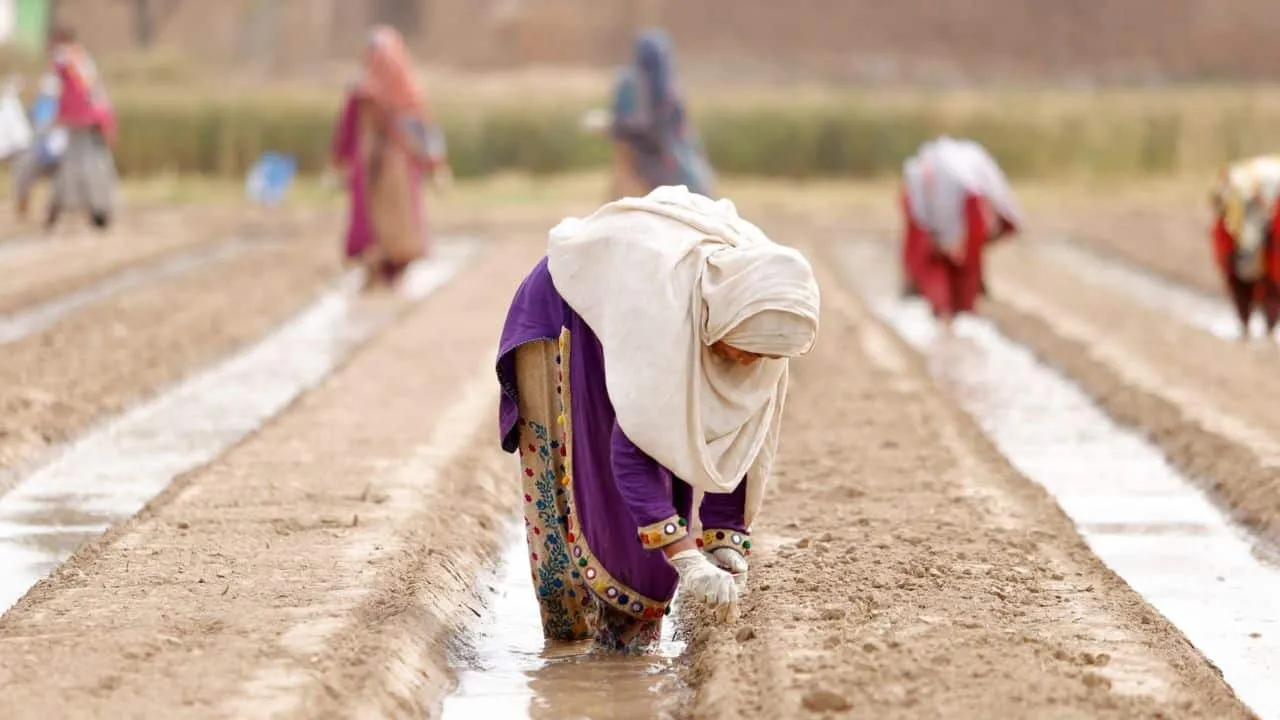
Women have long been central to Pakistan's agriculture, handling planting, harvesting, livestock and other tasks that sustain rural livelihoods and national food supplies. Still, less focus is given to how their economic role links to access to healthcare, sanitation, workplace safety and training.
This creates a paradox for a nation seeking higher productivity. The Pakistan Bureau of Statistics Labour Force Survey 2024-25 reports that 61.4 percent of employed women work in agriculture, forestry, hunting and fishing, underscoring the need for development programs to address women's specific needs.
The issue is not unique to Pakistan. The UN Food and Agriculture Organization, in its report The Status of Women in Agrifood Systems, found women in agricultural wage labour earn about 82 cents for each dollar earned by men, and women managing farms of equal size face a 24 percent productivity gap due to unequal access to resources, services and technology.
In Pakistan, women's health and safety on farms are especially pressing. Field tasks can be physically demanding, expose workers to harsh weather and, in some cases, to agricultural chemicals. Access to protective gear, safety guidance, sanitation facilities and preventive healthcare can markedly improve daily conditions.
A 2019 study of 260 female cotton-picking workers in Sindh's Shaheed Benazirabad district, published in Science of the Total Environment, showed that more than half did not use protective measures during harvest. The women reported skin and eye irritation and headaches linked to possible pesticide exposure.
The research also calculated that medical costs for reported health problems were roughly 2.5 times higher than the expense of preventive measures, highlighting the economic case for better occupational health support.
International Day of Rural Women on October 15 offers a chance for Pakistani agricultural stakeholders to expand existing programmes. Syngenta Pakistan's Zarai Khawateen Sehat Program, which recently held sessions in Lahore, Multan, Sahiwal and Sheikhupura, has reached 300 women farmers.
The initiative blends training on safe product use, personal protective equipment, workplace health and hygiene with medical check-ups, professional consultations and nutrition advice via free health camps. Participants also received kits containing protective gear and sanitary items.
By pairing knowledge sharing with preventive health services and safety supplies, the programme aims to raise awareness and promote safer practices in farming communities.
Further expansion could come from stronger collaboration among agribusinesses, growers, industry groups, public agencies, healthcare providers and development organisations. Integrating women's health, hygiene and safety into extension services, workforce development and rural outreach would ensure these issues receive attention alongside crop management.
Increasing women's participation in training and decision-making, while recognising their contributions to rural economies, can improve well-being and allow agricultural communities to fully benefit from their skills and experience.
The International Day of Rural Women serves as a reminder that acknowledging women's role in agriculture and improving their working conditions are mutually reinforcing goals. Building on public and private initiatives, sustained collaboration and investment in women's health, safety and professional growth could unlock the full potential of a workforce central to Pakistan's agricultural future.