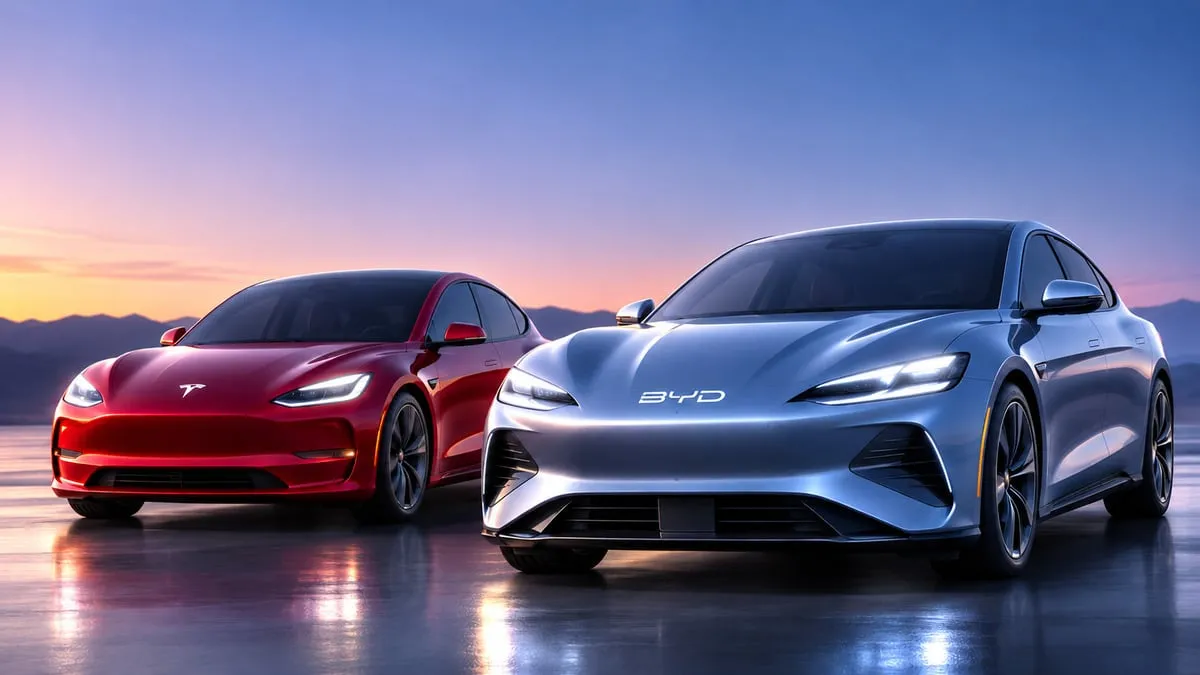
Chinese electric vehicle manufacturer XPENG has topped an EV owner satisfaction ranking for the second consecutive year, outperforming Tesla, BMW, Porsche and several other established carmakers.
According to USCALE's 2026 EV Satisfaction Study, 82% of surveyed XPENG owners gave the brand the highest recommendation ratings, compared with 79% for Tesla. The comprehensive research project surveyed 4,004 electric vehicle drivers across Germany, Austria and Switzerland to measure consumer sentiment and brand loyalty in the rapidly growing modern car market.
XPENG Maintains Its Lead Over Tesla in Satisfaction Study
XPENG retained first place with an 82% promoter share, improving slightly from 81% in the previous year's survey. Tesla moved into second place after ranking sixth in 2025, demonstrating a notable recovery in consumer perception within the German-speaking European region. Skoda and Porsche followed closely behind with 67% each, while Hyundai and BMW recorded 63% satisfaction levels among their respective customer bases.
Further down the rankings, Kia and Mini received 61%, followed by Polestar at 58% and Mercedes-Benz at 54%. Across all brands evaluated in the study, 53% of respondents were classified as promoters, making XPENG's result 29 percentage points higher than the overall industry figure. The survey also recorded no detractors among the XPENG respondents, while 6% of Tesla respondents fell into that category, highlighting a stark difference in customer contentment at the top of the table.
Background on the USCALE EV Satisfaction Research
The automotive industry relies heavily on consumer research to gauge how new technologies are received by everyday drivers. USCALE conducts annual assessments to track how electric vehicle owners interact with their cars, focusing on software capabilities, charging infrastructure, and general usability. The data collection for this iteration took place online in June and July 2026 among owners of fully electric vehicles no older than three years.
Participants for the study were recruited through social media channels, meaning the results are not statistically representative of all electric vehicle owners on the road. Instead, the findings reflect the opinions and experiences of the surveyed drivers rather than serving as a definitive ranking of mechanical reliability or overall factory product quality. Despite these methodological limitations, the survey provides valuable insights into how drivers perceive competing automotive brands.
What Makes XPENG Owners More Positive?
USCALE identified charging performance, charging management, and driving range as major strengths for XPENG that helped secure its leading position. The research also found substantial improvements in the company's connected vehicle app compared with the previous year, showing that the manufacturer actively addresses software feedback from its customer base. However, the brand was not without weaknesses noted by drivers. Route planning remained its most frequently identified shortcoming, while criticism of energy consumption increased among users.
In contrast, Tesla performed particularly well in software, connected-app functionality, route planning and energy efficiency. Nevertheless, more than half of the surveyed Tesla drivers criticized the brand's charging power, pointing to an area where European and Asian competitors are gaining ground. The research also highlighted continuing concerns involving vehicle build quality, acoustics and driver-assistance systems for the American electric vehicle pioneer.
Other Chinese EV Brands Show Mixed Results
XPENG's strong performance did not extend equally to every Chinese electric vehicle manufacturer operating in the European market. BYD recorded a promoter share of 47%, placing it slightly ahead of Volkswagen at 46%. Leapmotor also received 46%, while Smart and MG recorded considerably weaker results of 37% and 30%, respectively, showing that brand origin alone does not guarantee consumer satisfaction.
The findings suggest that brand-specific software stability, charging performance and everyday usability have a substantial influence on owner recommendations. As more foreign automotive companies enter European markets, consumer expectations regarding digital features and physical build quality continue to rise. Carmakers must constantly update their mobile applications and infotainment systems to keep pace with rapid technological advancements.
Overall EV Satisfaction Reaches New High in Europe
USCALE reported that overall electric vehicle owner satisfaction improved for the third consecutive year across the monitored regions. The industry's Net Promoter Score increased from 33 points in 2025 to 38 in 2026, marking its highest level since the research series began. However, the study also found continuing problems with public charging stations, software glitches, and mobile application reliability that frustrate users on a daily basis.
Automotive analysts and industry observers watch these metrics closely to understand where traditional manufacturers are losing ground to digital-first competitors. As battery technology improves and charging networks expand, consumer priorities are shifting toward user interfaces and seamless charging experiences. The 2026 results prove that established legacy brands face intense pressure from newer market entrants who excel in specific technological categories.