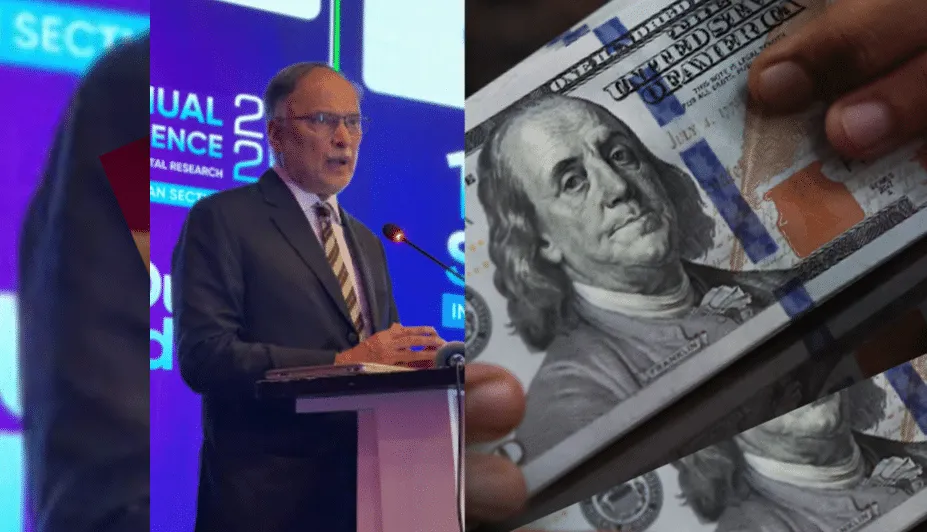
Federal Minister for Planning, Development and Special Initiatives Professor Ahsan Iqbal stated that young citizens must take a leading part in national progress, noting that they possess the capacity to turn Pakistan into a $3 trillion economy by 2047. Speaking at Quaid-i-Azam University in Islamabad during an event celebrating 1,700 completed teams under the Bano Shaheen Program, Iqbal explained that the project shifts youth focus from merely spotting issues to creating workable answers.
The creation of 50 Bano Shaheen chapters at the university represents a major step for the nationwide project. The Planning Ministry has set up these chapters in upwards of 165 universities nationwide to engage students in development planning and integrate their priorities into state policies.
According to Iqbal, the project seeks to build capable and action-driven youth inspired by Allama Iqbal's Shaheen. He told students to concentrate on fixing local issues instead of showing despair, stating that winning nations spot chances alongside hurdles and apply their skills to fuel growth.
Looking back at the Pakistan Movement, the federal minister noted that the 1947 generation made the hard dream of a free state come true despite small resources. He stated that current youth possess a sovereign and nuclear-armed nation, schools, assets, and chances, and ought to continue that history.
Iqbal stated that Pakistan ought to hit a fresh landmark in 2047 upon marking a century of freedom, calling the $3 trillion economy target a major state goal that demands youth involvement in growth.
He noted that Pakistan must evaluate why growth speeds dropped, mentioning Vietnam export gains as proof of how other nations advanced. Resources and talent are not enough on their own, he said, adding that results rely on a good setting, proper policies, steady paths, and strong execution.
Through the Bano Shaheen Program, students will study social and economic signs in local regions, spot problems, and suggest real fixes. Iqbal stated the scheme lets them move past study and show their skills via deeds.
The minister named schooling and human growth top state needs, stating Pakistan must bring 25 million out-of-school children into learning centers. He stated youth malnutrition needs treatment as a state emergency so every child can meet their potential.
Iqbal stated a scheme providing 5,000 scholarships started for youth from poorest areas, covering Balochistan and former FATA regions. He also mentioned laptop distribution efforts designed to help students reach modern learning and tech and draw left-behind areas into state growth.
Ahsan Iqbal cautioned that false news and wrong stories create dangers during times of artificial intelligence, big data, and social networks. Youth, he stated, should push fact checking, careful talk, and smart thinking to fight division and lies.
The minister asked youth to pick hope over sadness, fixes over complaints, and state service over private gains. He stated they ought to aid Pakistan growth, wealth, and fiscal stability using the same drive and shared unity that built the country.