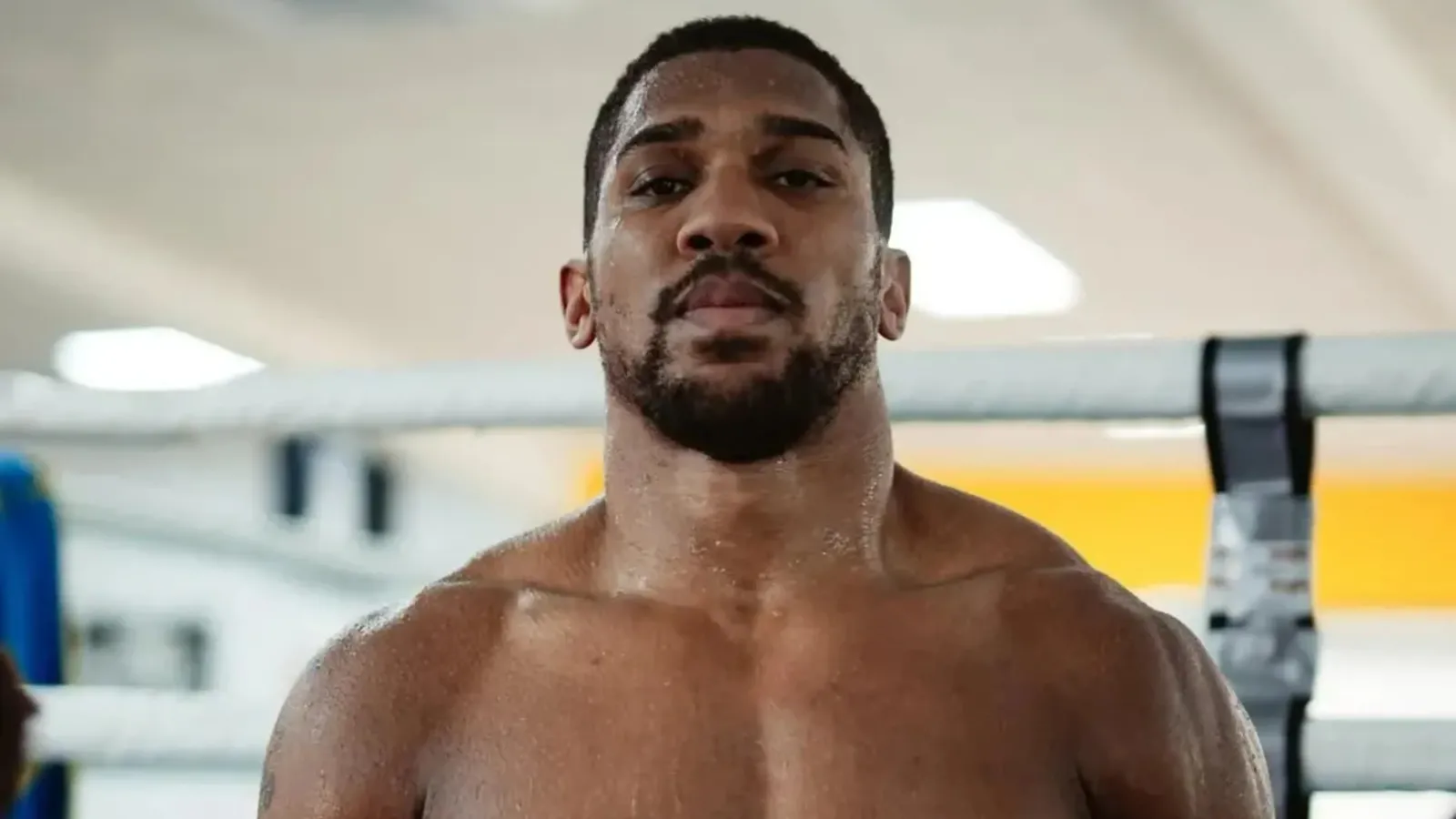
Anthony Joshua is leaving nothing to chance as he preps for his overdue showdown with Tyson Fury.
The British heavyweights collide in Cardiff on December 11 with fight fans desperate to see them settle their long-running beef.
Joshua is the smaller man at 6ft 6in and almost 18 stone, but still needs to eat a ridiculous amount to keep up with the demands of training.
He spoke to The Sun's Clemmie Moodie and revealed his insane diet regimen.
What Joshua's Daily Calorie Intake Looks Like
AJ revealed he eats between four and four-and-a-half thousand calories a day in camp, almost double what the average man needs. For a heavyweight boxer, such a high intake supports intense strength sessions, sparring, and the recovery work required to maintain muscle mass while cutting weight for a fight night.
Nutritionists who work with elite boxers explain that a 4,500-calorie diet typically includes a balance of lean proteins, complex carbohydrates, and healthy fats, often split across six to eight meals to sustain energy levels and aid muscle repair. While the exact breakdown of Joshua's meals was not disclosed, his statement aligns with standard practice for athletes of his size and activity level.
Why Water Consumption Is a Priority
But the former heavyweight champ revealed that water is his biggest concern. He said: "People talk about how many calories we eat. The thing is, is how many litres of water we have to drink. I think I go for about 10 litres of water a day."
That amount is about five times NHS guidelines, which recommend roughly 2 litres of fluid per day for an average adult. The extra volume helps maintain plasma volume, supports thermoregulation during long training sessions, and assists in the removal of metabolic waste produced by high-intensity work.
When Moodie asked, "Are you not weeing like a racehorse all day long? Wow. Don't you have to get up in the night? That would really annoy me in the night," Joshua answered that he staggers his intake, especially before bed, to avoid disruptive nocturnal trips to the bathroom.
He explained: "You have to stagger the way you drink the water before bed, like 500 millilitres, a litre here, then another 500." This approach mirrors recommendations from sports physiologists who advise spreading fluid intake throughout the evening to keep hydration steady without overloading the bladder.
Training Context: What the Regimen Supports
Joshua's preparation for the December 11 fight includes a mix of strength-and-conditioning work, technical sparring, and cardio sessions designed to improve stamina for the later rounds. Heavyweight boxers typically train twice a day, with morning sessions focusing on conditioning and evening sessions on skill work.
At 6ft 6in and nearly 18 stone, Joshua's body mass requires a higher caloric ceiling to prevent loss of lean tissue. The 4,500-calorie range provides roughly 3,000 kcal from carbohydrates, 1,000 kcal from protein, and 500 kcal from fats, though exact ratios can vary day-to-day based on training load.
Career Implications and Future Plans
As a two-time unified champion, there is not much left for AJ to prove after this fight. He already has a plan lined up for when he puts the gloves away for good.
The Watford brawler added: "That's the motto I have with boxing. Boxing is not glamorous. I keep it pretty simple, straightforward. I do what I can. I live by what I need, not by what I want. And it's working out."
He hinted at post-retirement interests, saying, "And then I think when I finish fighting, I'll be more chilled and then maybe I can go and look at investing in Under Armour stocks or maybe have a share in the Under Armour company or something like that. But as for now, I'm pretty content."
At 37, Joshua acknowledges his age: "I can't believe I'm 37. It's crazy. So when am going to retire? think, yes, pretty soon. I'm getting old now. From an athlete's point of view, I'm getting old. So maybe that will be our next sit down when we talk about plans for after boxing, because that will be coming around pretty soon. I haven't got many years ahead of me."
How This Fight Fits Into the 2026 Boxing Calendar
All eyes are focused on the 'Battle of Britain' between Anthony Joshua and Tyson Fury, with the pair set to finally settle their decade-long rivalry in December. The bout is scheduled for Friday, December 11, and will be streamed on Netflix, marking a high-profile platform for the event.
Other notable fights slated for 2026 include:
- Sat 28 Nov - Agit Kabayel vs Nelson Hysa - DAZN
- Dec 5 - David Benavidez vs Michal Cieslak - DAZN
- Fri 11 Dec - Tyson Fury vs Anthony Joshua - Netflix
- Sat 12 Dec - Dmitry Bivol vs Callum Smith - DAZN
- Sat 19 Dec - Anthony Cacace vs Nick Ball - DAZN
- Sat 24 Dec - Jake Paul vs Cedric Doumbe - (no platform listed)
These match-ups illustrate a busy year for heavyweight and middle-weight divisions, with broadcasters vying for exclusive rights.
Practical Takeaways for Fans and Aspiring Athletes
While most readers will not attempt a 10-litre water habit, Joshua's comments highlight the importance of individualized hydration strategies. Athletes should consult sports nutritionists to determine fluid needs based on body size, sweat rate, and training intensity.
Similarly, the calorie figures underscore that elite boxers require substantially more energy than the average adult. Anyone considering a high-intensity training program should seek professional guidance to avoid under- or over-eating, both of which can impair performance and health.
For casual fans, understanding the scale of Joshua's regimen adds perspective to the physical demands of heavyweight boxing, where size, power, and endurance intersect.
As the December 11 fight approaches, the boxing world will watch not only the clash of fists but also the science behind how champions like Joshua fuel their bodies for peak performance.