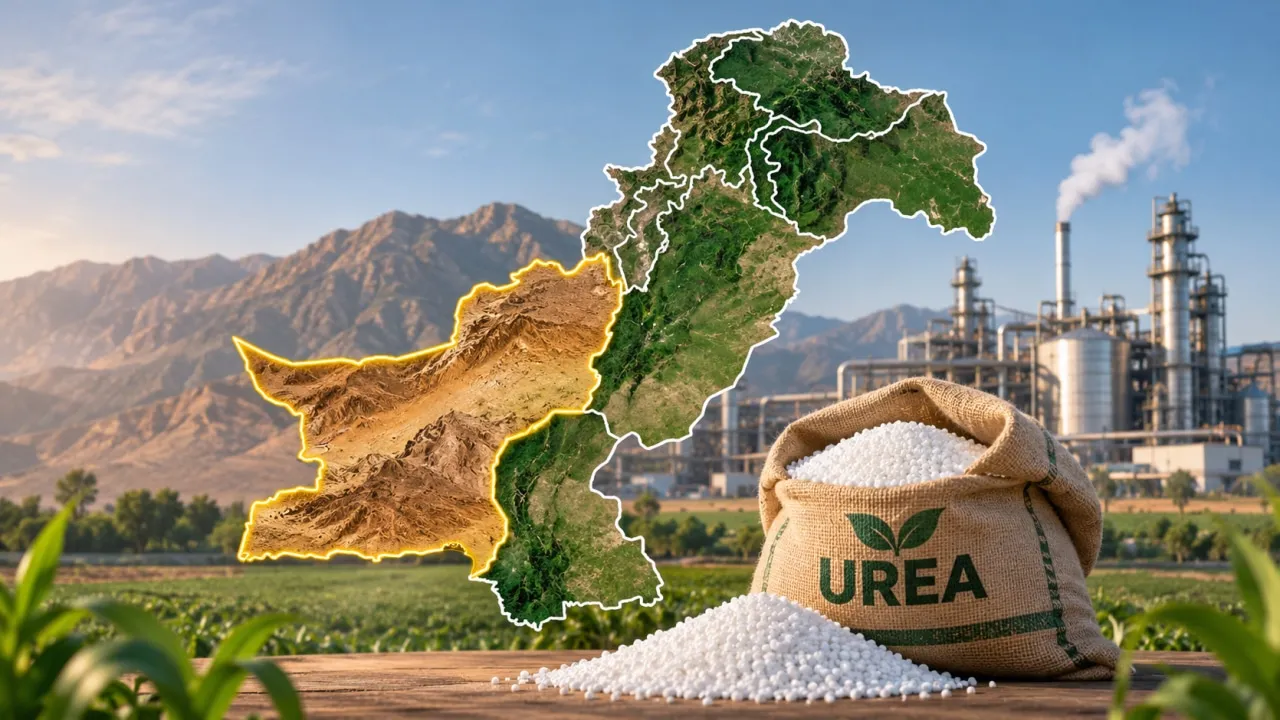
Balochistan Approves $895 Million Urea Plant in Historic Deal
Balochistan has approved $895 million, which equals Rs. 250 billion, for a new urea fertilizer complex located at Sui in Dera Bugti. This agreement marks the largest public-private partnership project in the history of the province and ranks as one of the largest industrial public-private partnership transactions across Pakistan.
The formal approval for the massive industrial undertaking was granted during the 10th meeting of the Balochistan Public-Private Partnership Board. Chief Minister Mir Sarfraz Bugti chaired the session, while the official announcement regarding the decision was delivered by Faraz Syed, who serves as the Chief Executive Officer of the Balochistan Public-Private Partnership Authority.
Technical Specifications and Gas Supply Details
The proposed manufacturing complex will rely heavily on local energy resources to sustain its heavy industrial output. It will consume 100 million cubic feet per day of indigenous low-BTU gas sourced directly from the Zin block. This particular block is operated by the Oil and Gas Development Company Limited at a delivered cost of $2 per MMBtu.
The utilization of local gas reserves ensures that the plant has a steady and cost-effective feedstock for its chemical processes. The project draws from estimated recoverable reserves of 912 billion standard cubic feet, with the gas supply expected to maintain a stable plateau level until 2043.
Production Targets and Import Substitution Goals
Once operational, the facility will boast an annual production capacity of 580,800 tons of urea. Because Pakistan currently relies on foreign purchases to meet a portion of its domestic agricultural demands, this output is expected to contribute directly to import substitution by boosting local fertilizer manufacturing.
The sprawling complex will take shape on a 496-acre site situated at Sui within the Dera Bugti district. Commercial production at the facility is officially targeted to begin in April 2031, giving engineers and industrial planners several years to construct the necessary infrastructure.
Financial Projections and Economic Viability
Project details shared by the Balochistan Public-Private Partnership Authority outline strong financial indicators for potential backers. The complex carries an estimated net present value of $301 million alongside an equity internal rate of return of 25.1 percent.
Furthermore, financial planners have projected a payback period of nine years for the primary investors. These figures highlight the commercial viability of establishing heavy manufacturing plants within resource-rich regions of Pakistan.
International Interest from Saudi Investors
In addition to domestic backing and the public-private framework, international interest has begun to emerge around the initiative. Topline Research reported that the venture has been presented to prospective Saudi investors who are currently exploring the investment opportunity.
If these foreign entities decide to move forward, they could bring in a local partner to assist with operations. This local partner might be an existing player within the fertilizer industry or an established business group from within the country.
Despite this international outreach, the venture remains at an initial stage of development. Officials confirmed that no formal investment agreement or binding partnership has been finalized or confirmed yet.
Institutional Collaboration Behind the Project
Bringing a project of this magnitude to the approval stage required extensive coordination across multiple government bodies. The Balochistan Public-Private Partnership Authority acknowledged the vital contributions made by several key government directorates.
These supporting entities include the Planning and Development Department, the Finance Department, the Energy Department, Balochistan Energy Company Limited, and the Balochistan Board of Investment and Trade. Their combined efforts were essential in advancing the project through the rigorous provincial review process.
Background on Balochistan Industrial Development
Industrial development in Balochistan has historically faced unique geographic, infrastructural, and security challenges despite the region holding vast natural resource wealth. Energy deposits, including natural gas discovered decades ago at Sui, have powered much of the country, yet local processing plants have remained limited.
Public-private partnerships represent a modern policy instrument designed to bridge the gap between government objectives and private capital. By sharing financial risks and leveraging private sector management expertise, provincial administrations hope to accelerate regional economic growth and create stable employment opportunities.
Understanding the Fertilizer Sector in Pakistan
Agriculture forms the backbone of the national economy, making a steady and affordable supply of urea fertilizer essential for crop yields. Seasonal shortages and high international market prices often strain farming communities, driving up the cost of food production.
Domestic production facilities reduce reliance on global supply chains and foreign exchange reserves. By adding nearly 600,000 tons of local capacity, projects like the one in Dera Bugti aim to stabilize the domestic agricultural market over the coming decade.
What Lies Ahead for the Sui Urea Complex
As the project transitions from the planning board to execution phases, stakeholders will monitor preparatory milestones leading up to 2031. Key activities will involve finalizing engineering designs, securing environmental clearances, and nailing down formal investment contracts with local or international partners.
The Balochistan Public-Private Partnership Authority will continue overseeing the legal and structural frameworks to ensure compliance with provincial regulations. Observers and investors will watch for updates on foreign capital participation and ground-breaking timelines as the initiative progresses.





