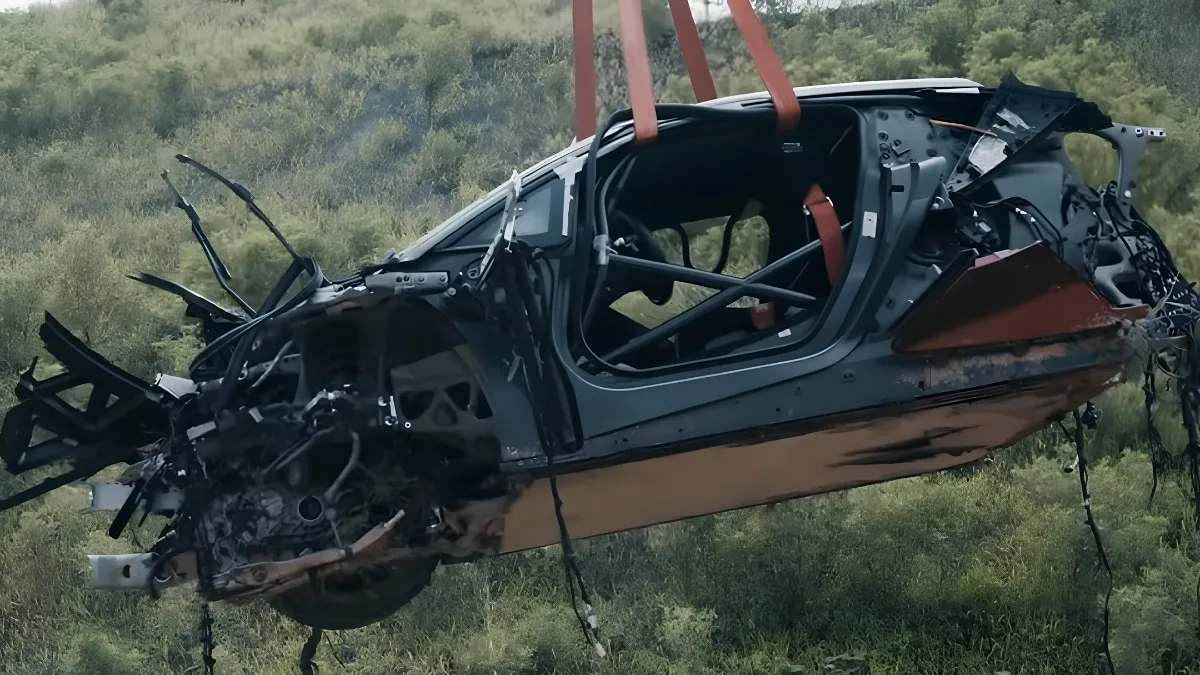
On November 2, visual material emerged showing that the Yangwang U9 Xtreme, a $3 million electric hypercar built by BYD, suffered severe damage during a high-speed testing session on a closed circuit in China. The vehicle departed from its designated driving line and struck a barrier, resulting in substantial destruction, including the complete detachment of the rear axle. Despite the destructive nature of the collision, the driver managed to exit the cabin without assistance and sustained no serious injuries. Observers noted that the main passenger cell held its structural integrity well, and emergency responders recorded no battery fires following the impact.
This incident places sudden scrutiny on the high-performance testing protocols of one of the world's largest electric vehicle manufacturers. As automotive firms push battery-electric technology into previously uncharted velocity territories, track testing involves extreme mechanical and thermal loads. The survival of the driver without serious harm offers a positive indication regarding the structural safety engineering of the hypercar, even as engineers must now evaluate the wreckage to determine the sequence of mechanical failures that preceded the barrier strike.
Was BYD Attempting Another World Record During the Test?
Automotive industry observers immediately questioned whether the testing session was a formal attempt to set a new global velocity benchmark. Official statements from the manufacturer have not confirmed the exact purpose of the evaluation run. Unconfirmed reports suggest the vehicle may have been gathering telemetry data as part of preparations to surpass the 500 km/h barrier. Furthermore, the exact velocity of the hypercar at the moment of impact has not been publicly released by corporate representatives. Consequently, media claims alleging that the vehicle was actively breaking a world record when the accident occurred require careful verification.
BYD previously outlined intentions to execute a top-speed record run scheduled for November 2026. Stella Li, who serves as Executive Vice President, stated publicly that the corporation aimed to push the U9 Xtreme past 500 km/h, designating Dubai as the target venue for that future exhibition. However, corporate officials had not finalized or publicly released details regarding specific road closures, administrative permits, or exact dates for the Dubai project prior to the recent crash in China.
Previous Speed Records Set by the BYD Yangwang U9 Xtreme
The high-performance vehicle already occupies a prominent position in international automotive performance records. Prior to the incident in China, the U9 Xtreme achieved a verified top velocity of 496.22 km/h, equivalent to 308.3 mph, during evaluation sessions held at the Automotive Testing Papenburg facility in Germany. Corporate literature positions this achievement at the pinnacle of global electric vehicle speed classifications.
Following that successful German outing, engineering teams analyzed telemetry data and concluded that the machine retained additional performance headroom. That internal assessment drove management to authorize further development aimed at breaking the symbolic 500 km/h threshold, which converts to approximately 310.7 mph. The ongoing testing regimen in China formed part of this continuous push to extract maximum capability from the electric propulsion system.
Engineering Specifications of the $3 Million Electric Hypercar
The U9 Xtreme represents the flagship model within the premium Yangwang performance division managed by BYD. Propulsion is delivered by an array of four electric motors generating a combined output of 2,220 kW, translating to roughly 2,977 horsepower. The entire powertrain operates on an advanced 1,200-volt electrical architecture designed to manage massive power throughput while minimizing thermal degradation during high-load operations.
To cope with the immense physical forces generated at extreme velocities, the hypercar relies on specialized high-speed tires, heavy-duty carbon-ceramic brakes, and a complex aerodynamic body kit. Production numbers for the vehicle remain strictly limited, with only 30 units slated for manufacturing. The estimated market value for each example stands at approximately $3 million.
What Next for BYD and the 500 km/h Target?
The immediate aftermath of the crash leaves several operational questions unanswered for the automaker. Corporate leadership has not yet issued a revised timeline for the planned speed demonstrations, nor have they published a root-cause analysis explaining why the vehicle left the track. Stakeholders and industry analysts continue to monitor official communications to see if the damaged test mule will delay upcoming engineering milestones or alter future public demonstration schedules.