Punjab Government Introduces Green Bus Project in Attock
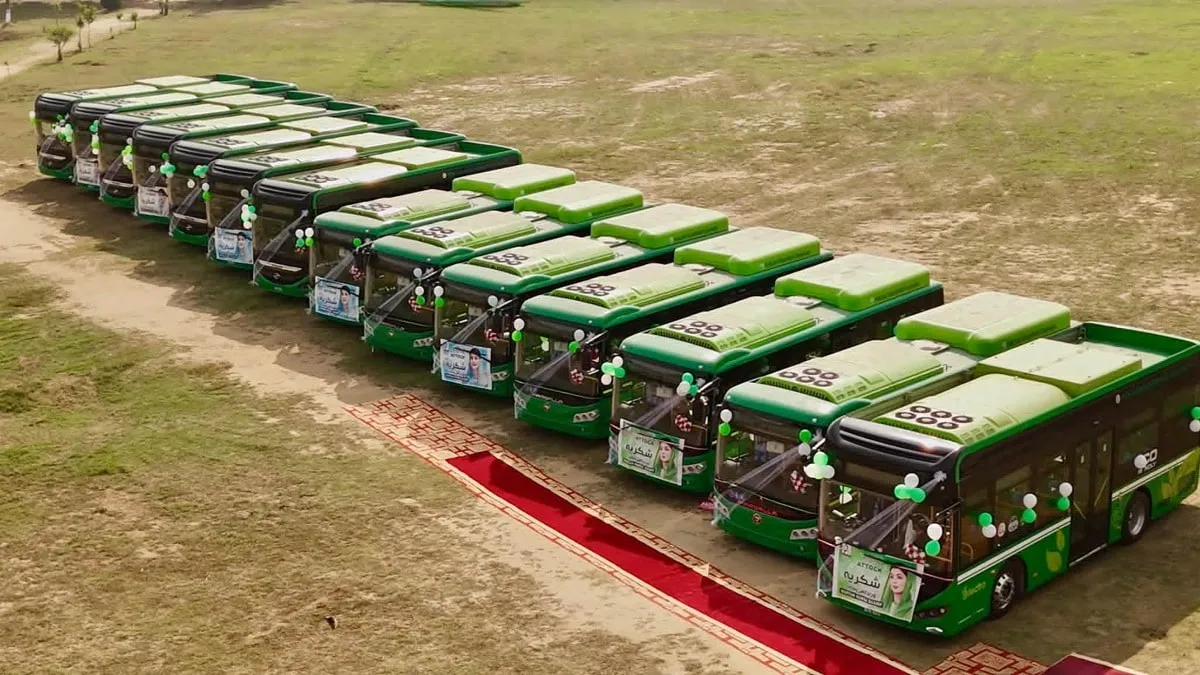
Punjab Chief Minister Maryam Nawaz Sharif has formally launched the Green Bus Project in Attock, introducing a new public transport service aimed at making daily travel easier for residents, particularly students. This initiative brings modern transit options to the district, addressing long-standing public transportation hurdles faced by local commuters. The introduction of these vehicles marks a shift toward sustainable urban mobility within the region.
During her visit, the chief minister also inspected an electric bus and reviewed the transport service. A total of 15 buses are now operating on three routes across Attock city. Officials designed these routes to cover key urban corridors, linking densely populated neighborhoods with vital commercial and educational zones.
Free Public Transport for Students in Attock
Maryam Nawaz said the service would provide students with a convenient way to travel to colleges and universities and return home without worrying about transportation expenses. For many young scholars in the area, commuting to higher education institutions previously involved high costs and unreliable private transport options. This project removes financial barriers to education access by easing daily travel logistics.
She announced that the provincial government had made the Green Bus service completely free for students, allowing them to travel without paying any fare. Students simply need to use the designated routes to reach their classes without incurring daily ticket costs. The policy targets youth enrollment and attendance rates by ensuring that financial constraints do not hinder academic pursuits.
How the Attock Electric Bus Routes Operate
The buses operate across different parts of Attock, connecting residential areas with educational institutions and providing students with an additional commuting option. The project forms part of the Punjab government's efforts to improve public transport facilities and make daily commuting more affordable for residents. Transit planners mapped the three initial corridors to capture maximum passenger volume during peak morning and afternoon hours.
With 15 buses currently operating on three routes, the service is expected to benefit students and other commuters traveling within Attock. General commuters also gain access to a reliable municipal fleet, which helps reduce congestion and provides a cleaner alternative to traditional diesel or gasoline vehicles. The deployment reflects broader regional strategies to modernize infrastructure outside major metropolitan centers.
Background on Public Transport Expansion in Punjab
Public transport networks across the Punjab province have undergone various modernization phases in recent years, focusing on urban centers and expanding into secondary cities like Attock. Historically, residents in smaller cities relied heavily on auto-rickshaws, privately owned vans, and motorcycles, which often lacked safety standards and regulated fare structures. Provincial authorities have increasingly prioritized state-backed transit schemes to curb urban air pollution and ease household expenses.
The transition toward battery-powered commercial vehicles represents a modern approach to municipal administration in Pakistan. By integrating electric fleets, the government addresses both transit deficits and environmental degradation. Attock joins a growing list of administrative districts receiving targeted investments in public amenities as part of provincial development programs.
Impact on Local Students and Residents
Families residing in Attock stand to save a significant portion of their monthly budgets due to the fare exemption for students. Transportation costs traditionally consume a notable share of household incomes, particularly for families funding multiple children in higher education. Removing these expenses frees up financial resources for educational materials, food, and other household essentials.
Beyond financial relief, the electric buses offer a safer and more comfortable travel environment compared to overcrowded private wagons. Female students, in particular, benefit from structured public transport options that offer reliable schedules and secure seating arrangements. The presence of municipal staff and designated stops adds a layer of security that informal transit modes often lack.
Future Outlook for the Green Bus Initiative
As the initial phase rolls out with 15 vehicles, transportation authorities will monitor passenger demand across the three active routes. Data collected from daily ridership numbers will help determine whether additional buses or route extensions are necessary to meet community needs. Observers will watch for potential expansions into neighboring towns or rural peripheries connected to Attock city.
The success of this deployment serves as a benchmark for future green infrastructure projects in secondary districts of Punjab. Provincial planners continue to evaluate renewable energy applications within public utilities to ensure long-term sustainability. Residents and student bodies anticipate further announcements regarding municipal transport enhancements as the current phase beds down.