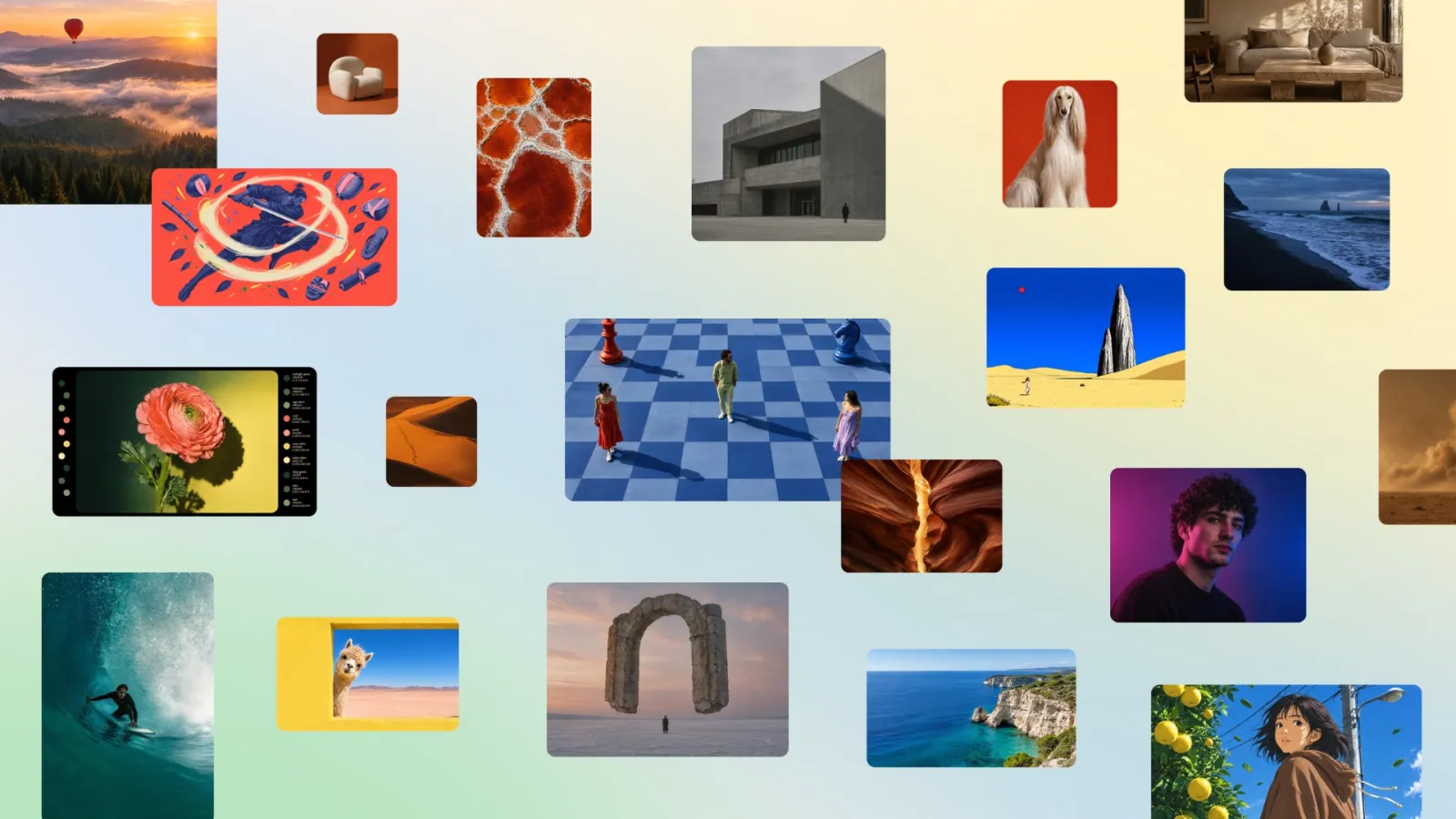
Design platform Canva announced the launch of its first image-generation model, Canva Craft, built by its research team to rival similar tools from Google, OpenAI, ByteDance and Meta.
The company explained that the model operates in two phases. First, it reads a user's prompt and drafts a plan that details spatial relationships, relative scale, visual hierarchy and text information. In the second phase, it produces an image up to 2K resolution in any of 30 aspect ratios suitable for different platforms.
Canva said this method enables the creation of pictures with precise object details and readable text, and lets users edit specific parts without altering the rest of the image.
Instead of training on photographs, Canva used design assets, human-crafted templates from its library such as posters, social posts, presentations, infographics, menus and typography-rich layouts, to teach the model.
Consequently, outputs from Canva Craft can be turned into layered designs via Canva Magic, the platform's image-to-design transformer. Last year, Canva released a model that could understand designs and layers.
Canva Craft is now available to all users through the Dream Lab tab on the platform and will also be reachable via the Canva API. The company also intends to enable image generation in third-party chatbots like ChatGPT and Gemini through its MCP.
Having relied on various external image models, Canva expects the new system to cut API expenses while delivering better quality and speed control.
In 2024, Canva acquired media-generation platform Leonardo.ai, and researchers from Leonardo contributed to the new model.
The firm is developing two lower-cost variants, named Craftfast and Craft-ultrafast, slated for release soon.
Canva reported it was on track for $4 billion in revenue last year, but it lowered its 2026 growth outlook, leading analysts to say its valuation fell from $42 billion to $35 billion.