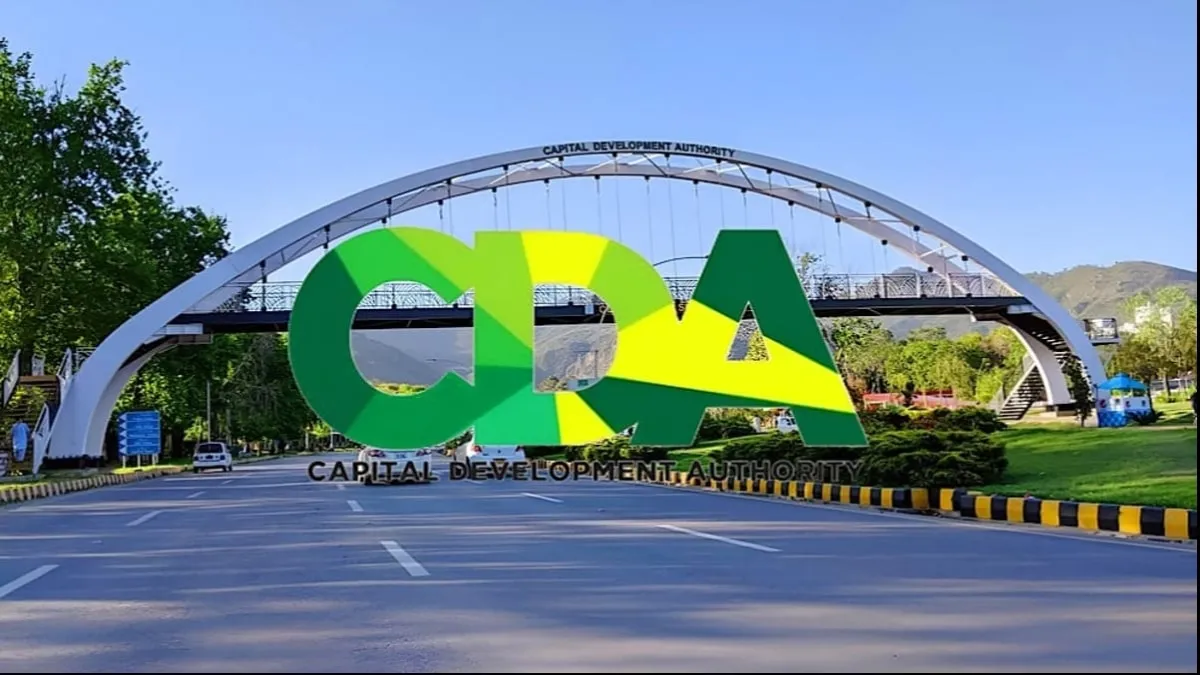
The Capital Development Authority (CDA) has launched solid waste management services in Islamabad's Zones IV and V, extending formal sanitation coverage to rural and suburban communities.
The service will cover approximately 484 square kilometers and serve more than 1.1 million people. CDA says it has allocated 1,550 workers and 103 vehicles and machinery units for the operation.
Areas covered include Bhara Kahu, Bani Gala, Tramri, Lehtrar Road, Shahzad Town, Humak, Sehala, Lohi Bhair, Kirpa, Rawat, Gagri, adjoining localities, and private housing societies.
CDA launches Solid Waste Management Services for Zone 4 & Zone 5
Solid Waste Management Service for Zones 4 & 5 includes 1,550 workforce, 103 machinery units, covering approximately 484 km² and serving over 1.1 million people.
Equal services for every citizen, from the center… pic.twitter.com/ktyCdKEUVY
— Capital Development Authority – CDA, Islamabad (@CDAthecapital) November 6, 2026
According to CDA, the initiative covers 65 union councils, primarily in Zones IV and V. The authority described it as its first extension of formal solid waste management services to rural areas within these zones.
CDA has awarded the contract to a Turkish company, which will collect, transport and dispose of approximately 342 tonnes of waste daily using trained staff and specialised equipment.
The initiative was launched on the directions of Interior Minister Mohsin Naqvi under the leadership of CDA Chairman Sohail Ashraf.
Why the Expansion Matters for Islamabad Residents
Islamabad's rapid population growth has outpaced existing sanitation infrastructure. Prior to this move, many of the 65 union councils in Zones IV and V relied on informal collection or private contractors, often resulting in irregular pickups and illegal dumping. By bringing formal services to these areas, the CDA aims to reduce public health risks, improve environmental quality, and align the capital's waste management with national standards.
Background: Islamabad's Waste Management History
Since its founding in the 1960s, Islamabad has been divided into sectors and zones managed by the CDA. The authority's waste collection network originally focused on the central, high-density sectors (Zones I–III). Over the past decade, suburban expansion and the development of private housing societies created a patchwork of service levels. In 2019, the CDA introduced a city-wide door-to-door collection pilot, but the program never reached the peripheral union councils that lie beyond the main arterial roads.
Nationally, Pakistan's solid waste generation is estimated at 38 million tonnes per year, with per-capita generation rising to 0.6 kg per day in urban areas. The federal government has urged provincial and local bodies to adopt integrated waste management plans, yet funding and technical capacity have remained uneven.
How the New Service Operates
The Turkish contractor will run three core functions: collection, transport, and disposal. Collection routes are mapped using GIS software supplied by the CDA, ensuring each household in the 65 union councils receives a weekly pickup. Trained crews operate the 103 vehicles, which include compactors, side-loaders, and specialised trucks for bulky waste.
Daily, the contractor expects to handle about 342 tonnes of waste. This volume is transferred to a regional transfer station located on the outskirts of Zone V, where waste is sorted for recycling, composting, or landfilling according to the CDA's waste hierarchy policy.
Staffing and Training
The 1,550 workers include field operatives, drivers, supervisors, and support staff. All field staff have completed a two-week safety and hygiene training program accredited by the Pakistan Environmental Protection Agency. The training covers personal protective equipment usage, emergency response, and proper segregation techniques.
Equipment Details
Among the 103 units, 45 are compactors capable of handling up to 2 tonnes per load, 30 are side-loaders designed for narrow lanes in residential colonies, and 28 are standard trucks for bulk transport to the transfer station. The fleet also includes two mobile shredders for large plastic items and three water-spray units for street cleaning during the collection process.
Impact on Local Communities
Residents of Bhara Kahu, Bani Gala, and the surrounding villages have long complained about uncollected garbage accumulating near schools and mosques. The formal service promises regular pickups, reducing breeding grounds for disease-carrying insects and rodents. Preliminary surveys by the CDA indicate that 78 % of households in the newly covered zones welcomed the initiative, citing cleaner streets and lower fire hazards.
Businesses in the area, particularly small food vendors and construction firms, will also benefit from predictable waste removal, which can lower operating costs associated with ad-hoc disposal. Moreover, the contract includes a clause for the contractor to provide weekly reports on collection efficiency, enabling the CDA to monitor performance and address gaps quickly.
Financial and Contractual Aspects
The contract with the Turkish firm was awarded through a competitive bidding process overseen by the CDA's procurement department. While the exact monetary value has not been disclosed, the agreement covers a five-year period with an option to extend based on service quality metrics.
Funding for the project comes from the CDA's capital budget, supplemented by a grant from the federal Ministry of Interior, which allocated resources following Minister Mohsin Naqvi's directive. The budget also earmarks funds for community awareness campaigns, encouraging residents to separate recyclables from general waste.
What Comes Next: Monitoring and Expansion Plans
The CDA has set a 30-day performance review after the launch to assess route adherence, collection completeness, and resident satisfaction. Results will be published on the authority's website and used to fine-tune operations. If the pilot meets its targets, the CDA plans to replicate the model in Zones VI and VII, which together house another 800,000 residents.
In parallel, the authority is working with the Capital Development Authority's Environmental Division to develop a composting facility that will process organic waste collected from the new zones. This facility aims to produce 15,000 tonnes of compost annually for use in municipal landscaping projects.
Practical Takeaways for Residents
- Households will receive a weekly schedule indicating the collection day for their street.
- Residents should place waste in the provided colour-coded bins: green for organics, blue for recyclables, and grey for residual waste.
- Any missed collection should be reported via the CDA's 24-hour hotline (051-921-0000) or the mobile app.
- Improper dumping will be penalised under the CDA's municipal by-law, with fines ranging from Rs. 5,000 to Rs. 20,000.
By institutionalising waste collection in these peripheral zones, the CDA hopes to set a benchmark for other Pakistani cities grappling with rapid suburban growth and inadequate sanitation services.