Understanding OpenBot 1.0 and the CopilotKit Release
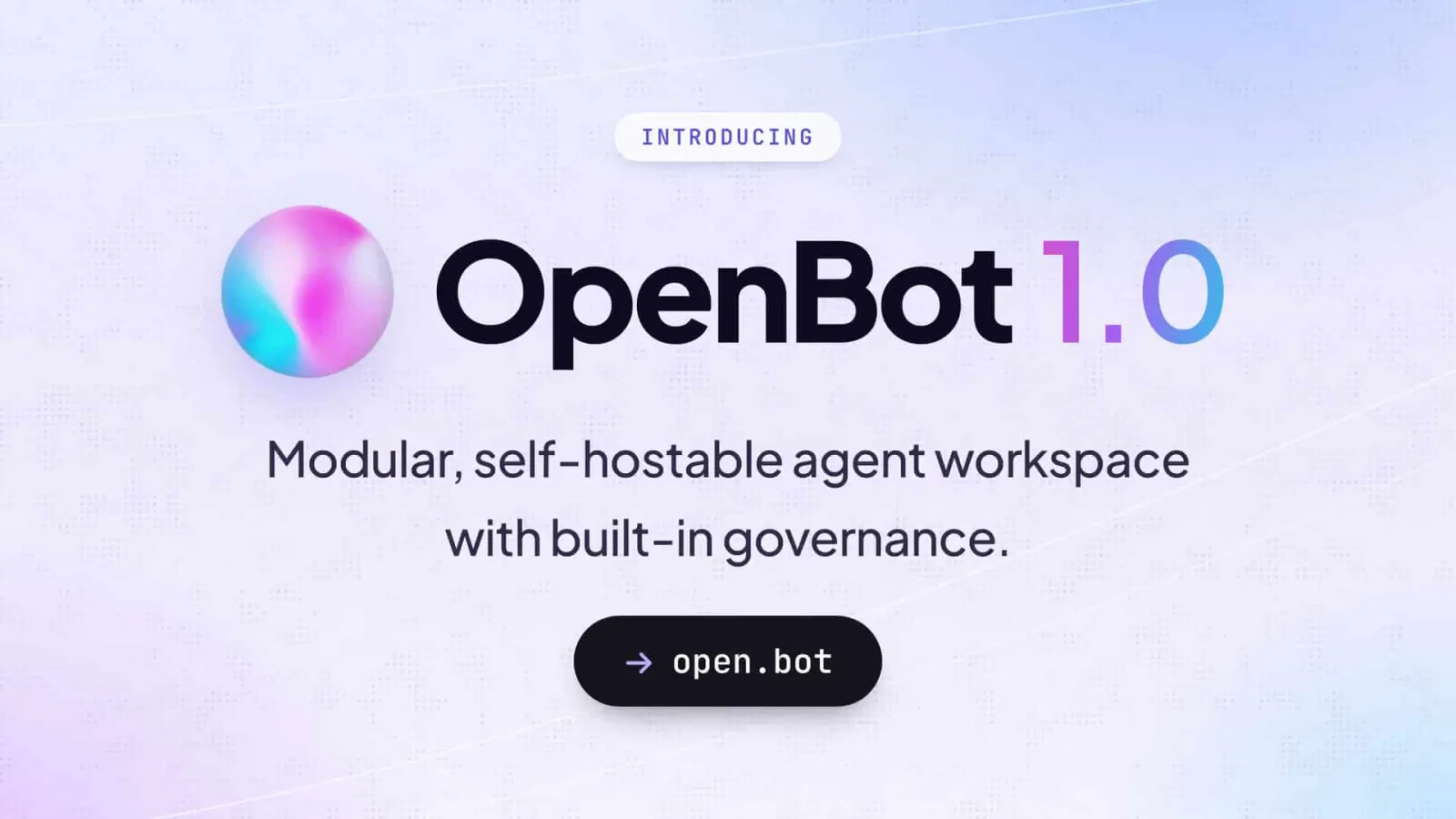
CopilotKit officially released OpenBot 1.0 on November 9, introducing an MIT-licensed workspace that allows businesses and developers to execute artificial intelligence agents entirely on their own infrastructure. The platform grants users total freedom to select specific models, autonomous agents, and functional tools to suit their daily workflows. A built-in policy gateway meticulously examines every digital action, including browser clicks, file writes, and tool executions, before those actions can actually run on the system. This design aims to balance operational speed with rigid security boundaries for enterprise environments.
The workspace environment relies on Chromium browser profiles and dedicated local workspace folders to keep operations organized. Administrators possess the capability to assign individual autonomous workers their own isolated containers, ensuring that processes remain safely partitioned from one another. Each worker gains access exclusively to the specific tools it has received explicit permission to use. By default, version 1.0 relies on Markdown formatting for text replies while retaining the capacity to render interactive charts, functional checklists, organized tables, or compact cards whenever those visual elements add clarity to a task.
How the Teach a Bot Feature and Core Workflows Operate
One of the most notable capabilities introduced in this software version is the Teach a Bot utility, which transforms a recorded human task into a reusable skill that team members can inspect and evaluate. Users can assign a specific task, observe the worker execute the steps in real time, review the gathered findings, and approve subsequent actions inside a single conversational window. This interactive verification loop ensures that human operators maintain oversight during multi-step digital operations. Workers can handle various administrative chores, such as sorting incoming support tickets and pausing for human sign-off before publishing messages to Slack, flagging corporate expenses that violate internal spending thresholds, or drafting code fixes for a human engineer to check.
The desktop application accommodates Windows alongside both Apple Silicon and Intel Macintosh computers, incorporating signed software updates and automatic system backups prior to carrying out any upgrades. For app connectivity, the software integrates with Composio and Arcade, allowing individuals to link multiple accounts for the same software application and save distinct approval rules for each account. Through Composio, workers can establish connections to several hundred third-party applications. Furthermore, workers can delegate complex duties to specialist workers, subject to strict administrative limits governing which entities can collaborate and how many handoffs are permitted.
CEL Policy Checks and Enterprise Governance Controls
Safety and oversight remain central to the platform through the implementation of Common Expression Language rules, commonly known as CEL rules, which evaluate browser interactions, file modifications, Model Context Protocol calls, and interface components. The security gateway evaluates explicit denial rules first, records its administrative decision prior to executing any permitted action, and immediately blocks operations if a required security policy is missing or if a rule evaluation fails. This multi-layered checking mechanism prevents unauthorized file modifications and stops rogue scripts from executing unexpected commands across local directories or network shares.
For larger commercial deployments, OpenBot for Business delivers advanced features including single sign-on capabilities, System for Cross-domain Identity Management synchronization for users and groups, and a centralized administration console. Official documentation lists identity providers such as Google, Microsoft Entra, and Okta, alongside standard protocols like SAML and OIDC. Administrators can grant system access based on individual workers, specific roles, or named persons, review pending access requests, and route sensitive operations to a human supervisor for final authorization. Workers are also able to act on behalf of a user by using temporary tokens that typically carry a restricted subset of that specific user's permissions.
Model Support, Agent Frameworks, and Deployment Infrastructure
OpenBot connects seamlessly to autonomous agents that support the AG-UI protocol, an interface standard that CopilotKit helped create. Supported agent frameworks include the Claude Agent SDK, OpenAI Agents SDK, LangChain, Google ADK, Mastra, AWS Strands, Microsoft Agent Framework, and CrewAI. The source code repository also supplies practical examples for Agno, AG2, LlamaIndex, and Pydantic AI. Development teams can plug in language models from OpenAI, Anthropic, Google, and xAI through existing subscription tiers or direct API keys, while the platform also accommodates open-source models like Kimi, DeepSeek, Qwen, Nemotron, and Mistral.
When it comes to deployment, personal users can store their workspace data and API keys locally while paying their model providers directly. Organizations can deploy the platform using a standard Helm chart on Amazon Web Services, Microsoft Azure, Google Cloud, or alternative Kubernetes clusters, with CopilotKit offering professional engineering assistance for setup. The business tier provides comprehensive spending reports organized by worker, role, team, or individual, alongside strict daily, weekly, and monthly token consumption limits. Additional enterprise features include isolated tenant environments, audit log exports destined for security monitoring platforms, content labeling to satisfy European Union artificial intelligence transparency mandates, data retention controls, and prompt deletion on request. CopilotKit states that the infrastructure is certified as SOC 2 Type II compliant.
Commercial Pricing Models and Comparative Analysis
The financial structure for the platform combines free personal access with scalable business pricing tiers. The software is entirely free for personal projects, while pay-as-you-go business plans cost up to $29 per active user per month. Additionally, CopilotKit levies a 5 percent fee on the portion of monthly model spending that exceeds $5,000 per organization, which applies to both pay-as-you-go customers and annual subscribers. The custom-priced annual enterprise plan expands upon these offerings by incorporating air-gapped deployment options and round-the-clock production support for mission-critical operations.
When compared to alternatives in the market, OpenBot 1.0 occupies a distinct niche against proprietary offerings like OpenAI dots and open-source projects like OpenClaw. OpenAI dots run on OpenAI-hosted cloud computers per dot and use proprietary code, whereas OpenBot and OpenClaw employ the open-source MIT license and can run on local laptops, virtual private servers, private clouds, or Kubernetes clusters. OpenAI added GPT-6.1 Terra to its dots on November 3, running alongside GPT-6 Astra, and relies on user-configured approvals. Meanwhile, OpenBot differentiates itself through automated CEL policy checks prior to action execution, comprehensive enterprise audit logging, and deep integration capabilities across hundreds of applications via Composio, Arcade, and Model Context Protocol hubs.