Sindh Government Approves Shift to Electric Vehicles for Official Fleet
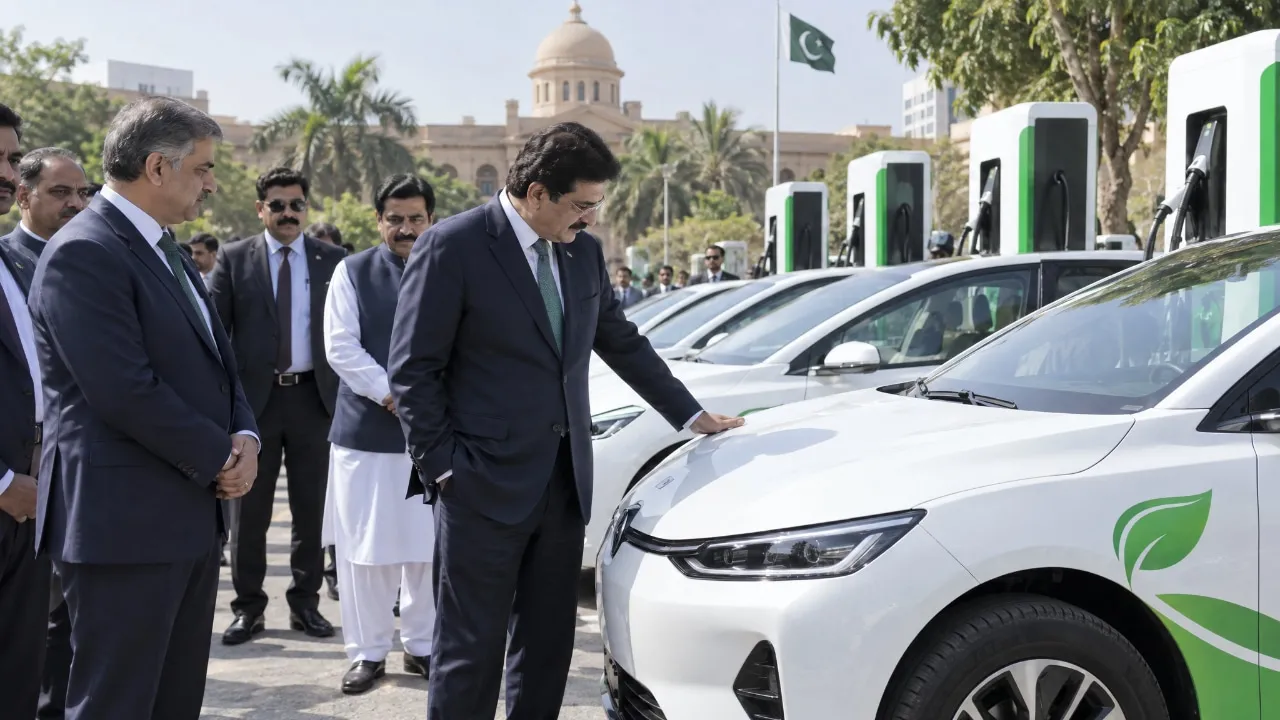
The Sindh government has decided to phase out traditional vehicles used in government departments and shift to electric vehicles (EVs). Senior Minister Sharjeel Memon said saving public resources is among the government's top priorities, and measures are being taken that reduce costs while also protecting the environment. He said the Sindh government wants future vehicle purchases to prioritise electric vehicles over traditional ones, with the entire government vehicle system gradually shifted to environmentally friendly technology.
This major policy change aims to restructure how provincial ministries and public departments manage their transport logistics. By moving away from petroleum-dependent automobiles, the administration intends to modernise public sector operations while addressing fiscal constraints. The decision marks a notable shift in provincial administrative policy regarding energy consumption and public procurement.
Cabinet Committee on Austerity Meets to Discuss Vehicle Purchases
A meeting of the Cabinet Committee on Austerity was held under the chairmanship of Senior Minister Sharjeel Inam Memon, attended by Provincial Minister for Local Government Syed Nasir Hussain Shah, relevant provincial secretaries and other officials. The meeting reviewed reductions in government expenditure, fuel savings and the vehicle requirements of various departments.
During the session, officials evaluated the operational needs of multiple administrative bodies to determine where transport resources could be streamlined. The committee approved the purchase of vehicles for the Home Department, Anti-Corruption Establishment, and universities and boards. It was also decided that electric vehicles would be prioritised in vehicle purchases for government departments.
Reducing Fuel Costs and Easing Public Expenditure
Sharjeel Memon said promoting EV use in the government fleet would reduce fuel costs, and the transition to EVs would ease the burden of fuel expenditure on the public exchequer. He said the future belongs to EVs, and the Sindh government wants public institutions to adopt environmentally friendly technology and reduce dependence on traditional fuel. The phased transition to EVs would also cut the daily operating costs of government departments.
State administrations face continuous pressure to manage fuel bills amid volatile global petroleum markets. By introducing battery-powered transport into official fleets, provincial authorities expect to lower recurring maintenance and energy expenses. Public funds saved through this transition can then be reallocated toward essential public services and infrastructure development across the province.
Environmental Impact and Urban Air Quality in Sindh
Syed Nasir Hussain Shah said smoke emitted by traditional vehicles affects the urban environment and atmosphere, and local government institutions are also promoting the use of electric vehicles instead of conventional ones. Major urban centers in the province frequently grapple with heavy smog and elevated pollution levels caused by vehicular emissions.
Adopting clean energy transport helps mitigate the accumulation of greenhouse gases and particulate matter in densely populated cities. Local government agencies are aligning their transport strategies with broader ecological goals to improve overall air quality for residents. This environmental focus reinforces the administrative shift toward sustainable public infrastructure.
Background on Public Fleet Management and Administrative Austerity
Government administrations maintain large fleets of automobiles to support ministers, secretaries, law enforcement agencies, and educational boards. Historically, these fleets relied entirely on internal combustion engines running on petrol and diesel. Maintaining hundreds of traditional automobiles creates a steady financial draw on provincial budgets through routine servicing, replacement parts, and fuel purchases.
Cabinet committees on austerity are formed to scrutinize public spending and identify areas where administrative overhead can be lowered. Vehicle procurement and fuel consumption traditionally constitute major portions of non-development expenditures. Restricting conventional vehicle purchases represents a structural approach to fiscal discipline within provincial departments.
Understanding Electric Vehicle Adoption in Public Sector Operations
Shifting an institutional transport network from internal combustion engines to battery-powered alternatives involves careful planning regarding charging infrastructure and vehicle availability. Departments such as the Home Department and the Anti-Corruption Establishment require dependable transport for official duties and field operations. Prioritising electric models in procurement approvals ensures that new additions to the fleet align with long-term sustainability targets.
As manufacturing sectors expand production of electric cars, commercial vans, and two-wheelers, public institutions gain viable alternatives for daily departmental use. The gradual replacement schedule allows ministries to adapt their logistics without disrupting ongoing administrative functions. Regional universities and educational boards included in the recent procurement approvals will also begin integrating clean energy transport into their operations.
What Comes Next for Sindh Government Transport Policy
The transition announced by the Cabinet Committee on Austerity will unfold in phases as existing traditional vehicles reach the end of their operational lifecycles. Departmental heads will coordinate with procurement cells to source electric models for approved vehicle allocations. Authorities will continue to monitor fuel savings and operating expenses to measure the financial impact of the policy shift over time.
Observers will watch for further announcements regarding the development of dedicated charging infrastructure at government offices across the province. The success of this fleet conversion may also influence broader transport policies and private sector adoption rates for clean energy vehicles in the region.





