DARE-RC International Education Summit 2026 at LUMS Sets Priorities for Education Reform in Pakistan
The Data and Research in Education Research Consortium International Education Summit 2026, known as EDCON26, took place on October 31 and November 1 at the Lahore University of Management Sciences. Co-hosted with the Syed Ahsan Ali and Syed Maratib Ali School of Education, the event brought together researchers, policymakers, practitioners, funders, and education leaders.
Operating under the theme From Evidence to Action, the summit explored findings from a portfolio of 44 new research studies and scoping papers. The gathering aimed to strengthen pathways from evidence to action, set priorities, and consider future directions for education reform across the country.
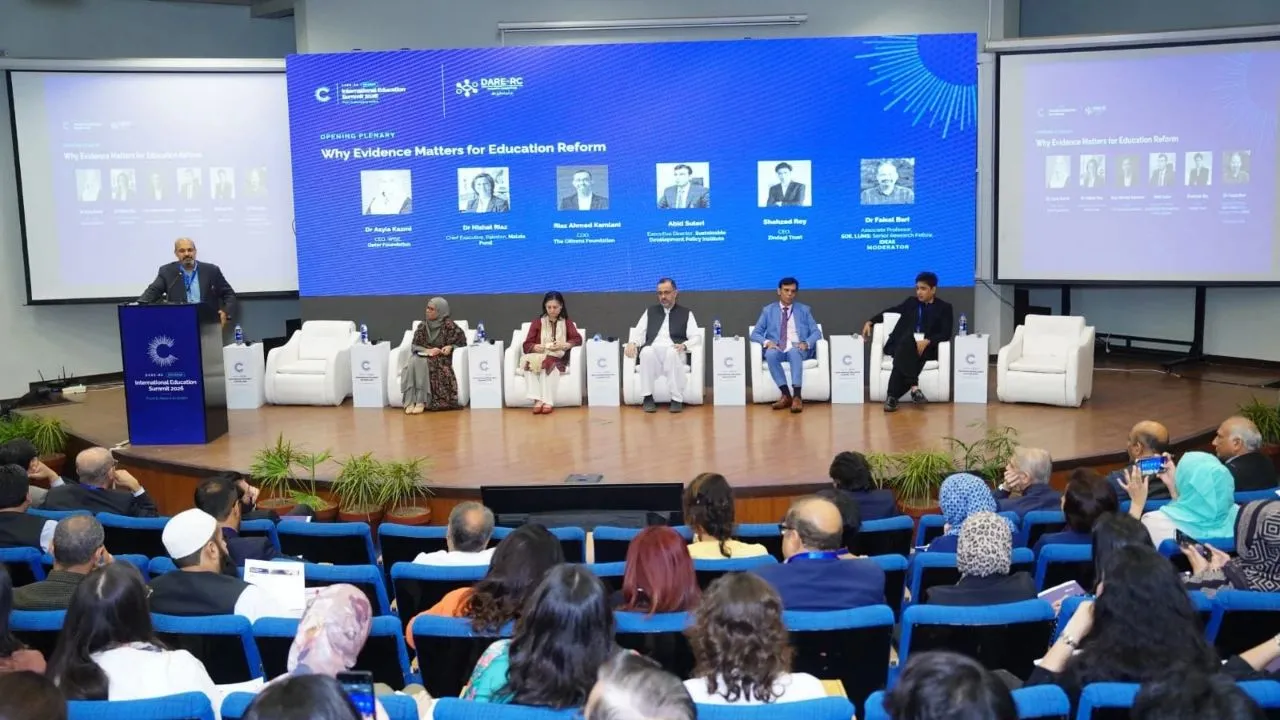
Why Evidence Matters for Education Reform in Pakistan
Opening remarks at the summit were delivered by Maria Wyard, Head of Human Capital, Inclusion and Governance at the British High Commission, followed by Federal Secretary of Education Nadeem Mahbub, LUMS Vice Chancellor Dr. Ali Cheema, and WWF International President Dr. Adil Najam.
Speakers addressed the pressing need to use existing data effectively. "With resources under pressure in Pakistan and globally, we must make better use of the evidence we already have and fill critical knowledge gaps," Maria Wyard said. She added that the United Kingdom invested in DARE to strengthen the country's education evidence base, improve access to high-quality data, and help policymakers make informed decisions based on evidence rather than assumption.
Synthesizing Rigorous Research on Teaching, AI, and Inclusion
Day one of the summit focused on understanding and synthesizing the extensive evidence produced by the consortium. Leading researchers led sessions examining DARE-RC research on data and artificial intelligence, teaching and the education workforce, inclusion, and climate resilience.
The second day shifted focus toward translating quality evidence into practical policy changes. Sessions addressed governance and accountability, language policy, and scaling solutions that work. Three policy labs paired researchers with policymakers to shape future priorities for evidence-based reforms.
Bridging Research and Government Policy Action
The conference featured active participation from government officials and institutional leaders to ensure research findings reach decision-makers. Government contributors included Nausheen Adnan, Parliamentary Secretary for the School Education Department in Punjab, and Shahid Farid, Managing Director of the Punjab Education Foundation.
Additional government insights came from Rizwan Qadeer, Special Secretary of the SED in Balochistan, Aftab Alam, Director of SEMIS at the Reform Support Unit in Sindh, and Omer Iftikhar Sherazi, Programme Director at PMIU-PERSPR. The closing session provided expert perspectives on government decision-making with contributions from Silwat Saeed, Qaisar Alam, and Lal Jan Jaffar.
Practitioner Perspectives on Systemic Challenges
The summit also incorporated perspectives from prominent civil society and non-profit organizations operating within the education sector. Discussions featured Shehzad Roy, Chief Executive Officer of Zindagi Trust, and Dr. Asyia Kazmi, Chief Executive Officer of WISE at the Qatar Foundation.
Nishat Riaz, Chief Executive for Pakistan at the Malala Fund, Riaz Kamlani, Chief Operating Officer of The Citizens Foundation, and Abid Suleri, Executive Director of SDPI, also contributed insights on why evidence matters for practical reform.
The Legacy and Future of the DARE-RC Programme
The EDCON26 conference marks the conclusion of the DARE-RC programme, which leaves behind a legacy of empirical depth, close engagement with practitioners, and an empowered network of researchers across Pakistan.
"Synthesising the rich evidence DARE-RC has produced matters more now than ever before as the challenges facing Pakistan's education system are increasingly complex and interconnected," said Dr. Monazza Aslam, Research Director of DARE-RC. She noted that the collective picture helps identify what works, for whom, and under what conditions to build resilient systems.
Moving forward, the Syed Ahsan Ali and Syed Maratib Ali School of Education at LUMS will carry the EDCON conference series forward. This strategic partnership ensures a lasting legacy for the DARE-RC programme and cements the vital role of academia in raising education outcomes in Pakistan.