Government Announces Completion Timeline for M-4 Motorway Expansion
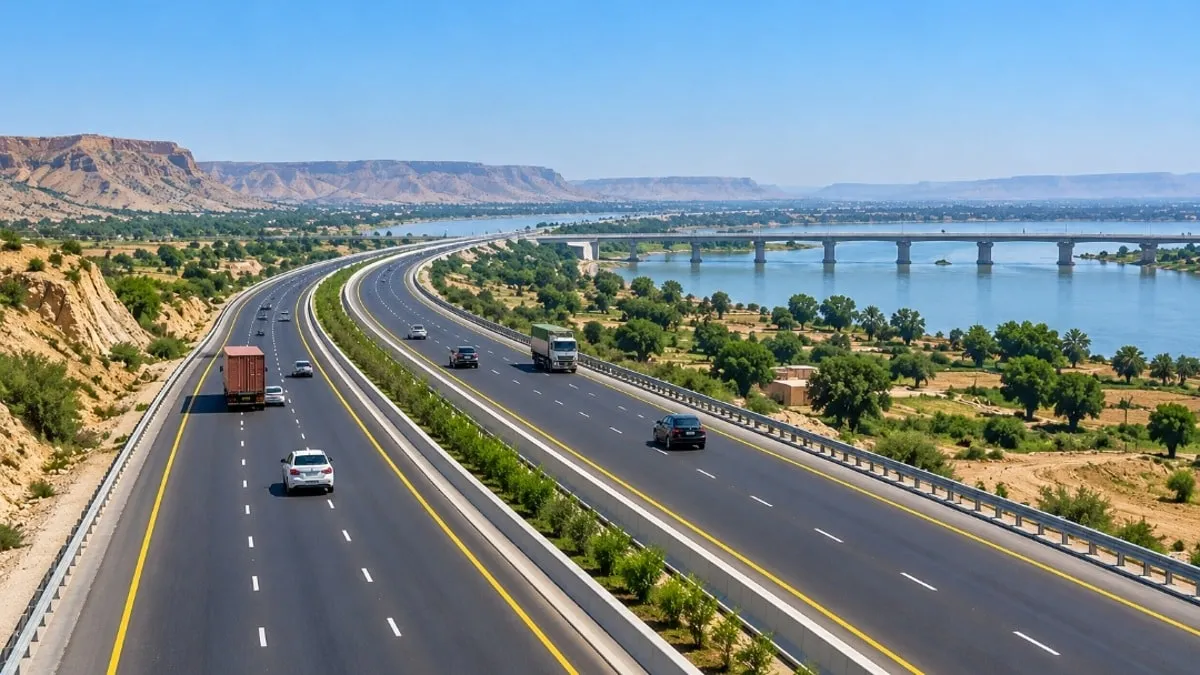
The government aims to complete the expansion of the Faisalabad-Pindi Bhattian section of the M-4 Motorway by the start of next year, turning it into a modern six-lane highway. This major infrastructure undertaking seeks to resolve decades of commuting challenges for motorists traveling through this industrial and agricultural heartland. Federal authorities have mobilized resources to ensure the construction adheres to the newly established deadlines, bringing relief to thousands of daily commuters and freight operators who rely on this vital transit corridor.
Federal Minister for Communications Abdul Aleem Khan announced the target during his visit to the ongoing expansion project, saying the government wanted to present the people of Faisalabad with a modern motorway as a New Year gift. The announcement marks a concrete milestone in a region that has long awaited infrastructure upgrades to match rising vehicular traffic volumes. Officials accompanying the minister received strict instructions to monitor progress closely and maintain high construction standards throughout every phase of the development work.
Understanding the Scope of the M-4 Motorway Project
The 53-kilometer project will expand the existing four-lane section to six lanes, addressing a demand that residents of Faisalabad have raised for the past 30 years. Expanding a major highway while keeping traffic moving requires careful coordination between construction crews and transport authorities. Engineers have divided the 53-kilometer stretch into manageable zones to streamline earthmoving, asphalt paving, and bridge widening activities.
Motorways in the country serve as the backbone of national logistics, connecting major industrial production hubs with ports and consumer markets. Upgrading the Faisalabad-Pindi Bhattian corridor directly supports commercial transport efficiency by reducing transit times for goods trucks and passenger buses alike. Local trade bodies and business owners have repeatedly petitioned for this specific lane addition to accommodate the heavy volume of heavy transport vehicles using the route daily.
Minister Inspects Construction at Kamalpur Interchange
During his visit to Kamalpur Interchange, Khan inspected construction activities and directed officials to accelerate work by increasing the number of machinery units and workers. The minister walked parts of the construction zone to review the quality of materials being used for the sub-base and surface layers. Field engineers briefed him on the deployment of heavy equipment, including asphalt pavers, rollers, and excavators, currently operating across multiple shifts.
Interchanges act as critical nodes for entering and exiting high-speed motorways, making their redesign essential for safety during the expansion process. Crews at Kamalpur Interchange are working on widening slip roads and improving acceleration and deceleration lanes to prevent bottlenecks. Supervisors received orders to deploy additional workforce teams to complete structural additions without delaying the overall timeline.
Expected Benefits for Commuters and Road Safety
He said the expansion would ease traffic congestion, improve travel conditions and help prevent road accidents. Traffic bottlenecks on narrow sections often lead to driver frustration and dangerous overtaking maneuvers, increasing the risk of collisions. Adding two extra lanes provides greater lateral clearance between heavy vehicles and passenger cars, creating a more forgiving driving environment.
The minister said the upgraded motorway would feature trees along both sides, green belts in the central section and date palm trees as part of its landscaping. Environmental integration forms a key component of modern civil engineering projects, helping to reduce glare from oncoming headlights at night and lowering ambient temperatures along the asphalt surface. Horticultural teams will maintain these green spaces to ensure the highway remains aesthetically pleasing while supporting regional ecology.
New Rest Areas and Amenities for Travelers
The government also plans to establish modern rest areas to facilitate passengers traveling between Faisalabad and Pindi Bhattian. Long-distance driving induces fatigue, which stands as a primary contributor to highway accidents. Providing dedicated spaces equipped with restrooms, parking zones, and food stalls allows drivers to take necessary breaks during their journeys.
Khan directed officials to complete the rest area designs within one week and ensure proper lighting along the entire section. Adequate illumination prevents nighttime visibility hazards, especially around interchanges and entry points. Municipal and highway departments will coordinate power supply lines to support continuous lighting across the entire 53-kilometer stretch.
Background and Historical Context of the Faisalabad Route
The demand for expanding this specific route stems from decades of industrial growth in Faisalabad, known widely as the textile capital of the country. As manufacturing output expanded over the last thirty years, the traffic capacity of the original four-lane layout reached saturation point. Frequent gridlocks and slow-moving freight convoys prompted continuous appeals from civil society and industrial associations for a comprehensive lane addition.
Motorway networks across the country have undergone continuous modernization phases to handle rising vehicle ownership rates and commercial freight demands. The integration of the Faisalabad-Pindi Bhattian section into a six-lane configuration aligns with broader national transport strategies. These strategies prioritize bottleneck elimination on heavily used industrial corridors to lower logistics costs and improve supply chain reliability.
What Comes Next for the M-4 Expansion
With the completion timeline set for the start of next year, construction teams face a tight schedule to finish paving, lane marking, and interchange remodeling. Regular monitoring by the Ministry of Communications aims to catch any technical delays early and reallocate resources where needed. Motorists traveling through the zone should expect ongoing construction activity and temporary traffic management measures as crews finalize the remaining stretches of the highway.
Observers and local residents will monitor the rapid design finalization for the new rest areas and the installation of the lighting infrastructure over the coming weeks. Adherence to these strict deadlines will determine whether the public receives their anticipated modern motorway gift on schedule. Authorities remain committed to enforcing safety protocols for both construction workers and daily travelers while the final phases of the project move forward.