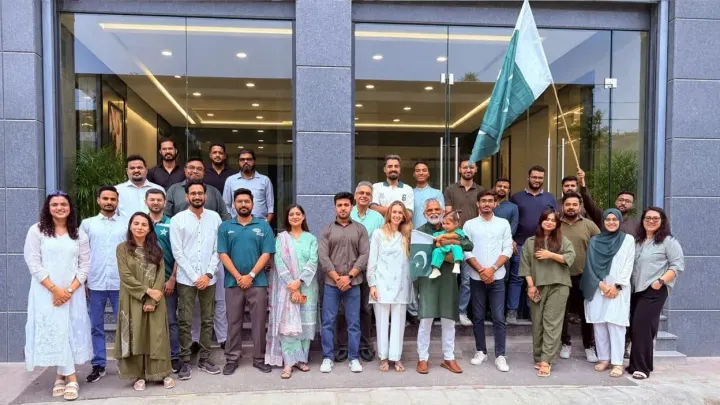
Eight Pakistani fintech startups have been selected for the Japan-Pakistan Startup Expansion Programme, a new initiative launched by the Asia Web3 Alliance Japan in partnership with Ignite, Pakistan's National Technology Fund. The cohort will travel to Tokyo for Japan Fintech Week in February 2027 and receive market-entry support, cultural training and at least eight meetings with Japanese banks, venture capitalists and large corporations.
The programme is the first pilot designed to create a lasting innovation bridge between Tokyo and Pakistan, offering a structured pathway into one of Asia's most mature financial markets.
What Is the Japan-Pakistan Startup Expansion Programme?
The Japan-Pakistan Startup Expansion Programme is a joint effort between the Asia Web3 Alliance Japan and Ignite. It provides selected startups with a package that includes:
- Training on Japanese business etiquette, regulatory frameworks and go-to-market strategy.
- At least eight curated meetings with Japanese corporates, banks and venture capital firms.
- Access to networking events during Japan Fintech Week, a flagship industry gathering.
- Logistical support for travel and accommodation in Tokyo.
The goal is to move beyond a single trade mission and foster genuine partnerships that can lead to joint product development, investment and market penetration.
Who Are the Selected Startups?
The eight companies span a range of fintech sub-sectors, from payments to earned-wage access and blockchain security. They are:
- Virtual Remittance Gateway (VRG) - Operates the Asaan Mobile Account (AMA) platform to simplify digital financial access.
- MyTM Technologies (Barq Pakistan) - Provides a branchless banking platform, payment services and merchant tools.
- KalPay - Offers a Buy Now, Pay Later (BNPL) solution that complies with Shariah law.
- EZ Wage - An Earned Wage Access (EWA) platform that lets employees draw accrued salaries before payday.
- Lean Outset - Focuses on business growth and financial-tech infrastructure for SMEs.
- DIGIKHATA - A digital ledger and bookkeeping app designed for small and medium enterprises to manage cash flow and invoicing.
- PriceOye - Runs a managed e-commerce marketplace for consumer electronics with integrated digital payments.
- BlockApex Labs (HandlePay) - A Web3 and blockchain security firm building decentralized finance tools and payment infrastructure.
Why Is This Programme Important for Pakistan's Fintech Landscape?
Pakistan's fintech sector has expanded rapidly in the last five years, driven by widespread mobile phone adoption, a youthful population and supportive regulatory reforms such as the 2020 Digital Payments Policy. Digital payments and SME finance have become the strongest growth areas, accounting for more than half of total fintech funding in the country.
Historically, Pakistani startups have looked to the Middle East and Southeast Asia for expansion because of cultural and linguistic similarities. Japan, by contrast, presents a high-tech market with deep capital pools but also stringent compliance requirements and a business culture that differs markedly from South Asia.
By offering a curated entry route, the programme reduces the information gap and lowers the cost of market research for Pakistani firms. It also signals confidence from Japanese investors in the quality of Pakistan's tech talent.
How Will the Programme Be Implemented?
Each startup will undergo a two-week preparatory phase in Pakistan, led by experts from the Asia Web3 Alliance and Ignite. The curriculum covers:
- Japanese corporate governance standards and data-privacy laws.
- Regulatory licensing processes for payment service providers and fintech innovators.
- Pitch-training tailored to Japanese investor expectations.
- Cultural immersion workshops that address communication style, decision-making hierarchy and meeting etiquette.
After the training, the cohort will travel to Tokyo in February 2027. While there, they will attend Japan Fintech Week, host one-on-one sessions with pre-identified Japanese partners, and participate in a showcase event where they can demo their products to a broader audience.
What Are the Expected Outcomes?
Program officials expect several concrete results:
- At least three formal partnership agreements between Pakistani startups and Japanese corporates.
- Follow-on investment commitments totaling up to US$5 million across the cohort.
- Knowledge transfer that enables the startups to adapt their products for the Japanese regulatory environment.
- Long-term mentorship links that persist beyond the initial visit.
Hinza Asif, President and Founder of AWAJ, emphasized that the eight companies are not traveling "just to visit." He said the aim is to "form real partnerships and help build a lasting connection between the two countries."
What Does This Mean for the Wider Region?
Success could inspire similar bridge programmes between Japan and other South Asian tech hubs, such as Bangladesh or Sri Lanka. It may also encourage Japanese venture capital firms to allocate dedicated funds for South Asian fintech, a trend that has been limited by perceived market risk.
For Pakistani SMEs, the programme demonstrates that access to high-value markets is becoming more realistic, provided that companies can meet compliance standards and demonstrate scalable technology.
What Are the Next Steps for the Selected Startups?
In the coming weeks, each startup will finalize its pitch deck, align its product roadmap with Japanese regulatory timelines and schedule the eight corporate meetings. The Asia Web3 Alliance will release a public schedule of the Tokyo events, and Ignite will monitor progress through monthly reporting.
Stakeholders advise companies to prepare bilingual documentation and to consider localizing user interfaces for Japanese customers. Legal counsel familiar with the Financial Services Agency's guidelines will be essential for navigating licensing.
Watch for announcements from the participating Japanese firms after Japan Fintech Week, as they will reveal the first round of partnership deals and any follow-on funding.