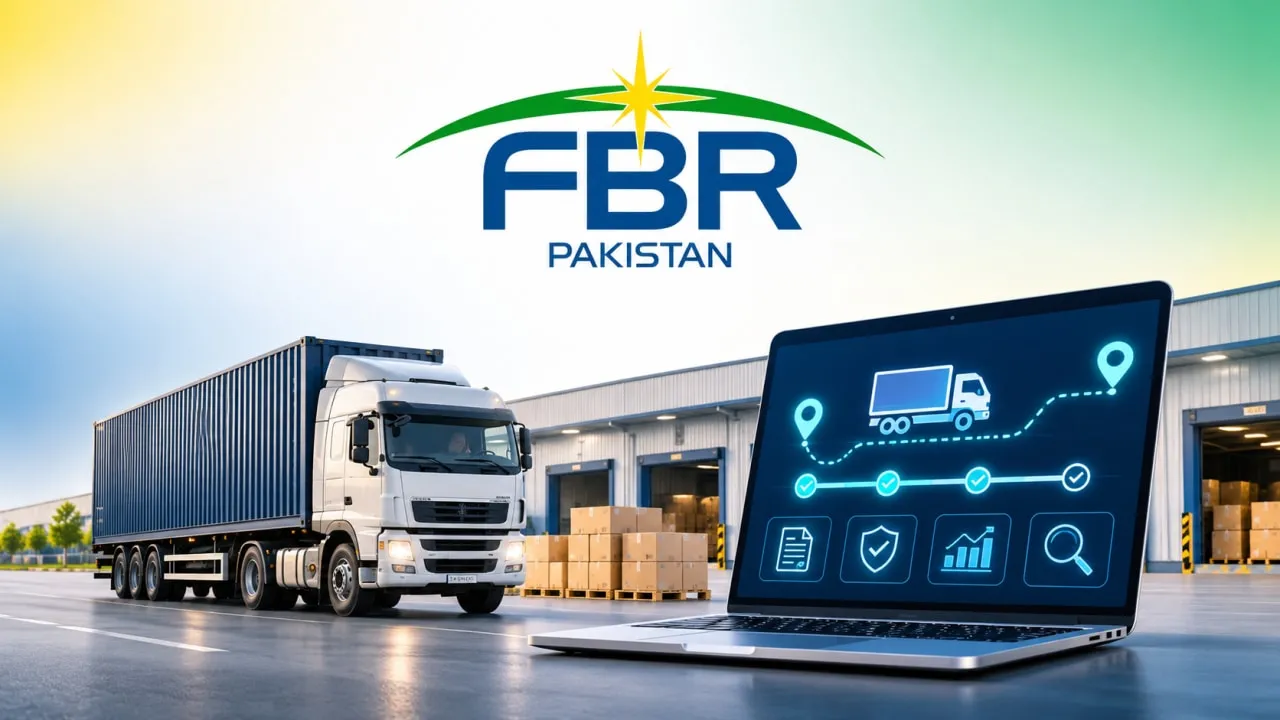
The federal government approved a new digital cargo tracking system on Tuesday, aiming to curb smuggling and protect sales-tax revenue by monitoring consignments from the point of loading to final delivery.
The proposal was reviewed during a weekly Federal Board of Revenue (FBR) affairs meeting chaired by Prime Minister Shehbaz Sharif. Officials briefed the cabinet that the platform will bring the entire cargo-tracking process under a single system.
What the Digital Cargo Tracking System Entails
The system will incorporate electronic bilty generation, risk-management tools, field-enforcement modules and an analytics dashboard that aggregates real-time data. A steering committee with representatives from each province is being formed to supervise rollout, ensure uniform standards and address regional concerns.
Why Digital Tracking Is Needed
Pakistan loses an estimated billions of rupees each year to cargo smuggling and under-declared shipments. The lack of a unified monitoring tool allows illicit traders to bypass customs checks, resulting in lost sales-tax collections. By digitising the bilty process, the government expects to create an auditable trail that customs officers can verify at every checkpoint.
Enforcement Operations Along the Indus River
During the same meeting, officials reported that the Indus Collectorate has begun operations at bridges along the River Indus to stop illegal goods movement. The unit has deployed 856 personnel and carried out 302 enforcement operations, seizing illegal goods worth Rs. 1.849 billion.
These operations are part of a broader effort to complement the digital platform with on-ground checks. The presence of a dedicated enforcement team at key crossing points creates a physical barrier that works in tandem with electronic monitoring.
Smart Scanning at International Airports
Prime Minister Sharif also directed that smart scanning systems be made operational at all international airports as soon as possible. The goal is to speed up customs clearance, immigration and related services.
Officials said the systems are being installed at major international airports with support from relevant institutions. The scanners will automatically direct passengers' baggage through green and red channels, allowing faster clearance while strengthening checks.
FBR's Separate Sales-Tax Zones Initiative
To improve sales-tax collection, the FBR is establishing separate sales-tax zones in the four major taxpayer units of Karachi, Lahore, Islamabad and Multan. The zones will have dedicated teams that focus on high-value taxpayers and use the new digital tools to verify declarations.
Data-Security Enhancements at PRAL
The meeting also covered improvements to data security at Pakistan Revenue Automation Ltd (PRAL). Additional security features have been added to several software systems to protect data integrity, addressing concerns about cyber-theft and unauthorized access.
Accountability Measures Within the FBR
Departmental proceedings are under way against FBR officers accused of issuing unauthorized consumption certificates by misusing tax exemptions that were previously available to the erstwhile Federally Administered Tribal Areas (FATA) and Provincially Administered Tribal Areas (PATA).
Engagement With the Business Community
Prime Minister Sharif said he hoped recent visits by the FBR chairman and his teams to Karachi and Lahore would strengthen engagement with the business community and support trade, exports and investment.
Officials told the meeting that the visits had already helped resolve several issues raised by traders and industrialists. The FBR is also setting up an office at Karachi's Korangi Industrial Estate to make it easier for businesses to access tax-related services.
How the New System Will Work in Practice
When a consignor loads cargo, an electronic bilty will be generated through the portal. The bilty includes a unique identifier, cargo description, weight, origin and destination. As the shipment moves, checkpoints, such as border posts, railway stations and airport cargo terminals, will scan the identifier and update the system with status, time stamp and any inspections performed.
Risk-management algorithms will flag shipments that deviate from expected routes or exhibit inconsistencies in declared value. Field officers receiving an alert can initiate a physical check, and the outcome will be logged back into the dashboard.
The analytics dashboard will aggregate data across all shipments, allowing the FBR to spot trends, calculate potential revenue loss and allocate enforcement resources more efficiently.
Potential Impact on Stakeholders
Importers and exporters will experience faster clearance times if their cargo follows the prescribed digital workflow, reducing dwell time at ports. Legitimate traders stand to benefit from reduced paperwork and clearer compliance requirements.
Conversely, smugglers will face a higher probability of detection, as each movement leaves a digital footprint. The government expects the combined effect of electronic tracking and on-ground enforcement to increase sales-tax collections by an undisclosed but material amount.
Next Steps and Timeline
The steering committee is expected to finalize system specifications within the next month. Pilot testing at selected ports and major bridges is slated for the next quarter, after which a phased national rollout will begin.
Smart scanning equipment at international airports is being installed on a priority basis, with full operational status targeted before the end of the fiscal year. The FBR will monitor progress through monthly reports to the prime minister's office.
What Readers Should Watch For
Stakeholders should monitor announcements from the steering committee regarding pilot locations and user-training schedules. Businesses in the four sales-tax zones should expect new registration procedures and may need to adapt to electronic bilty requirements.
Any further updates on data-security upgrades at PRAL or outcomes of the departmental proceedings against FBR officers will be reported as they become public.