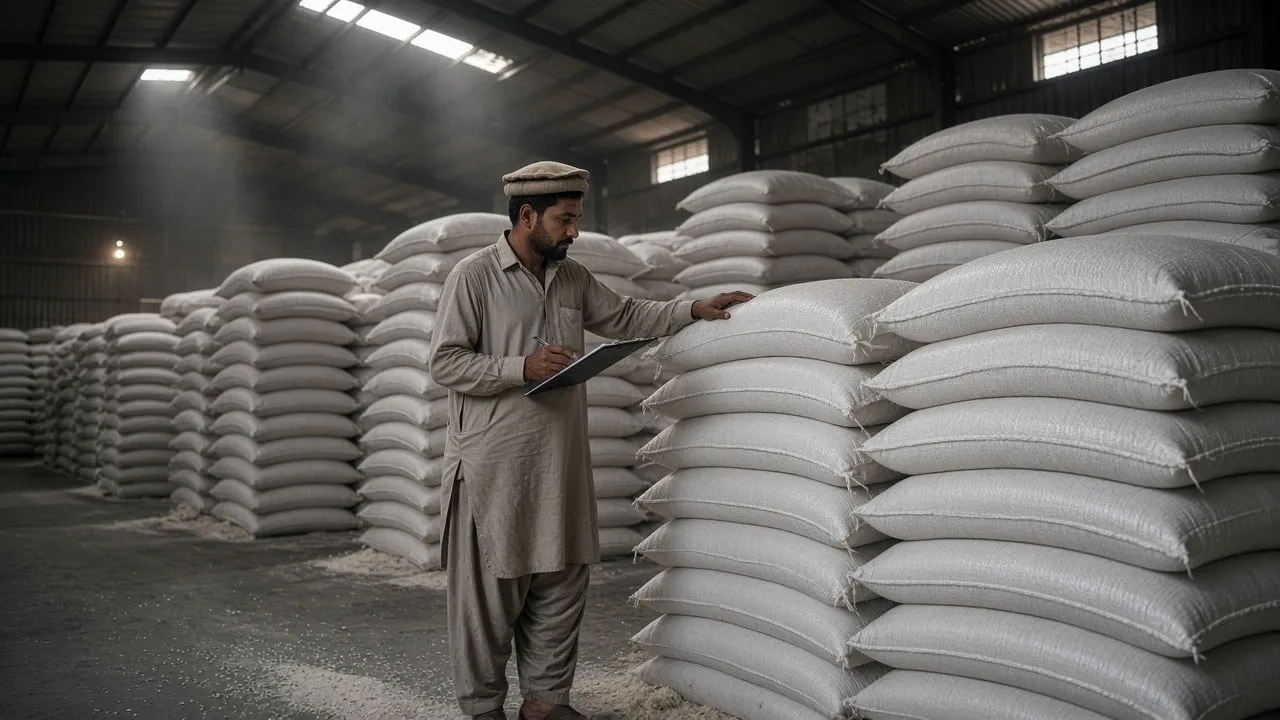
Pakistan's federal cabinet approved a national policy to deregulate the sugar sector on November 24, 2026, ending government-fixed prices and lifting many restrictions on sugarcane, mills and trade.
The move clears a long-standing IMF benchmark, opens the market to new investment and gives farmers the right to sell to any buyer at market rates.
Why the Policy Was Needed
Since June 2026 Pakistan had been in breach of a structural benchmark in its International Monetary Fund (IMF) programme. The benchmark required the removal of price controls on sugar, a sector that had been heavily regulated since the 1970s. Failure to meet the condition threatened to delay the IMF Executive Board meeting scheduled for December 11, 2026, and could have jeopardised the next tranche of financing.
Historically, the government set a ceiling for farmgate sugarcane prices and limited the number and capacity of sugar mills. Those controls were intended to protect farmers from price volatility and to prevent over-capacity in the industry, but they also discouraged private investment and led to frequent mismatches between supply and demand.
Key Changes in the New Sugar Policy
The cabinet's decision, recorded after a summary from the Industries and Production Division, introduces several concrete changes:
- Farmers can sell sugarcane to any buyer; prices will be set by market forces.
- Restrictions on planting zones and on most sugarcane varieties are removed, except for varieties listed on a negative list of banned strains.
- New sugar mills may be established without prior approval, and existing mills can expand capacity based on market demand.
- Mills may choose raw-material sources freely, rather than being tied to specific growers.
- Export subsidies are eliminated; a transparent mechanism for imports and exports will be introduced.
- Inter-provincial movement of sugar will be facilitated.
Safeguards remain for farmers, including third-party validation of weighing scales, a sucrose testing framework and a requirement that mills pay interest on delayed cane payments.
How the Deregulation Affects Farmers
Under the previous regime, farmers received a fixed price set by the Ministry of Finance, often below prevailing market rates during high-demand periods. The new policy gives them the ability to negotiate directly with mills, traders or exporters, potentially increasing farmgate earnings.
The removal of planting-zone limits means that growers in provinces such as Punjab, Sindh and Khyber Pakhtunkhwa can expand acreage without seeking special permission. However, the negative list of banned varieties remains to protect crop quality and prevent the spread of disease.
To protect smallholders, the policy mandates third-party verification of weighing equipment and introduces a sucrose testing protocol that will certify the quality of the cane before payment. If a mill delays payment, it must also pay interest, providing a financial incentive to settle accounts promptly.
Implications for Sugar Mills and Investors
By removing the requirement for government approval before setting up a new mill or expanding existing capacity, the policy aims to attract private capital. Investors can now plan projects based on projected demand rather than waiting for bureaucratic clearance.
Mills will be able to source raw material from any region, allowing them to optimise logistics and reduce transport costs. The freedom to adjust production levels in response to market signals should improve overall efficiency and reduce the risk of excess inventory.
In addition, the policy promises a predictable and transparent mechanism for sugar imports and exports. While export subsidies are being phased out, the new framework is expected to streamline customs procedures and provide clearer price signals for exporters.
Financing and Mechanisation Measures
The cabinet also announced steps to improve access to financing for both farmers and mills. A farm-mechanisation scheme will be promoted to raise productivity, encouraging the use of harvesters, tractors and other equipment that can lower labour costs.
To support a market-based pricing system, the government will work toward mandatory ethanol blending and the development of commodity markets for sugar. A transparent commodity exchange would allow price discovery based on supply-demand dynamics, further reducing the need for direct price controls.
What Remains Under Government Control
Although most price and capacity controls are being lifted, the state will retain authority over buffer stock management. The government will continue to monitor data on sugarcane production, sugar output and market availability to ensure that strategic reserves can be used in case of sudden shortages.
Transitional arrangements are also built into the policy for the current crushing season, giving mills and farmers a short adjustment period before the full deregulated regime takes effect.
Broader Economic Impact
Analysts expect the deregulation to stimulate competition, attract foreign direct investment and increase export volumes. A more efficient sugar sector could improve Pakistan's trade balance, especially as global sugar prices have been volatile since 2023.
For the broader economy, meeting the IMF benchmark removes a major uncertainty that had been weighing on the country's credit outlook. Successful implementation could pave the way for the next disbursement of IMF funds, which are earmarked for fiscal consolidation and structural reforms.
Next Steps and Timeline
The policy will be formally published in the Gazette within the next two weeks. After publication, ministries will issue detailed guidelines on the weighing-scale verification, sucrose testing and interest-payment calculations.
Stakeholder workshops are scheduled for early December to train mill operators and farmer cooperatives on the new procedures. The IMF Executive Board meeting on December 11 will review Pakistan's compliance with the benchmark, and a formal assessment is expected shortly thereafter.
Watch for announcements from the Ministry of Finance on the timeline for phasing out export subsidies and from the State Bank of Pakistan on any credit facilities linked to the farm-mechanisation scheme.
Overall, the deregulation marks a decisive shift from a command-driven model to a market-oriented framework, with the potential to reshape Pakistan's sugar industry for the next decade.