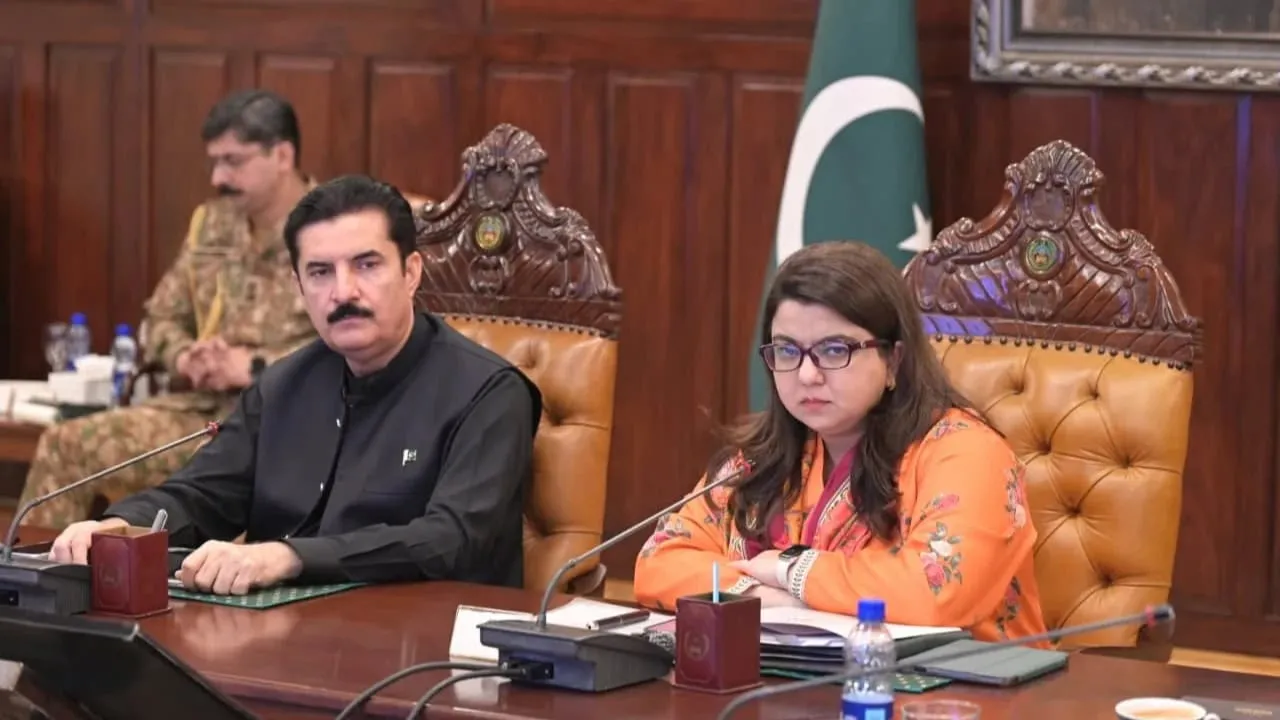
The Federal Government has committed to providing complete support to Khyber Pakhtunkhwa in developing its digitalization and IT infrastructure. The announcement followed a high-level meeting held at the Governor House in Peshawar, where KP Governor Faisal Karim Kundi and Federal Minister for IT and Telecommunication Shaza Fatima Khawaja co-chaired the session. The meeting brought together key leadership to discuss the comprehensive Digital Master Plan and the National Digital Commission. Attendees included PDA Chairman Dr. Sohail, PSEB CEO Faisal Jady, Ignite CEO Bilal Abbasi, and KP Chief Secretary Dr. Fakhar Alam Irfan.
The joint session focused on bridging technological gaps between regions and establishing a unified digital framework across the country. Officials reviewed ongoing projects and discussed administrative strategies to accelerate technology adoption. The commitment from federal authorities marks a direct step toward integrating regional administrative units into a national network. Regional stakeholders expressed optimism that the partnership will address long-standing technological challenges in the area.
Connecting Provinces Through a Central Hub
During the briefing, Shaza Fatima and Dr. Sohail detailed the Digital Nation Pakistan and National Digital Master Plan initiatives. The government is currently connecting all provinces to a central digital infrastructure. This integration aligns with the Prime Minister's Digital Pakistan vision. The centralized One Window System will provide citizens with easy access to economic and social facilities. The digital ecosystem will improve service delivery across the business, health, and education sectors.
The centralization strategy aims to eliminate bureaucratic hurdles that traditionally slow down public service delivery. By merging disparate administrative databases into a single interface, citizens can interact with government departments more efficiently. Healthcare providers and educational institutions will also benefit from streamlined data sharing and digital record-keeping. Business owners will find it easier to register enterprises, apply for licenses, and pay taxes through the unified portal.
Representation in the National Digital Commission
The federal government has given all four provinces active representation in the National Digital Commission. This inclusion ensures that regional authorities retain a voice in national policy formulation and resource allocation. At present, the federal government manages 500 active digital platforms nationwide. Interestingly, 150 of these functional platforms operate directly within KP, demonstrating a substantial existing footprint of digital services in the region.
Having provincial representation helps tailor federal policies to local needs rather than imposing a uniform model. The National Digital Commission meets regularly to oversee the deployment of digital assets and monitor cybersecurity standards. Local administrators can report technical bottlenecks directly to federal overseers through this institutional channel. The ongoing collaboration prevents duplication of effort and maximizes the return on public investments in technology.
Upskilling Youth in AI and Startups
Minister Shaza Fatima assured complete federal support to resolve the issues facing the KPK IT sector and digital infrastructure. She revealed that the Digital Skills program has already successfully trained 800,000 youth across the province. The government will now launch specialized training programs based on the Prime Minister's strict directives. Young people in the province will receive modern training in Artificial Intelligence and small business startups. This initiative will allow young men and women to secure online employment opportunities from their homes.
In response, Governor Faisal Karim Kundi formally thanked the Prime Minister and the IT Ministry. He stated that these federal initiatives will play a vital role in making the province's youth economically independent. He also reiterated the provincial government's commitment to supporting these federal digital reforms.
The shift toward advanced technologies like Artificial Intelligence addresses the changing demands of the global labor market. Freelancing and remote digital work have grown substantially, offering viable income streams for regions with high graduate unemployment. Specialized bootcamps and certification courses are designed to bridge the gap between traditional university curricula and industry requirements. Mentorship programs attached to these initiatives help participants translate raw technical skills into viable business ventures.
Minister Visits NIC Peshawar
Following the meeting, Shaza Fatima visited the National Incubation Center in Peshawar. She met extensively with the young men and women receiving technical training. During her visit, she reviewed their modern technical projects and emerging startups. The Minister praised the talented efforts of these young innovators.
The National Incubation Center serves as a physical incubator for early-stage technology companies, providing workspace, high-speed internet, and legal guidance. Startups operating out of the Peshawar facility focus on various sectors, including agriculture technology, education technology, and e-commerce. Direct interaction between government ministers and resident entrepreneurs helps policymakers understand practical challenges on the ground. Such visits often result in targeted grants, policy adjustments, and networking opportunities for promising founders.
The Broader Impact of Digital Transformation in Pakistan
The federal push for digitalization carries significant economic implications for underserved regions. Expanding broadband connectivity and digital literacy helps decentralize economic activity away from major metropolitan centers. Citizens in smaller towns and rural districts can access banking, government documentation, and educational resources without traveling long distances. This reduction in transaction costs benefits low-income households and small business operators alike.
Information technology exports represent a growing share of the national economy. By investing in regional talent hubs like Peshawar, the country can tap into previously underutilized human capital. Training programs focused on modern software development, data analytics, and digital marketing prepare the workforce for international remote contracts. Sustained cooperation between federal ministries and provincial governments remains essential for maintaining momentum in the digital sector.