Finland and Pakistan Expand Economic Partnership Into Electric Vehicles
Pakistan and Finland are set to deepen cooperation in electric vehicle manufacturing, as the two countries look to give a new dimension to their economic partnership after completing 75 years of diplomatic relations. This bilateral engagement marks a significant diplomatic milestone, as both nations seek to expand their cooperation beyond traditional trade sectors into advanced industrial technologies and sustainable energy infrastructure.
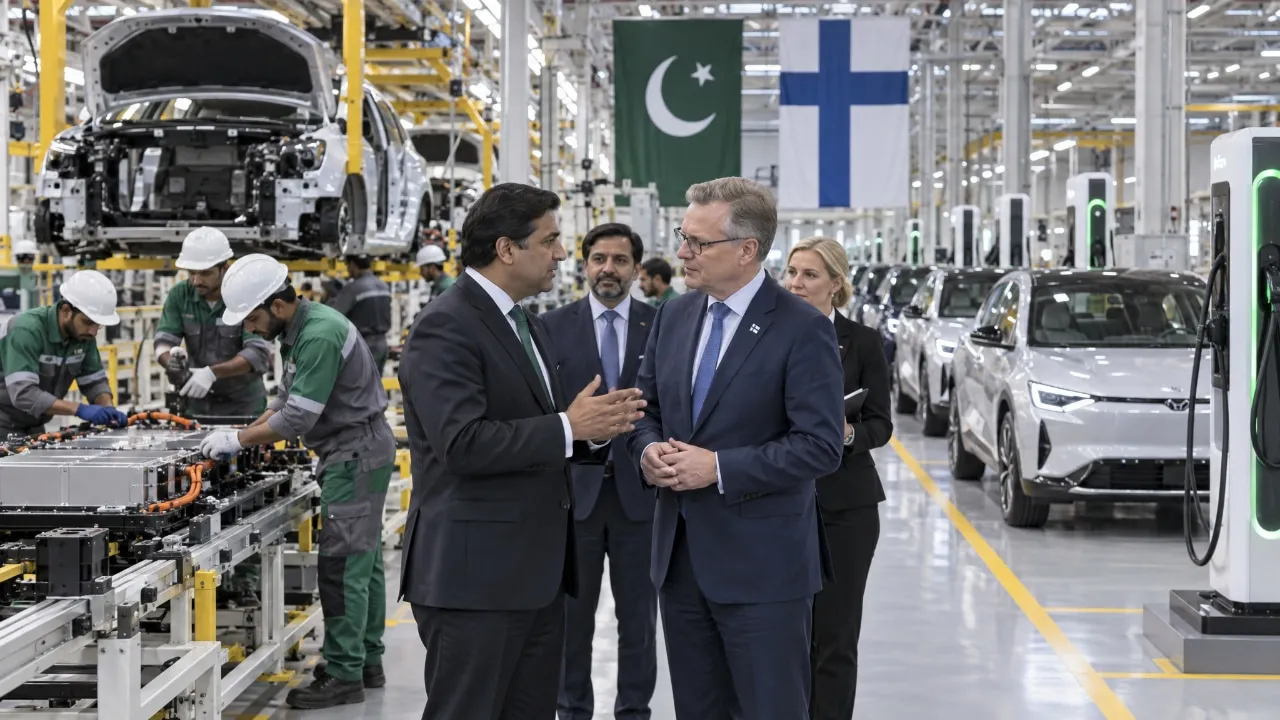
The development came during a meeting between Adviser to the Prime Minister on Industries and Production Haroon Akhtar Khan and Finland's Under-Secretary of State for International Trade Jarno Syrjälä, where trade and industrial cooperation, investment and the promotion of modern technology were discussed. The high-level discussions aimed to align the industrial strategies of both nations, creating pathways for European technological expertise to enter the South Asian market.
EV Technology at the Centre of Bilateral Talks
Haroon Akhtar Khan said Pakistan is seeking cooperation with Finland in electric vehicle technology, battery storage, minerals, renewable energy and modern manufacturing. By targeting these specific sectors, the government hopes to modernize its industrial base and reduce the heavy economic burden of imported fossil fuels.
He said Pakistan is building a business-friendly environment through regulatory reforms, and that the National Industrial Policy, National Tariff Policy, New Energy Vehicle Policy and Battery Energy Storage System are the foundation of the country's industrial transformation. These policies are designed to attract foreign direct investment by offering structured regulatory frameworks and incentives for sustainable manufacturing operations.
Finnish Interest in Pakistan Clean Energy Markets
The Finnish Under-Secretary expressed interest in cooperation and investment opportunities in Pakistan, signalling Finland's willingness to support the country's electric vehicle and clean energy ambitions. Finnish firms possess advanced technological capabilities in cold-weather battery performance, sustainable mineral extraction, and power grid management, which align well with the stated goals of the Pakistani administration.
Both countries agreed to strengthen their economic partnership across these sectors, with electric vehicle manufacturing emerging as a key area of collaboration. This consensus reflects a shared understanding that modern transportation networks must transition toward electrification to meet global environmental standards and domestic energy security needs.
Background on Pakistan and Finland Diplomatic Relations
The diplomatic relationship between Pakistan and Finland spans over seven decades, originating shortly after Pakistan gained independence in 1947. Over the past 75 years, bilateral interactions have typically focused on traditional goods, education, and development assistance, but recent global economic shifts have encouraged both governments to prioritize technology transfer and industrial modernization.
Diplomatic missions from both countries have frequently organized trade delegations to explore untapped opportunities in telecommunications, energy, and machinery. The recent anniversary serves as a strategic juncture to pivot toward green technology, reflecting contemporary global demands for climate action and sustainable economic growth.
Understanding the New Energy Vehicle Policy and Industrial Reforms
The institutional framework underpinning this new partnership relies heavily on domestic policy instruments introduced by the Ministry of Industries and Production. The New Energy Vehicle Policy acts as the primary regulatory guide for introducing electric cars, two-wheelers, and commercial transport to local roads, offering tax exemptions and customs relief for machinery imports.
Complementing this is the Battery Energy Storage System framework, which regulates the deployment of large-scale power storage units necessary to stabilize power grids reliant on intermittent renewable sources like solar and wind. Furthermore, the National Industrial Policy and National Tariff Policy work in tandem to rationalize import duties on raw materials while protecting domestic manufacturing sectors from unfair external competition.
Economic Impact on Local Businesses and Consumers
The push for electric vehicle manufacturing is expected to alter the local automotive landscape by reducing reliance on imported petroleum products and cutting carbon emissions in major urban centers. For local businesses, partnering with Finnish firms offers access to advanced engineering standards, technical training programs, and joint venture opportunities that can elevate the competitiveness of domestic enterprises.
Consumers stand to benefit over the long term through cleaner air quality, potentially lower operational costs for personal transport, and the eventual availability of locally assembled electric vehicles that are more affordable than fully imported models. Small and medium enterprises specializing in auto parts manufacturing may also find new growth avenues by adapting their production lines to supply components for electric motors and battery packs.
What Comes Next for Pakistan Finland Industrial Cooperation
Following the recent high-level meeting, government officials from both nations are expected to establish working groups comprising technical experts and trade representatives to finalize the operational details of the planned agreements. These committees will review regulatory harmonization, facilitate business-to-business matchmaking between Finnish technology providers and Pakistani industrialists, and identify specific pilot projects in renewable energy and battery storage.
Observers and industry stakeholders should monitor upcoming bilateral trade forums and policy announcements from the Ministry of Industries and Production for updates regarding joint manufacturing ventures and formal Memorandums of Understanding. The successful implementation of these initiatives will depend on the consistent application of regulatory reforms and the ability of both governments to translate high-level diplomatic commitments into actionable commercial projects.





