Numerous businesses outside the technology sector are beginning to reevaluate their artificial intelligence budgets on October 24, according to a new report from Torsten Slok, chief economist at Apollo Global Management, because the technology has not yet provided clear financial gains for them.
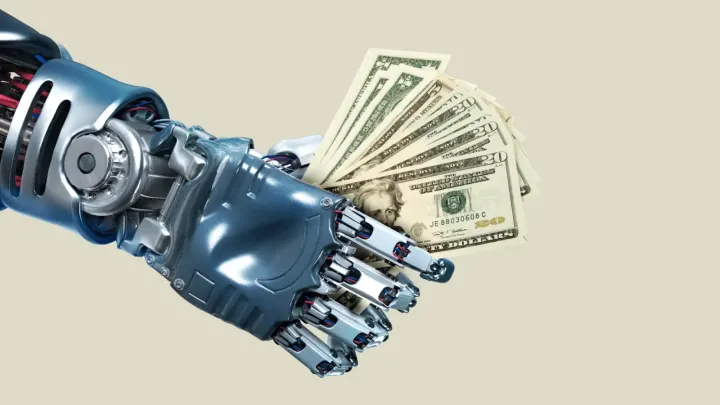
Rather than treating artificial intelligence as a growth driver, a rising number of enterprises now view the technology as an additional expense that hurts their profit margins.
Why Companies Are Pulling Back
Slok stated that mainstream corporate America is scaling back its artificial intelligence investments because the technology shows no noticeable effect on financial results.
Firms increasingly treat token spending, which is money spent on using artificial intelligence models, as an expense center rather than an investment that stimulates expansion.
He pointed out that most businesses outside the tech industry lack any need for the newest and most sophisticated artificial intelligence models, and they refuse to pay top dollar for them.
Meanwhile, venture-backed startups keep increasing their spending on artificial intelligence services.
Figures from fintech firm Ramp, referenced in the study, indicate that artificial intelligence spending is heavily concentrated. The top 10% of businesses make up 95.6% of spending on OpenAI and Anthropic, alongside 99.5% of spending on model serving and inference.
Slok mentioned that as long as artificial intelligence usage and expenditures remain limited to a minor sector of the economy, the wider economic impacts of the technology will stay very constrained.
This development unfolds while several major technology corporations continue investing heavily in the technology. Earlier in the year, artificial intelligence expenditures by Meta eliminated 91% of its free cash flow.
AI Cannot Replace Human Judgment
Slok also raised doubts about whether less expensive and more capable artificial intelligence models will automatically enable businesses to generate higher earnings.
He characterized artificial intelligence as an excellent calculator, noting that corporate intelligence primarily involves judgment. Such judgment relies on context, and the correct response can change depending on the person or model being consulted.
In the view of Slok, artificial intelligence lacks any comprehension of accountability, trust, workplace culture, unwritten rules, ethical trade-offs, or fairness.
These elements define a business reputation and ultimately dictate its revenue expansion and profit margins. Consequently, converting cheaper artificial intelligence into elevated revenues and earnings may prove more difficult than anticipated.
Previous Research Raised Similar Concerns
These conclusions mirror past studies that questioned whether the stampede to embrace artificial intelligence delivers results.
A study published in 2025 by the NANDA initiative at MIT revealed that roughly 95% of generative artificial intelligence pilot projects across businesses produced zero measurable effect on earnings.
Additional investigations have questioned whether widespread artificial intelligence adoption enhances workplace productivity, despite ongoing corporate investments in artificial intelligence tools and automation.
No Extra Profit Outside Big Tech
The analysis from Apollo examines the S&P 500 divided into two categories. One group consists of the Magnificent Seven, which includes Alphabet, Amazon, Apple, Meta, Microsoft, Nvidia, and Tesla. The second group comprises the remaining 493 enterprises within the index.
Worker revenue and profit margins are climbing for the Magnificent Seven. For the other 493 businesses, both metrics have remained unchanged.
Slok added that there remain zero indications of artificial intelligence accelerating productivity growth across the broader economy.
We noted previously that corporations are investing billions into artificial intelligence without generating any additional revenue from those efforts.
Per Slok, the ultimate trajectory of artificial intelligence will be determined by the S&P 493 rather than the Magnificent Seven. To date, he stated, no proof exists that revenue growth or profit margins are advancing outside the technology industry.