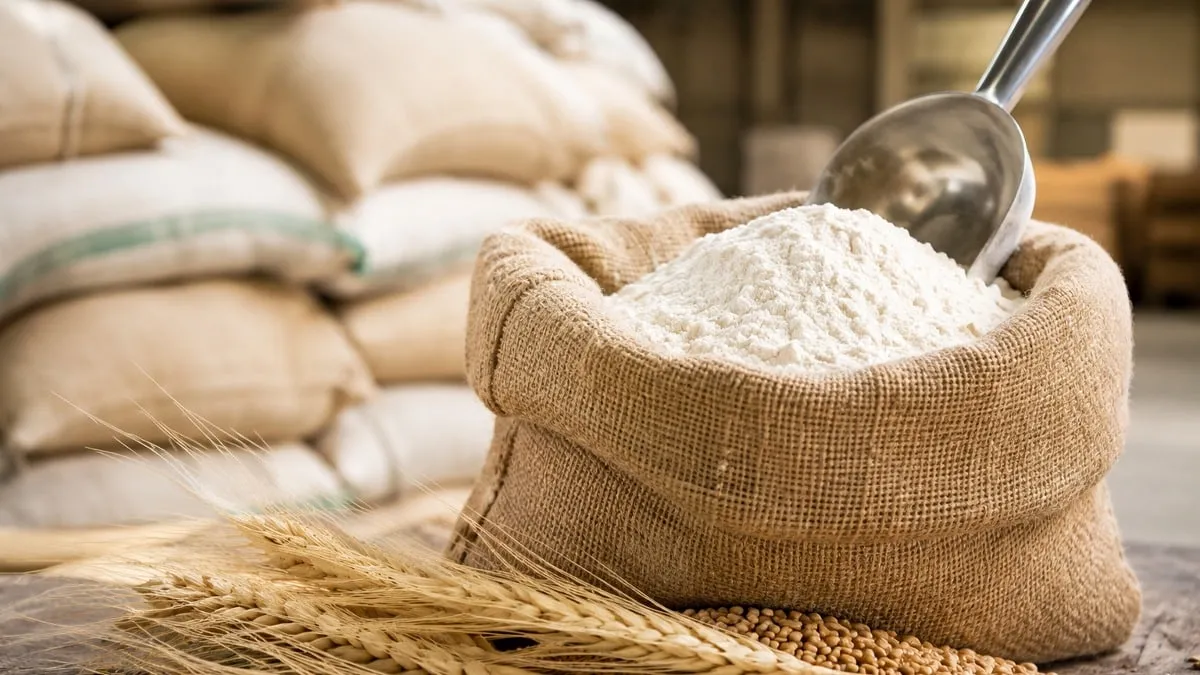
Pakistan's wheat crisis continues to push up food prices despite the arrival of more than 100,000 tonnes of imported grain since the last week of October. Retail flour prices have increased again, with sellers raising rates by Rs. 10 per kg amid higher prices charged by flour mills.
Retailers are now selling No. 2.5 flour at Rs. 180 per kg and fine flour at Rs. 200 per kg. The increases come after wheat prices in the open market climbed back to Rs. 140 per kg last week, reversing an earlier decline following the arrival of the first shipment.
Wheat prices initially fell from Rs. 140 to Rs. 130 per kg after a ship carrying 51,000 tonnes of imported wheat arrived on October 28. However, the relief proved short lived as grain prices recovered, prompting flour mills to increase rates across different varieties.
Cereal Association of Pakistan Chairman Muzammil Chappal said he had been warning the government about a potential shortage of 4 million tonnes since May. He said he had also urged authorities to allow private sector imports of at least 2 million tonnes, but his warnings had gone unheeded.
Why Flour Prices Are Rising Again
Flour mills had raised the prices of No. 2.5 flour, Maida, and fine flour to Rs. 8,100, Rs. 9,000, and Rs. 9,150 per 50 kg bag, respectively, from Rs. 7,800, Rs. 8,400, and Rs. 8,550. High-quality Chakki flour is selling for Rs. 200 per kg in the wholesale market, while retailers are charging Rs. 215. Millers had previously increased prices by Rs. 20 per kg before temporarily reducing rates ahead of imported wheat shipments. However, prices have started rising again amid what traders describe as inadequate government oversight.
Regional Disparities: Karachi's Struggle
Some of Karachi's price increases have been attributed to the delay in imported wheat supplies reaching Sindh. Local flour mills are struggling with limited open-market supplies after wheat arrivals from Punjab stopped. A flour miller who asked to remain anonymous warned that wheat prices had also increased in Punjab and Khyber Pakhtunkhwa despite the imported shipments, and that each mill is setting rates according to its own wheat stocks and market conditions.
Scale of the Shortfall
The country recorded a 4.3 percent increase in wheat production to 29.61 million tonnes in FY26, compared with 28.40 million tonnes in the previous fiscal year, according to the Economic Survey FY26. However, Chappal estimated annual wheat demand at 31 million to 32 million tonnes, leaving a potential supply gap of 3 million to 4 million tonnes.
He said the government needed to account for rising grain demand as Pakistan's population grows by more than 3 percent annually, despite the reported increase in domestic production. Wholesaler and trader Rauf Ibrahim said Pakistan needed at least 3 million tonnes of additional wheat to bridge the gap until the next crop enters markets between March and May 2027. He also criticized federal and provincial authorities for failing to launch effective campaigns against hoarding and the illegal diversion of wheat stocks since the FY26 harvest reached markets.
Imported Wheat: Not Enough to Close the Gap
The anonymous miller warned that imported wheat would be insufficient to meet demand, noting that Karachi's flour mills alone require around 80,000 bags of 100 kg wheat daily for grinding. The current import volume of just over 100,000 tonnes, spread over several weeks, cannot sustain that daily requirement.
Ibrahim said the shortage was placing additional pressure on low and middle-income households and warned that consumers could struggle to afford a 10 kg flour bag costing Rs. 2,000. He urged authorities to inspect flour mill inventories, which he said typically include one to two months of wheat stocks.
Impact on Everyday Consumers
Meanwhile, tandoor operators are facing higher costs for both flour and liquefied petroleum gas (LPG). Despite the pressure, they have so far maintained prices at Rs. 20 for Chapati, Rs. 30 to Rs. 35 for Naan, Rs. 100 to Rs. 110 for Sheermal and Taftaan, and Rs. 90 to Rs. 100 for Qulcha. These modest price caps mask the underlying cost pressures that could soon be passed on to diners.
What the Government Can Do
Experts suggest three immediate steps: (1) expedite clearance of pending wheat shipments, (2) authorize private-sector imports of up to 2 million tonnes as urged by the Cereal Association, and (3) enforce strict monitoring of wheat stocks to prevent hoarding. The Ministry of National Food Security and Research has not yet announced a concrete plan, but stakeholders expect a policy brief within the next week.
Looking Ahead
The next wheat harvest is expected to be harvested by March 2027, with market entry projected for April-May 2027. Until then, price volatility is likely to continue, especially if imported shipments remain delayed or if domestic production falls short of the 31-32 million-tonne demand estimate.
Consumers, especially those in low-income brackets, should monitor weekly market bulletins for price changes and consider bulk purchases when prices temporarily dip. Traders advise keeping an eye on government announcements regarding import licensing, as any relaxation could ease the current pressure.