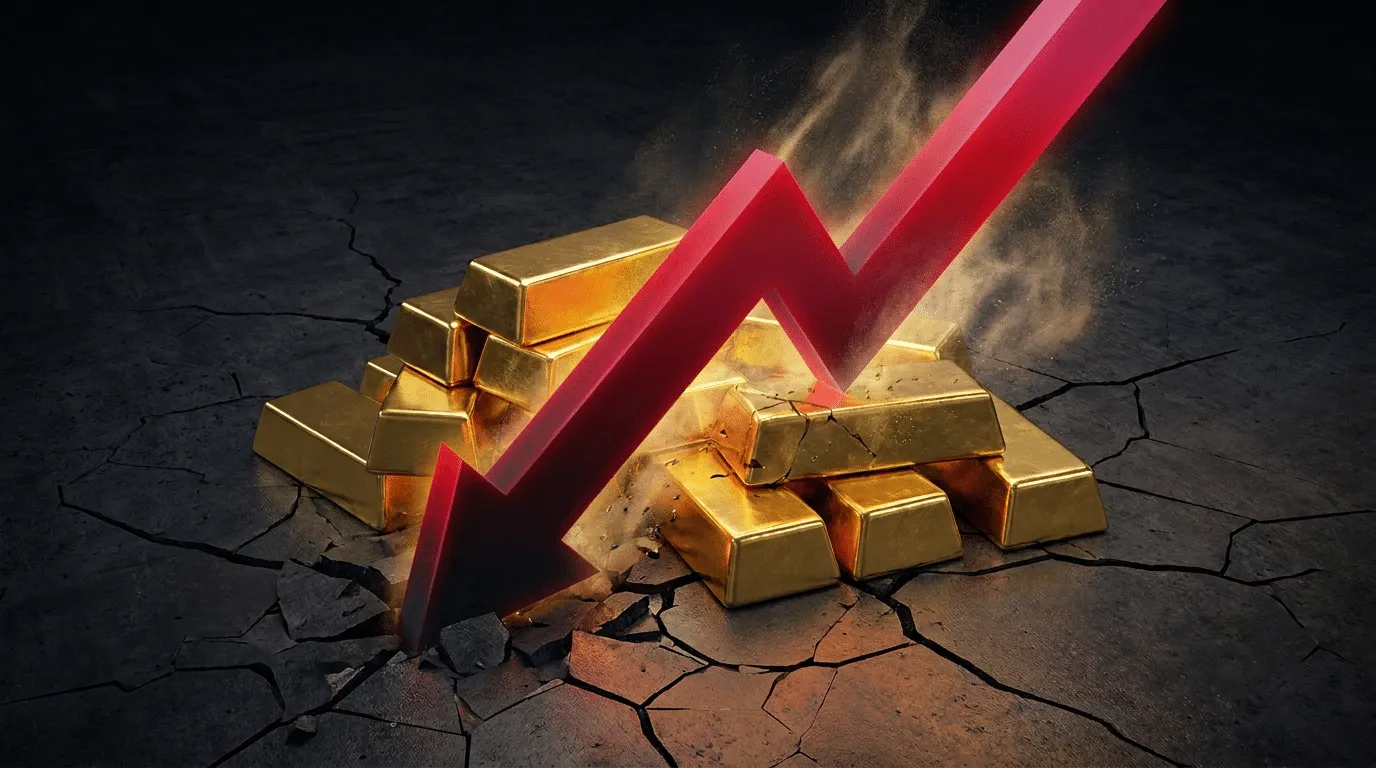
Gold Prices in Pakistan Drop Below Rs. 400000 Per Tola
Gold prices in Pakistan dropped sharply on Wednesday, with the per-tola rate falling by Rs. 10,000 to Rs. 398,936 amid a decline in international gold prices. This significant reduction marks a notable shift in the local bullion market, bringing relief to some buyers while impacting investors who hold physical assets. Market participants closely monitor these daily shifts as domestic rates react swiftly to global economic indicators and currency fluctuations.
Gold has fallen below Rs. 400,000 per tola for the first time since September 2025. On September 22, 2025, the per-tola price of 24-karat gold stood at Rs. 393,700. This historical comparison illustrates the recent volatility and the upward trajectory the precious metal maintained over the preceding months before this latest correction.
According to rates issued by the All-Pakistan Gems and Jewellers Sarafa Association (APGJSA), the price of 10-gram gold also decreased by Rs. 8,573 to Rs. 342,023. On Tuesday, gold prices remained unchanged at Rs. 408,936 per tola before the sharp downward adjustment took effect across commercial hubs in the country.
Understanding the International Market Influence on Local Rates
The domestic pricing structure in Pakistan is heavily tethered to global bullion trends. In the international market, gold fell by $100 to settle at $3,764 per ounce. Because Pakistan imports a significant portion of its precious metal to meet domestic demand, international price contractions translate directly into local market adjustments.
Traders and analysts look at global supply and demand dynamics, U.S. dollar strength, and macroeconomic policies to understand international price movements. When overseas bullion retreats, local associations like APGJSA update domestic rate sheets to reflect the new economic reality. This ensures that local commerce aligns with global valuation standards.
Precious metals serve as a primary hedge against inflation for many citizens. Global economic shifts frequently trigger rapid adjustments in both international and domestic markets. Consequently, local jewellers experience immediate changes in customer footfall whenever international rates register large gains or losses.
Impact on Silver Prices and Alternative Precious Metals
Alongside the dramatic decline in gold valuations, other precious metals also experienced downward pressure. Silver lost Rs. 180 to settle at Rs. 5,048 per tola on Wednesday. Silver often moves in tandem with gold, serving as an accessible alternative investment for retail buyers and industrial users alike.
Retail buyers frequently monitor silver when gold becomes cost-prohibitive. However, a drop in both metals indicates broad market sentiment rather than a localized anomaly. Industrial demand for silver also influences its local pricing structure, connecting retail Sarafa Association rates to broader manufacturing needs.
Jewellers and bullion traders analyze the silver-to-gold ratio to gauge market health. While gold commands the highest value and attracts major investors, silver remains a staple for traditional jewelry and smaller-scale savings. Both commodities saw coordinated downward movement during the Wednesday trading session.
The Role of the All-Pakistan Gems and Jewellers Sarafa Association
The All-Pakistan Gems and Jewellers Sarafa Association plays a central role in establishing daily market rates across the country. By aggregating international spot prices and domestic currency values, the association publishes official rate sheets that guide transactions in cities like Karachi, Lahore, and Islamabad.
Jewelry businesses and individual investors rely on these official figures to buy and sell safely. Transparency in pricing prevents market manipulation and provides a standardized benchmark for consumers. When international rates experience sharp drops, the association promptly calculates the local impact to maintain market integrity.
Consumers visiting local markets consult these published rates before engaging in transactions. The rapid transmission of price updates ensures that buyers and sellers operate under identical conditions. Wednesday's update was distributed to all regional bodies following the close of international trading desks.
What the Price Drop Means for Consumers and Investors
The falling cost of precious metals alters purchasing strategies for households preparing for weddings and other cultural events. Gold holds immense cultural and financial significance in the region, traditionally functioning as a secure store of wealth and a gift during major family milestones. Lower per-tola rates reduce the immediate financial barrier for families purchasing ornaments.
Conversely, investors who accumulated physical gold at higher price points face temporary devaluation of their holdings. Bullion investment requires a long-term perspective to weather short-term corrections driven by global market volatility. Financial advisors generally recommend maintaining a diversified portfolio rather than concentrating assets entirely in precious metals.
Market watchers will continue observing international economic indicators to determine whether the downward trend will persist or reverse in the coming days. Retail buyers frequently use price dips as an entry point to acquire physical gold, potentially increasing local demand despite the bearish global outlook.





