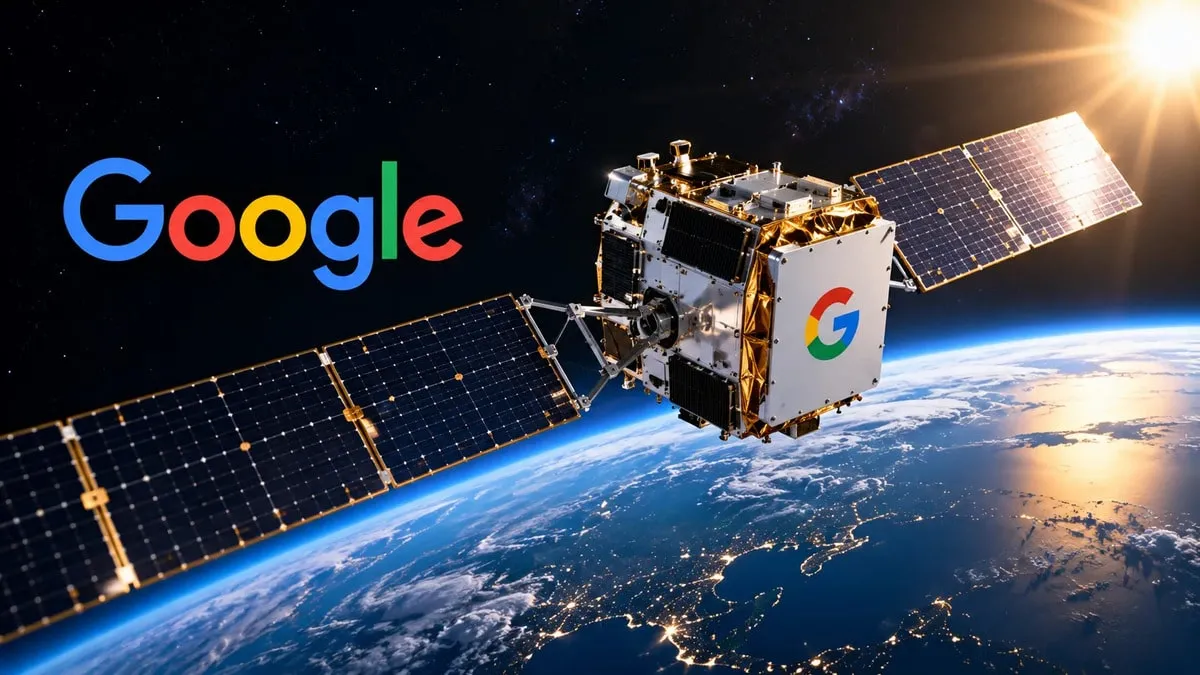
Google successfully executed an artificial intelligence model aboard an orbiting satellite and gathered the initial reply on Earth, advancing its research into off-planet computing infrastructure. This milestone falls under Project Suncatcher, an initiative studying whether machine learning operations can run in orbit rather than depending strictly on terrestrial facilities. Google revealed the successful test on October 30, confirming that an experimental spacecraft processed an AI query and transmitted the output home. The satellite lifted off on October 1 via a SpaceX rocket and underwent testing over the following weeks.
Google AI Sends Its First Message From Space
During the trial, engineers transmitted a prompt from the ground to the satellite, asking the onboard Gemma 4 AI model to compose a brief verse about orbiting the planet. The system handled the task using Google's Tensor Processing Unit, a specialized processor built for machine learning workloads. While flying above Svalbard, Norway, the spacecraft relayed the answer down to Earth. The artificial intelligence produced a three-line poem reading, "Blue marble below, Data streams in silent grace, Starlight feeds my core." Google characterized the successful transmission as its Hello World milestone, representing the first complete machine learning reply generated by a data center-class processor running in orbit. Following this demonstration, the team ran further tests involving more poems and inquiries about the spacecraft status, proving the hardware functions correctly in space and communicates back successfully.
Why Google Wants to Put AI Data Centers in Space
Google is investigating space-based computing setups to address the surging need for artificial intelligence capabilities. Machine learning facilities demand massive amounts of electricity to run processors and cooling systems. Project Suncatcher investigates whether solar-powered satellites might eventually manage some computing operations by harvesting sunlight in space and lowering the strain on terrestrial power grids. Running computers in orbit introduces significant difficulties, as hardware must endure severe temperature fluctuations and radiation. The current spacecraft helps scientists evaluate whether these processors function dependably in such environments, though Google has not disclosed commercial plans for space-based computing.
Google Plans Two More Connected Satellites in 2027
The next phase involves evaluating processor performance over extended periods exposed to radiation and thermal shifts. These evaluations will establish whether the chips maintain reliability during long missions. Google schedules its subsequent major objective for 2027 by deploying two linked satellites to test how multiple spacecraft cooperate on machine learning workloads. The organization is also examining logistical hurdles regarding hardware connectivity and power management in space. While Project Suncatcher stays in the research phase, the successful trial proves Google hardware can process AI tasks in orbit and return the results to Earth.