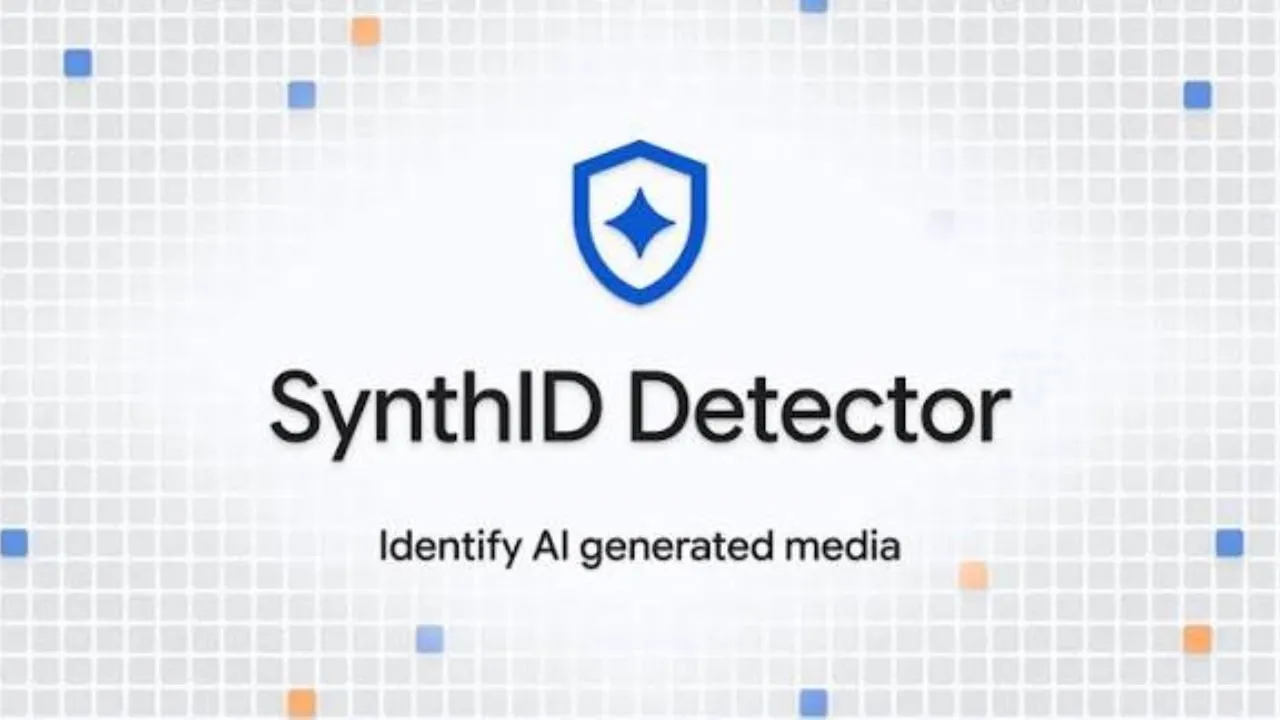
Google made its SynthID Detector tool available to the general public after spending over a year in limited testing. Users can now go to synthid.com to verify if an audio, video, or picture file holds a hidden artificial intelligence watermark, and the system provides answers in seconds.
The company initially revealed SynthID Detector during I/O 2025 as a restricted preview aimed at media professionals, researchers, and reporters. Verification through SynthID later reached Google Search in May 2026, and Chrome integration arrived weeks afterward. The public release launched on October 7, 2026, granting free access to all users for the first time.
This scanner operates by reviewing uploaded media for a concealed watermark placed by artificial intelligence platforms during generation. Accepted formats comprise JPG, PNG, WEBP, GIF, MP4, MOV, MP3, WAV, and FLAC. Google states these watermarks withstand compression, filters, speed adjustments, and cropping, meaning altered files still register detection.
SynthID extends beyond Google proprietary artificial intelligence instruments. Companies such as OpenAI, NVIDIA, ElevenLabs, and Kakao apply SynthID to mark their artificial intelligence media. Google reports that Apple support will arrive shortly, allowing the scanner to spot artificial intelligence material from various creators in a single location.
Statistics for the platform show substantial usage. Google reports watermarking more than 180 billion pictures and videos alongside 240,000 years of audio. The integrated verification mechanism processes over one million daily inquiries across Gemini, Search, and Chrome.
Google cautions that SynthID Detector is not a complete solution for spotting artificial intelligence. It only identifies files bearing a SynthID watermark, meaning unmarked material escapes detection. A negative scan also fails to confirm human origin, with Google describing the system as a clue rather than a verdict. Individuals receive about 10 checks daily to stop attempts at finding ways to strip watermarks.