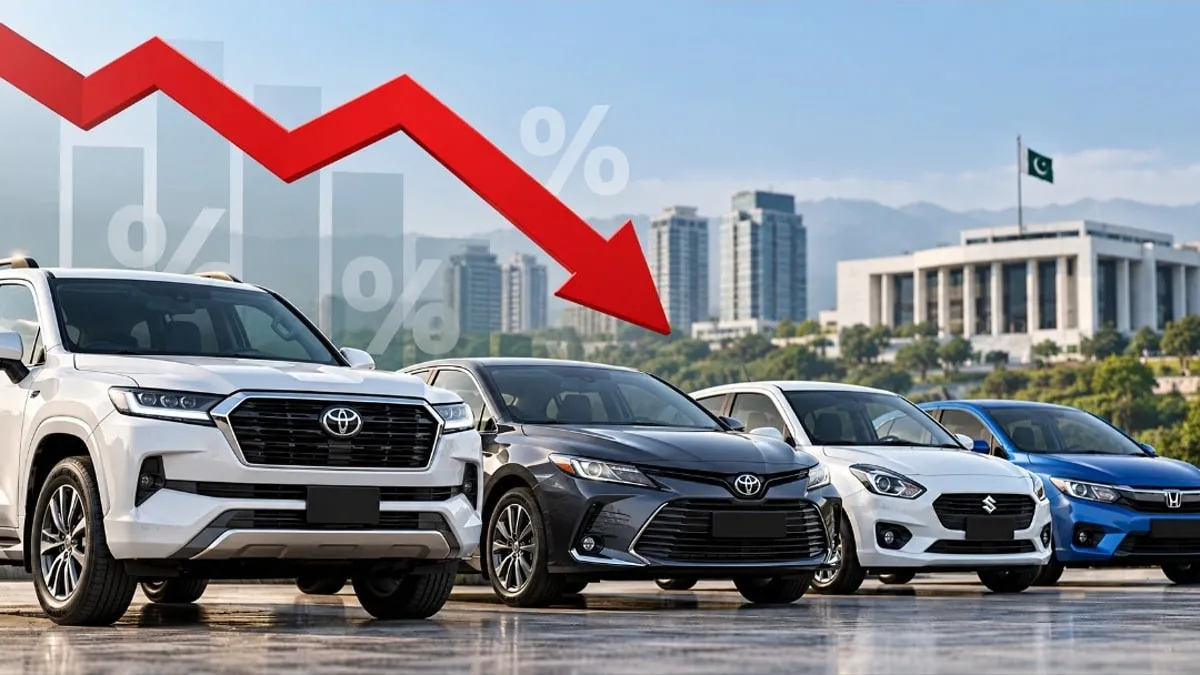
Pakistan's proposed Auto Policy 2026-31 may cause price drops in multiple vehicle segments, with certain models dropping by more than 20 percent while other vehicles face potential price hikes.
Early industry projections indicate manufacturers might cut standard petrol car costs by roughly 8 percent to 10 percent, alongside a 9 percent decrease for hybrid electric vehicles. Plug-in hybrid electric vehicles might experience steeper cuts surpassing 20 percent.
Battery electric vehicles carrying import values under $15,000 might drop by about 22 percent in price, whereas costlier battery electric vehicles could experience cuts near 8 percent.
Conversely, range-extended electric vehicles might rise in price by roughly 3 percent under the new tax framework. Topline Securities reported that the current draft keeps a 1 percent general sales tax for battery electric vehicles while suggesting 9 percent for plug-in hybrids and 6 percent for range-extended vehicles.
An earlier draft suggested a flat 1 percent general sales tax across all new energy vehicles, and the past policy placed tax rates between 8.5 percent and 12.75 percent on plug-in hybrids.
Authorities additionally intend to lower tariffs on localized completely knocked-down parts from 25 percent down to 15 percent by fiscal year 2031. Topline Securities cautioned that this tariff cut might negatively impact domestic auto-parts makers, though strong market competition might push manufacturers to transfer savings to buyers.
At the same time, anticipation of reduced prices might lead customers to delay buying vehicles, which could slow down sales and cause uncertainty for car companies possessing current stock.