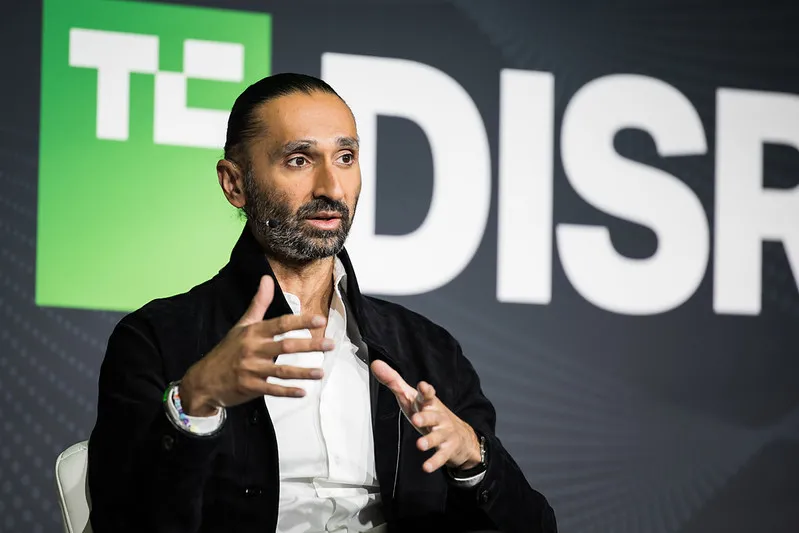
Private equity firm Blackstone is positioning itself at the heart of the artificial intelligence surge, as firm veteran Jas Khaira explained last week at TechCrunch Disrupt.
The company deploys funds through multiple strategies, which include providing large loans for data centers and backing frontier artificial intelligence models and applications.
Earlier this year, the firm established Blackstone N1 in San Francisco as a central office for its artificial intelligence projects. Jas Khaira leads this team after moving from New York to be close to the center of the technology shift.
Unlike previous technology waves like mobile or software-as-a-service, which permitted businesses to achieve scale with moderate funds, moving to artificial intelligence demands massive financial backing. That capital requirement explains why Blackstone, holding $1.3 trillion in assets under management, can play such an important part in this evolution.
Jas Khaira pointed out that Blackstone separates itself from standard venture capitalists by concentrating on compute financing and delivering flexible funding structures, spanning from debt to equity. The organization has invested heavily.
"We're the largest owner of compute outside of the hyperscalers today, whether it's investments in neo clouds, investments in data centers, and being able to use that compute strategically to support companies," Jas Khaira said.
For example, Blackstone N1 drove several compute agreements, such as Crux AI, a neocloud created with Google to market custom Tensor Processing Units, where Blackstone put in $5 billion. The firm also supported Etched, a four-year-old chip startup that drew investor interest. Neoclouds function as cloud providers renting out artificial intelligence graphics processing unit infrastructure.
Blackstone created a lending model that permitted massive loans to venture-backed neoclouds by evaluating customer contracts and using graphics processing units as security.
Blackstone completed its initial agreement of this type in 2023 with CoreWeave, soon after that neocloud watched demand surge following ChatGPT's release. CoreWeave held only $30 million of revenue and minimal profitability back then, according to Jas Khaira, yet requested a $2.3 billion loan from Blackstone.
CoreWeave borrowed against the value of its Nvidia graphics processing unit inventory, while Nvidia participated as an investor. Blackstone felt comfortable with the lending arrangement because CoreWeave held agreements with major clients like Microsoft.
That transaction quickly evolved into the standard for how Blackstone and alternative credit lenders supplied billions in additional debt to CoreWeave and competing neoclouds.
"One of the primary things that we're looking to is the nature of the customer. And if the customer is an investment-grade customer, let's say it's Microsoft or let's say it's Meta, the risk gets priced relative to that customer," Jas Khaira said.
Following the CoreWeave success, Blackstone completed other neocloud agreements, including co-leading a $10 billion credit facility alongside Coatue for Australian graphics processing unit provider Firmus earlier this year.
Jas Khaira noted that recent weeks brought attention to large debt totals held by these firms and other neocloud operators, causing worry. CoreWeave debt reached roughly $50 billion, leading Altimeter Capital founder Brad Gerstner to state in a CNBC interview that the collateral of graphics processing units no longer suffices for cheap debt.
Jas Khaira explained that credit market jitters arise from multiple elements. Interest rates climbed in September, and strong inflation hints that borrowing expenses will keep rising, alongside numerous artificial intelligence debt offerings.
"We're also seeing higher credit spreads," Jas Khaira said, noting lenders charge extra fees on top of elevated base rates to fund artificial intelligence buildout. "The cost of capital to price in debt for a Meta or a Microsoft has widened out," he added, mentioning that even technology giants pay more to borrow.
Rising debt expenses impacted the stock market, dropping CoreWeave shares over 20% recently, while Firmus canceled its planned initial public offering on the Australian Securities Exchange targeting a $30 billion valuation.
"Ultimately, the market wasn't there at that valuation, and so I think as a result, that deal didn't get done," Jas Khaira remarked concerning the canceled Firmus listing.
"The market is thinking what is the right price for neoclouds, what is the right price for these businesses in this moment when interest rates are moving up," he said.
Despite infrastructure provider pressures, artificial intelligence firms demand more compute for models, keeping data center construction active.
Jas Khaira rejected worries that debt accumulation might spark a credit crisis or economic crash. "This doesn't feel like something where you've got 2008 banks that are shaky credits," he stated.
He added that since most data centers serve hyperscalers, the supporting debt relies on the most creditworthy companies worldwide.
Apart from data centers, Blackstone assists corporate artificial intelligence adoption through a $1.5 billion joint venture named Ode with Anthropic, formed with Anthropic and Hellman & Friedman this year. Ode provides engineers to integrate artificial intelligence into operations, starting with Blackstone's 280 portfolio companies.
Asked about portfolio company gains, Jas Khaira admitted that return on investment exists but remains uneven, comparing technology adoption to a sawtooth pattern that can look like an oversupply before adoption catches up.