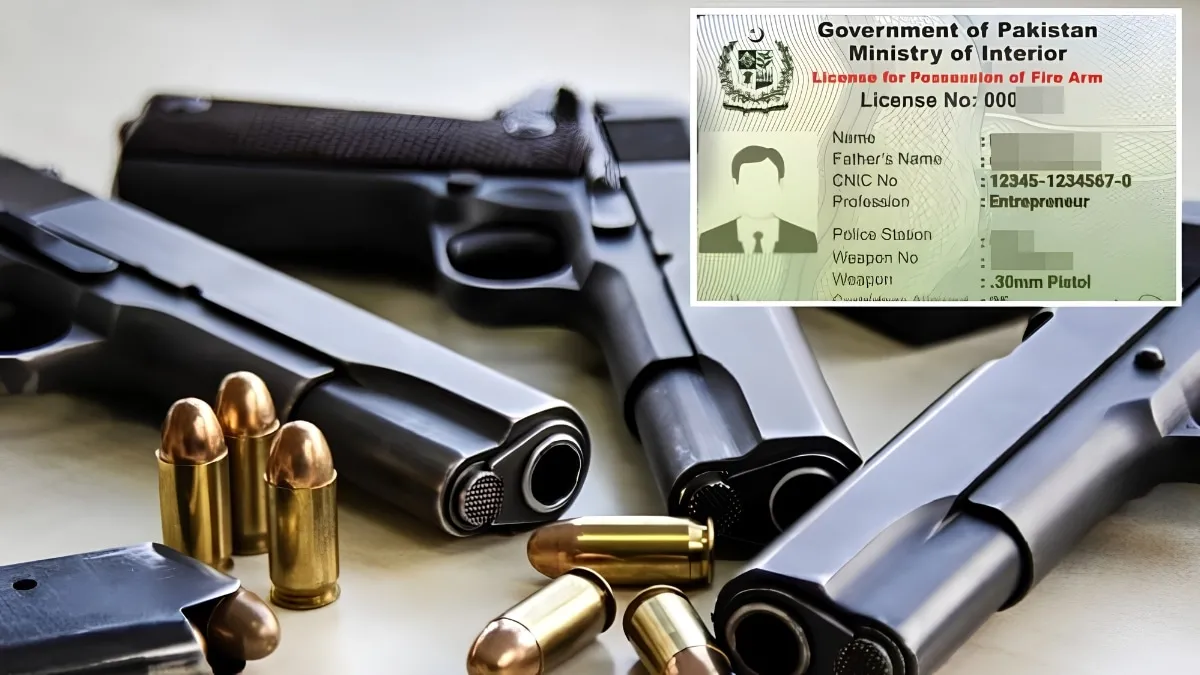
Federal Government Restricts Provincial Arms Licensing Powers
The federal government has barred provincial governments from issuing new All-Pakistan arms licenses and made federal revalidation mandatory for existing licenses that allow holders to carry firearms nationwide. This sweeping policy shift alters how firearm permits are regulated across the country, drawing a sharp line between national and regional jurisdictions. According to the Ministry of Interior, the authority to issue nationwide arms licenses rests exclusively with the federal government, while provinces can only issue licenses valid within their respective jurisdictions.
The directive alters longstanding administrative practices where provincial authorities occasionally issued permits with broader geographical scopes. By centralizing the issuance of nationwide permits, federal authorities aim to establish stricter oversight and uniformity regarding who can carry weapons across provincial boundaries. The Interior Ministry has formally communicated the decision to the chief secretaries and inspectors general of police of all four provinces, outlining the restrictions on provincial licensing powers and the requirements for existing license holders.
Mandatory Federal Revalidation for Existing All-Pakistan Arms Licenses
Under the new directive, all previously issued All-Pakistan arms licenses must undergo fresh examination and federal validation to retain their nationwide validity. Current holders of nationwide permits cannot rely on their existing documentation without taking steps to secure federal approval under the updated framework. This revalidation process is designed to filter out irregular permits and ensure that every document permitting cross-border firearm transport meets stringent central criteria.
Following successful verification, the National Database and Registration Authority will add new wording to the validated licenses. This physical or digital update on the documentation serves as proof that the permit has cleared the central review process. However, licenses that do not undergo the federal revalidation process will remain valid only within the province where they were originally issued, losing their nationwide utility.
Understanding the Role of the Ministry of Interior and Law Enforcement
The Ministry of Interior serves as the primary policymaker for internal security, border control, and civilian arms regulation in the country. By notifying the chief secretaries and inspectors general of police across all four provinces, the ministry has activated the administrative machinery required to enforce the new rules on the ground. Provincial police forces and local administrations must now align their verification procedures with the federal mandate.
Law enforcement agencies across provincial boundaries face the practical task of distinguishing between federally verified nationwide permits and restricted provincial permits. The clear distinction established between federally validated All-Pakistan arms licenses, which will remain valid nationwide, and provincial licenses, which will be restricted to their respective jurisdictions, helps police officers enforce the law during routine checks and security operations. Citizens carrying firearms outside their home province must ensure their documentation reflects the updated federal wording to avoid legal complications.
Operational Involvement of NADRA in License Verification
The National Database and Registration Authority plays a central technical role in implementing the updated arms licensing policy. NADRA maintains the centralized database for citizen records, identification cards, and various licensed privileges, including firearm permits. Once the Ministry of Interior clears an existing permit through the fresh examination process, NADRA handles the technical updating of the document.
The inclusion of new wording by NADRA on the validated licenses provides a tamper-resistant marker of federal approval. This integration prevents unauthorized duplication and ensures that the central database accurately reflects which permits possess true nationwide validity. License holders must interact with the designated administrative channels tied to NADRA processing centers to complete the mandatory revalidation steps before deadlines or enforcement actions take full effect.
Impact on Citizens, Businesses, and Regional Authorities
The policy change directly affects citizens who frequently travel across provincial borders for business, security, or personal reasons while carrying firearms. Individuals who previously held All-Pakistan permits must now submit their documents for fresh examination or accept that their carrying rights are confined to their home province. Security companies, private guards, and business travelers who rely on nationwide transit of protected assets must also review their operational readiness under the tighter federal rules.
Provincial governments lose their previous autonomy regarding nationwide permits, shifting administrative authority entirely to Islamabad. This centralization reduces the potential for conflicting local policies and closes loopholes where regional permits might have been interpreted too broadly during interstate travel. For ordinary citizens, the practical takeaway is the necessity of checking current permit documentation, understanding local jurisdictional limits, and preparing for the mandatory federal revalidation procedure managed through interior ministry guidelines and NADRA processing.





