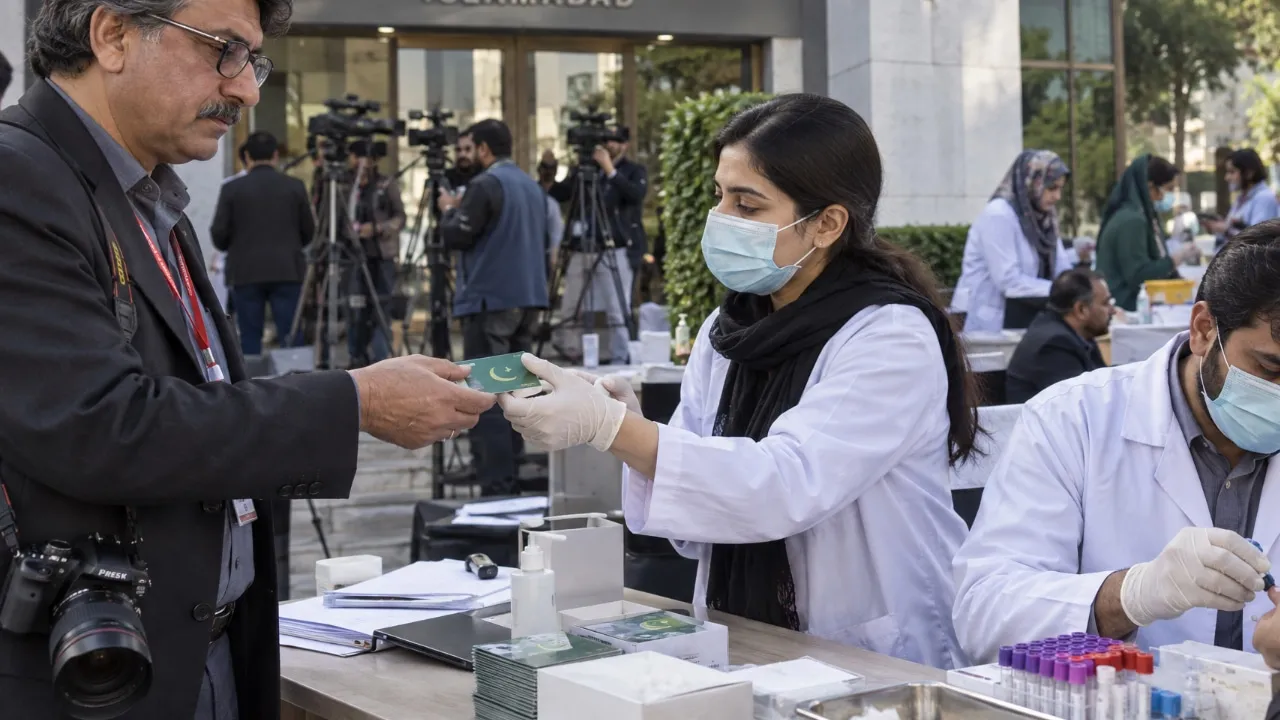
Federal Minister Announces Free Medical Treatment for Journalists
Federal Minister for Health Mustafa Kamal on Tuesday announced the relaunch of the Sehat Sahulat Card for journalists in Islamabad, under which free treatment will be provided at 15 private hospitals. This significant development aims to provide vital healthcare security to media personnel working in the capital, ensuring they have access to private medical facilities without financial distress.
Speaking to the media at the National Press Club after inaugurating a hepatitis screening camp, organized in collaboration with Akbar Niazi Teaching Hospital, the Minister said focal persons will be appointed at PIMS and Polyclinic to facilitate journalists, while facilities at both hospitals are being improved. The introduction of designated focal persons is expected to streamline administrative processes and reduce wait times for media workers seeking medical attention.
How Journalists Can Access Sehat Sahulat Card Benefits
To ensure that media workers fully understand the mechanics of the revived scheme, administrative preparations are already underway in the capital. The CEO of the Sehat Sahulat Programme and representatives of relevant institutions will visit the National Press Club on Wednesday to brief journalists on the procedure. This briefing will cover eligibility verification, hospital admission protocols, and the scope of medical services covered under the initiative at the designated private facilities.
Media personnel often face demanding work hours and high-stress environments, making reliable healthcare access a pressing concern. By extending the Sehat Sahulat Card to cover 15 private hospitals, the health ministry intends to bridge the gap between public sector constraints and the specialized care often required during medical emergencies or extended illnesses.
National Hepatitis Elimination Drive Across Pakistan
Alongside the announcement regarding media workers, the Federal Minister also revealed a major national hepatitis elimination drive, saying the government will screen 70 million people across Pakistan and provide free treatment to those testing positive. This ambitious public health campaign represents one of the largest screening efforts undertaken in the country to combat a chronic viral infection that affects millions of citizens.
He said a test worth Rs 7,000 is being provided free of cost, while medicine worth Rs 68,000 will also be provided free to Hepatitis C patients across Pakistan. By absorbing these substantial medical costs, the state intends to remove financial barriers that traditionally prevent low-income households from seeking timely diagnosis and pharmaceutical intervention.
Implementation and Geographic Rollout of the Hepatitis Program
The operational framework for the nationwide health initiative is already taking shape across multiple regions. The programme has started in Islamabad, Azad Kashmir and Gilgit-Baltistan, with digital devices provided to operators and an agreement signed with NADRA. Using digital tracking and the National Database and Registration Authority infrastructure ensures transparency, prevents duplication of beneficiaries, and allows health authorities to monitor screening progress in real time.
Health administrators are deploying trained personnel equipped with modern diagnostic tools to field locations, ensuring that remote populations as well as urban centers receive adequate coverage. The integration of digital registration systems marks a modern approach to public healthcare delivery in the participating territories.
Addressing the Scale of the Hepatitis C Crisis
Explaining the urgency behind the sweeping health campaign, Mustafa Kamal said Pakistan has the highest number of Hepatitis C patients in the world. The disease usually shows its effects after 20 years and can turn into liver cancer if not treated in time. Because the virus often remains dormant for decades before manifesting severe hepatic damage, widespread screening is considered the only effective method to catch infections before they progress into life-threatening conditions.
He said the government is following Egypt's successful model, and treatment is possible within three months if a person tests positive. Egypt previously mounted a globally recognized campaign that successfully screened and treated millions of its citizens, and Pakistani health planners are closely replicating those proven epidemiological strategies to curb transmission rates and cure active infections.
Improving Public Hospital Infrastructure in Islamabad
In addition to private hospital partnerships and national screening drives, the government is focusing on upgrading existing public healthcare institutions in the federal capital. The improvements at PIMS and Polyclinic form a core part of the broader strategy to elevate the standard of care available to everyday citizens and accredited professionals alike. By upgrading diagnostic machinery, increasing bed capacities, and stationing helpful staff members, the ministry hopes to restore public confidence in government-run medical centers.
The collaboration with Akbar Niazi Teaching Hospital for the initial screening camp sets a precedent for public-private partnerships in healthcare delivery. Such joint efforts allow public health initiatives to leverage private infrastructure and expertise, ultimately expanding the reach of medical services to underserved segments of the population.





