Central Development Working Party Clears Projects Worth Rs. 191.8 Billion
The Central Development Working Party has given the green light to 11 development projects with a total value of Rs. 191.8 billion. This latest batch of approvals spans a wide range of sectors, including food security, public infrastructure, administrative governance, healthcare, information technology, vocational training, power generation, transport, and environmental protection.
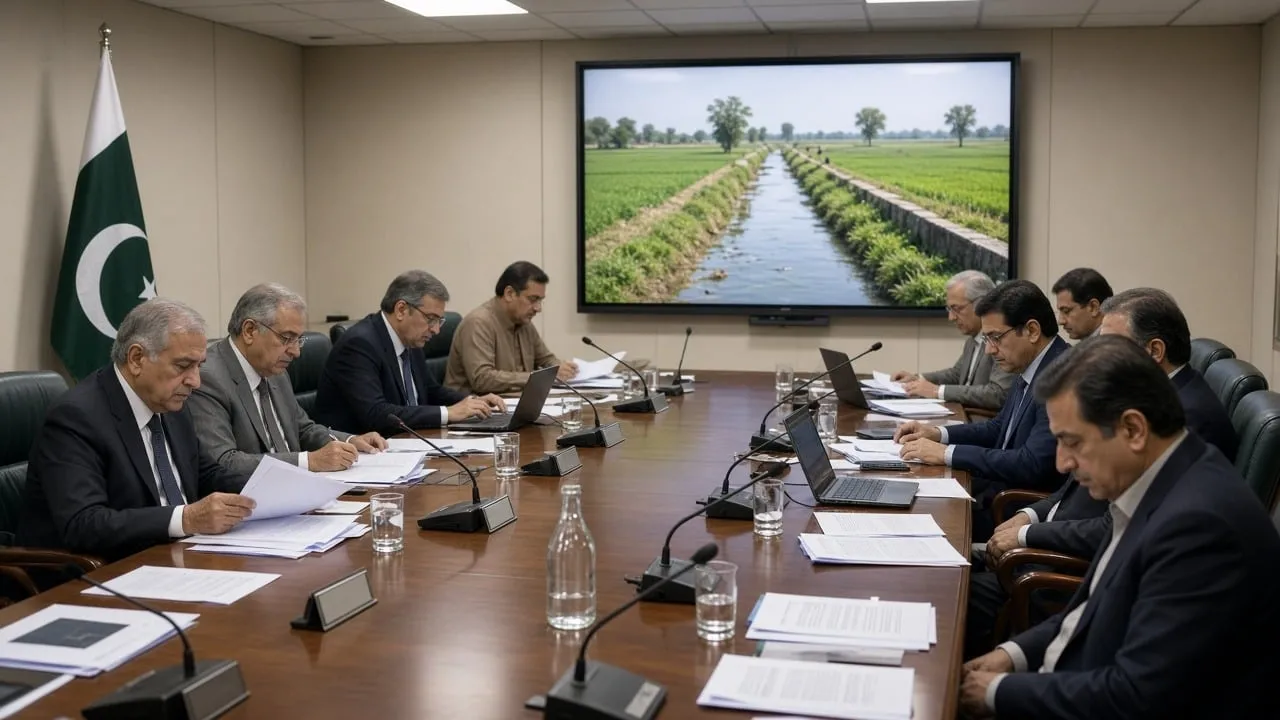
The high-level forum convened under the leadership of Federal Minister for Planning, Development and Special Initiatives Prof Ahsan Iqbal. During the session, officials cleared seven smaller schemes costing Rs. 19.3 billion directly and forwarded four much larger initiatives valued at Rs. 172.4 billion to the Executive Committee of the National Economic Council for ultimate clearance.
What is the Central Development Working Party and How Does It Work?
The Central Development Working Party functions as a crucial planning forum in the national administrative structure. It evaluates public sector development proposals submitted by various federal ministries and provincial departments before they receive final funding authorization. The committee reviews concept notes and detailed position papers to verify the proposed scope, financial costs, funding sources, and expected results.
Projects that exceed specific financial thresholds cannot be fully approved by the working party alone. Instead, the forum evaluates these high-value proposals and submits formal recommendations to the Executive Committee of the National Economic Council for final sanction. This multi-tiered review process aims to ensure fiscal responsibility and prevent the duplication of public sector expenditures.
Rs. 104.4 Billion Punjab Water Conservation Plan
The largest initiative reviewed by the forum is the Punjab Resilient and Inclusive Agriculture Transformation project, which was sent forward for final clearance. Out of its total cost of Rs. 104.4 billion, approximately Rs. 91.1 billion will be provided by the World Bank through foreign financing, while the remaining Rs. 13.3 billion will be contributed directly by the Punjab provincial government.
This agricultural scheme is designed to increase farming revenues, provide cultivators with equitable access to irrigation water, and minimize resource waste across the province. Key interventions include lining and rebuilding watercourses, constructing irrigation schemes outside traditional canal commands, and installing solar-powered high-efficiency irrigation systems. The plan also funds on-farm water storage ponds, certified plants and seeds, and market access initiatives through Farmers Entrepreneur Groups.
Youth Skills Development and Regional Road Construction
The forum granted in-principle approval to the third revised Prime Minister Youth Skill Development Program covering the years 2023 to 2028, valued at Rs. 47.6 billion, and recommended it for higher council review. The National Vocational and Technical Training Commission will execute this training initiative using funds from the Public Sector Development Programme. Prof Ahsan Iqbal directed administrators to rationalize the budget and eliminate any overlapping administrative functions.
Transport infrastructure also formed a major part of the agenda, with two road packages forwarded for final clearance. These proposals feature the revised construction and widening of the Sibi to Talli road measuring 23.52 kilometers and the Kohlu to Rakhni road measuring 85.16 kilometers, with a combined cost of Rs. 11.1 billion. Additionally, a black-topped road connecting Sui to Kashmore was advanced with an estimated cost of Rs. 9.3 billion.
New Border Terminals at Taftan and Gabd
To improve international commerce and border management, the forum approved two trade terminals along the frontier with Iran. The terminal located at Taftan within District Chaghi in Balochistan will require an investment of about Rs. 4.8 billion sourced through the Public Sector Development Programme. A second terminal located at Gabd received approval with an estimated cost of roughly Rs. 4.3 billion.
These facilities aim to properly regulate cross-border trade activities, generate employment opportunities for local residents, curb illegal smuggling operations, and facilitate standardized commerce. Authorities expect these trade gateways to strengthen bilateral economic ties and support the wider national economy.
Telecommunications, Medical Education, and Mineral Exploration
The committee approved a Rs. 4.4 billion telecommunications scheme to expand cellular services across Azad Jammu and Kashmir and Gilgit-Baltistan. Officials also cleared the modified development plan for the Mirwaiz Molvi Muhammad Farooq Shaheed Medical College in Muzaffarabad, costing approximately Rs. 3.4 billion through public sector funds to establish permanent campus infrastructure.
A notable addition to the energy sector is the Pakistan Atomic Energy Commission project valued at Rs. 1.4 billion, which targets the exploration of radioactive minerals in the Marwat Range. The primary objective of this mineral exploration is to decrease national dependence on imported fuel supplies used for nuclear power generation.
Regional youth empowerment received further support through the Youth Education, Employment and Empowerment Project Sindh, which carries a price tag of Rs. 600 million. Backed by the United Nations Development Programme on an equal cost-sharing arrangement, this scheme will provide vocational training to 15,000 young individuals, with women making up half of the participants across 16 districts including Karachi West, Korangi, Malir, Keamari, Hyderabad, Sukkur, Larkana, and Tharparkar.
Refugee Administration and Prior Funding Context
Administrative support measures also featured in the session, with the forum approving the revised Strengthening Institutions for Refugees Administration project worth Rs. 255.8 million. This administrative undertaking is financed through technical assistance linked to a World Bank International Development Association loan.
These recent approvals follow a series of similar planning sessions held earlier in the year. The committee previously cleared seven major mega projects valued at Rs. 253 billion during the early part of August, followed by an additional tranche of development schemes worth Rs. 60 billion later that same month.





