Government Extends Raast QR Payment Subsidy for Businesses
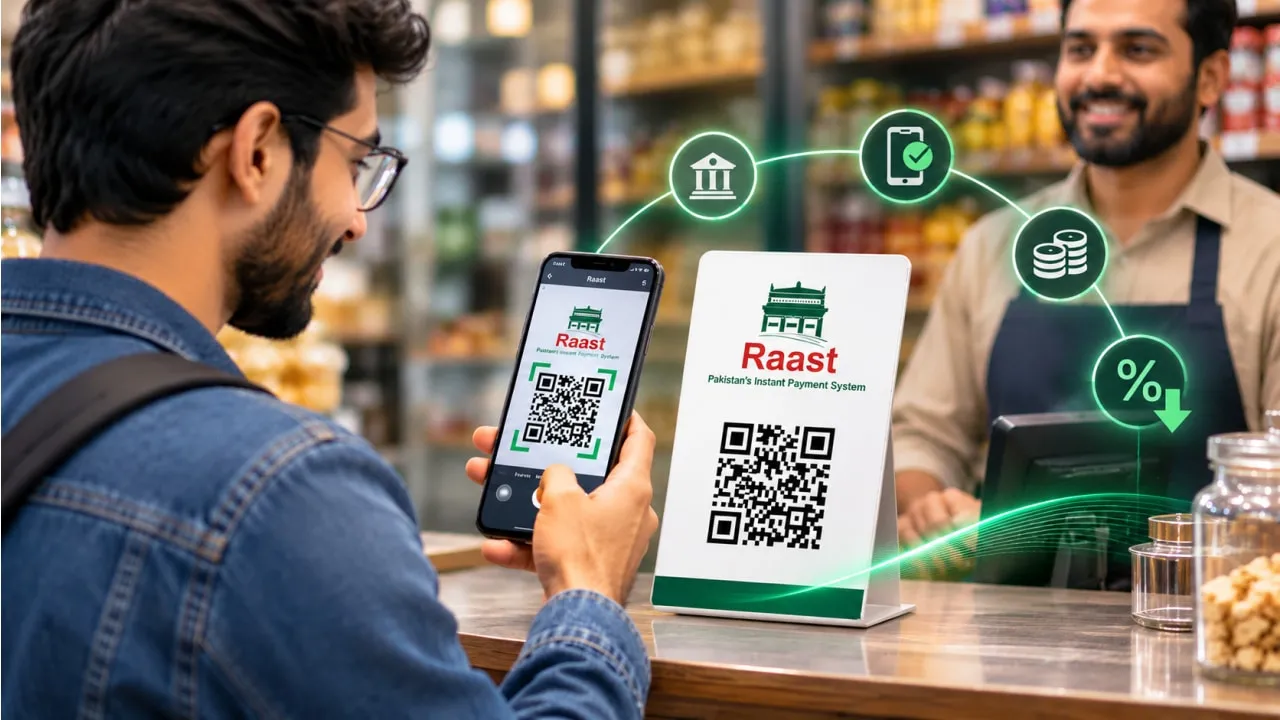
The federal government has decided to continue subsidizing merchant discount rate charges on Raast QR payments to encourage businesses to adopt digital payment methods under Prime Minister Shehbaz Sharif's Cashless Pakistan Initiative. This decision aims to maintain the ongoing momentum in digital financial inclusion and reduce reliance on cash transactions across the national economy.
Minister of State for Finance Bilal Azhar Kayani announced the official decision during a high-level meeting with banking executives at the Pakistan Banks Association headquarters in Karachi on Friday. Officials representing the State Bank of Pakistan, Raast, and Karandaaz also attended the discussions to review current progress and outline future steps for the national digital infrastructure.
Background of the Cashless Pakistan Initiative
The Cashless Pakistan Initiative represents a broad government strategy to modernize the financial ecosystem, curb documentation gaps, and bring a larger share of commercial activity into the formal banking network. Digital payments offer a transparent alternative to physical cash, reducing operational costs for merchants and lowering security risks associated with physical currency management.
Raast serves as Pakistan's instant payment system, designed to provide a fast, reliable, and low-cost mechanism for transferring funds between individuals, businesses, and government entities. By removing merchant discount rate charges through government subsidies, authorities eliminate a primary financial barrier that previously discouraged small and medium-sized enterprises from accepting digital QR code payments.
Details of the Announcement in Karachi
During the meeting at the Pakistan Banks Association headquarters, Kayani informed banking executives that the prime minister approved the extension to sustain the rapid growth observed in digital payment adoption. The subsidy specifically covers merchant discount rate charges associated with quick response code transactions, ensuring that businesses retain the full value of electronic sales.
The minister also briefed participants on broader progress achieved under the Cashless Pakistan Initiative. This update covered increased overall adoption rates among commercial establishments and the ongoing digitization of various government payments, highlighting steady movement toward specific economic targets set for fiscal year 2026.
Role of the State Bank of Pakistan and Financial Institutions
Kayani directed the State Bank of Pakistan to engage directly with commercial banks' chief digital officers, the chief executive officer of Raast, and representatives from Karandaaz. This collaborative group is tasked with preparing comprehensive recommendations for the Prime Minister's Cashless Committee.
The upcoming consultations will concentrate on improving the overall user experience across all available digital payment methods, with a particular focus on quick response transactions. Participants will also formulate practical measures designed to encourage wider consumer and merchant participation in the digital economy.
New Performance Indicators and Future Targets
To ensure continuous accountability and progress, the Prime Minister's Cashless Committee is currently working to introduce new performance indicators. The committee also plans to revise existing targets to accelerate the national digitization of payments in the coming months.
During the concluding segments of the meeting, the minister urged commercial banks to play a much more active role in expanding digital payment adoption across the country. Financial institutions are expected to leverage their branch networks and customer relationships to onboard more merchants onto the Raast platform.
Impact on Businesses and the Economy
The extension of the merchant discount rate subsidy directly benefits retail businesses, service providers, and everyday consumers by keeping electronic transactions affordable. Small merchants who operate on narrow profit margins often hesitate to accept card or digital payments due to processing fees, making the government subsidy a vital incentive for continued digital adoption.
A wider transition toward digital payments helps formalize the economy, improves tax collection transparency, and reduces the immense costs associated with printing and maintaining physical currency. As banks and financial authorities refine their strategies, the focus remains on building a secure and inclusive financial network that serves all segments of the population.