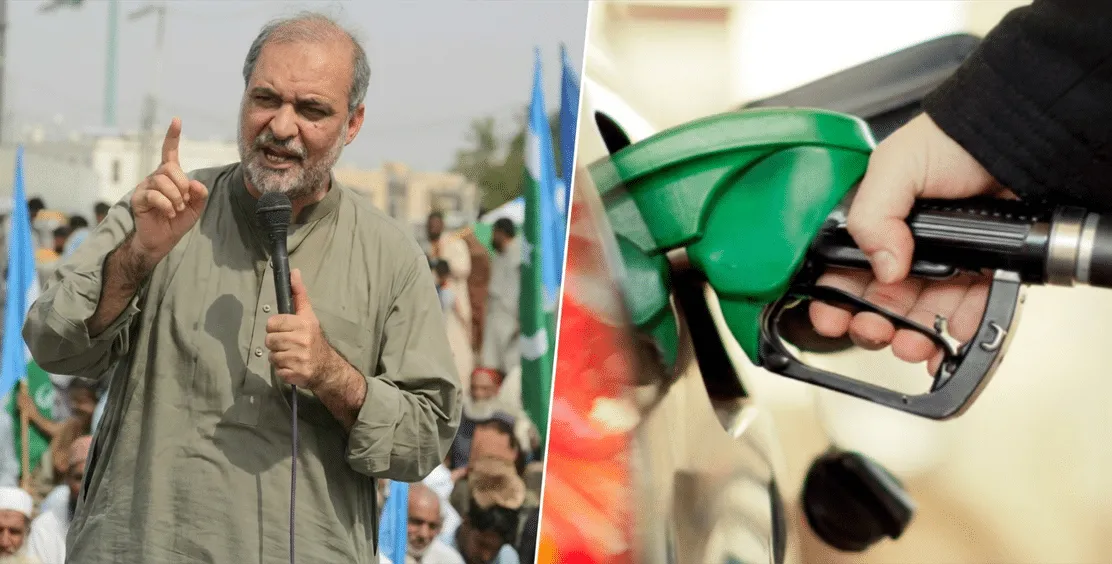
The government has agreed to provide fuel cost relief to the agriculture sector, public transport and certain categories of vehicles, but has refused to end the petroleum levy, Jamaat-e-Islami (JI) said on Tuesday after its latest round of talks with government representatives.
Acting JI Emir Liaquat Baloch said negotiations on removing the levy had reached their final stage. He spoke at a press conference after the meeting with Deputy Prime Minister and Foreign Minister Ishaq Dar.
What Happened in the Talks
According to Baloch, the government acknowledged that JI's demands were valid after the party's nationwide protest campaign and its six-point proposals. The protests, which began in early March, saw JI mobilise farmers, transport unions and small-business owners to demand a repeal of the petroleum levy that was introduced in 2022 to shore up the fiscal deficit.
He said the government would complete its work on oil refinery profits and a gradual end to the petroleum levy on Monday, and a working paper would be prepared on Tuesday. JI Emir Hafiz Naeem ur Rehman will announce the party's next step after reviewing the final draft agreement.
The government's side was less definite. The Foreign Office said both sides held candid discussions on relief for low-income citizens hit by rising energy costs and agreed to keep talking over the coming days. It did not confirm any agreement to remove the levy.
Government negotiators told JI that fuel prices depend on international oil rates, which are rising, and that they had already given every possible relief.
Why the Petroleum Levy Matters
The petroleum levy is a surcharge on every litre of petrol and diesel sold in the country. Introduced in the 2022 budget, it was intended to raise Rs. 1.6 trillion in FY27, according to the finance ministry's revenue projections. The levy is collected by the Oil and Gas Development Company and passed to the Ministry of Finance, where it is earmarked for debt servicing and infrastructure projects.
Because the levy is applied at the wholesale level, it affects the entire supply chain. Refineries pass the cost to distributors, who in turn reflect it in retail pump prices. Removing the levy would therefore lower the headline price of fuel, but would also create a shortfall in the fiscal plan that the government has been using to stabilise the balance of payments.
Background: JI's Six-Point Proposal and the Protest Campaign
Jamaat-e-Islami submitted a six-point proposal in February that called for: (1) an immediate suspension of the petroleum levy, (2) a rollback of oil refinery profit margins to pre-levy levels, (3) targeted subsidies for small-holder farmers, (4) a price cap on diesel for public transport, (5) a review of the levy's revenue allocation, and (6) a public audit of the levy's collection.
The party organised a series of rallies in Punjab, Sindh and Khyber Pakhtunkhwa, drawing thousands of participants. The protests coincided with a period of rising global crude prices, which pushed domestic pump prices above Rs. 300 per litre for petrol and Rs. 260 per litre for diesel in early April.
Economic analysts note that the timing of the protests amplified public pressure on the government, which had already faced criticism for high energy costs and inflation that exceeded 30 percent in the first quarter of the fiscal year.
What This Means for You
Nothing changes at the pump yet. Petrol and diesel prices stay the same until a final deal is signed and notified.
If the reported relief goes ahead, farmers, transporters and some vehicle owners would be the first to benefit. A full or gradual end to the levy would be a bigger change, but the government is relying on it heavily and aims to collect Rs. 1.6 trillion from the petroleum levy in FY27.
Impact on Farmers
Farmers rely on diesel for irrigation pumps and tractors. A modest subsidy or a temporary reduction in diesel rates could lower operating costs by an estimated Rs. 2,500 per hectare, according to the Pakistan Agricultural Research Council.
Impact on Public Transport
Public transport operators, especially mini-bus and rickshaw owners, have reported profit squeezes as fuel costs rise. A targeted relief package could keep fares stable for commuters in urban centres such as Lahore and Karachi.
Impact on Government Finances
Maintaining the levy preserves the projected Rs. 1.6 trillion revenue stream. If the levy were removed, the finance ministry would need to offset the loss through either higher taxes elsewhere or increased borrowing, both of which could affect the country's credit rating.
Next Steps and What to Watch For
The working paper promised by the government is expected to be drafted on Tuesday. Once drafted, it will be reviewed by JI's leadership, including Emir Hafiz Naeem ur Rehman, before any public announcement.
Key dates to monitor include:
- Monday - Government completes its work on oil refinery profits and a gradual end to the levy.
- Tuesday - Working paper prepared and circulated among stakeholders.
- Within the next two weeks - Potential press conference by JI announcing its next step.
Analysts suggest that any final agreement will likely include a phased reduction of the levy rather than an outright repeal, balancing fiscal needs with public demand.
Practical Takeaways for Readers
For farmers, keep an eye on announcements from the Ministry of Agriculture regarding diesel subsidies. Transport operators should monitor notifications from the Transport Department about any temporary fare adjustments.
Consumers can continue to compare pump prices across stations, as the government has not yet issued a formal price freeze. If a relief package is implemented, it will be communicated through official press releases and will appear in the next fuel price bulletin.
Overall, the negotiations illustrate the tension between fiscal sustainability and public pressure over energy costs. The outcome will shape the cost of living for millions and influence the government's ability to meet its FY27 revenue target.