Honor Develops Midrange Phone with 13,500 mAh Battery and 7-Inch Screen
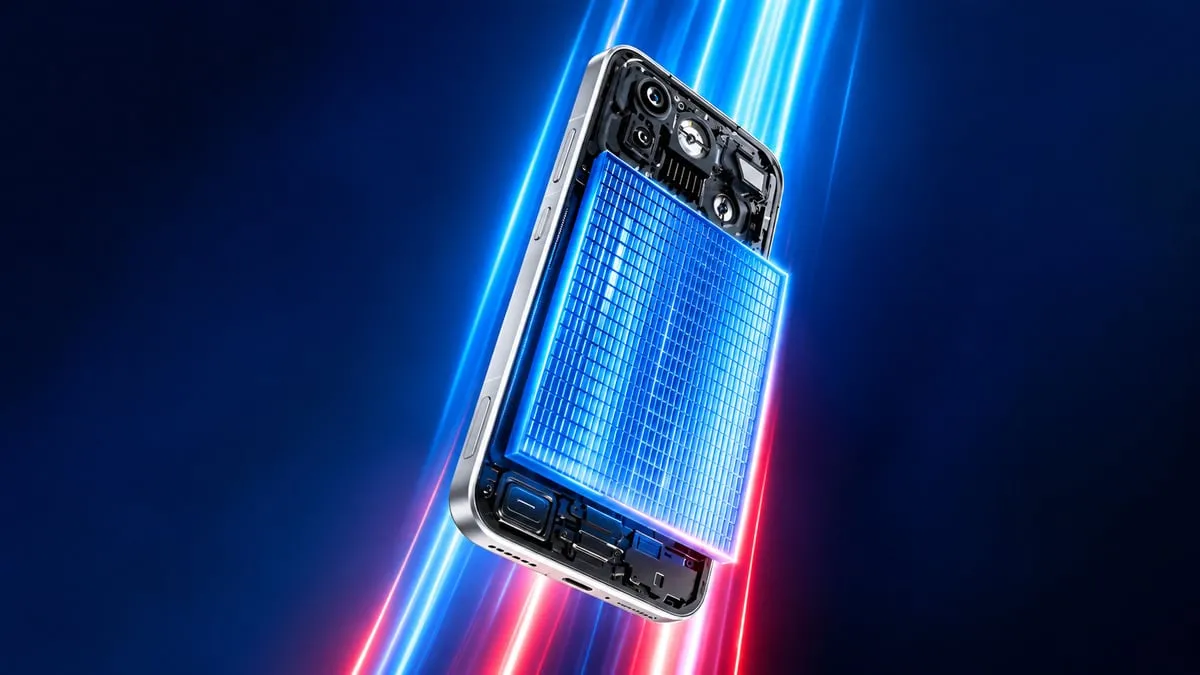
Honor has reportedly started trial production of a battery for a midrange phone with a 7-inch display. Weibo tipster Digital Chat Station puts the cell's rated capacity at 13,300 mAh and its typical capacity at around 13,500 mAh. This development signals a major shift in mobile hardware design, pushing power capacities far beyond conventional smartphone standards.
The pursuit of larger power cells in mobile devices addresses a long-standing consumer demand for extended usage times between charges. While modern mobile processors have grown more energy-efficient, display technologies and demanding applications continue to drain power rapidly. By focusing on ultra-large capacities within the midrange segment, manufacturers are changing what users can expect from everyday mobile hardware.
Evolution of Honor Power Batteries From 8,000 to 13,500 mAh
The original Honor Power launched in April 2025 with an 8,000 mAh battery. The Honor Power2 followed in January 2026 with 10,080 mAh in a 7.98 mm body. It supports 80W wired charging and can charge other devices at up to 27W over a cable.
Honor's gaming-focused WIN phones pair 10,000 mAh batteries with 100W wired charging. The company went further in June with the Honor X80 Pro Max, which has an 11,000 mAh battery and 90W wired charging. The rumored cell would add another 2,500 mAh over that model.
This rapid escalation in energy capacity demonstrates how engineering teams have adapted component layouts to fit larger power units without making devices excessively bulky. The transition from 8,000 mAh to over 13,000 mAh in a short span highlights rapid advancements in energy density and internal spatial arrangement.
Understanding Smartphone Battery Technology and Capacity Metrics
When evaluating mobile power units, manufacturers typically distinguish between rated capacity and typical capacity. The rated capacity represents the minimum energy guarantee under specific testing standards, while typical capacity reflects the average performance across a production batch. In the case of this new device, Digital Chat Station notes a rated capacity of 13,300 mAh and a typical capacity of around 13,500 mAh.
Building high-capacity power cells requires careful balancing of chemical composition, physical dimensions, and safety protocols. Traditional lithium-ion designs struggle to scale up without adding significant thickness and weight. Recent engineering breakthroughs allow manufacturers to pack more active material into tighter spaces, which explains how modern devices maintain reasonable profiles despite housing massive energy reserves.
The Role of Display Size and Hardware Integration
Pairing a massive power reserve with a 7-inch display creates unique design challenges and opportunities for mobile engineers. Larger screens provide more surface area for media consumption and productivity tasks, but they also draw more power from the system. Integrating a 7-inch panel with a 13,500 mAh cell indicates that the final product will likely target users who prioritize media consumption and prolonged usage away from wall outlets.
Midrange smartphones traditionally focus on balancing cost and performance rather than pushing extreme specifications. Introducing a massive power cell into this category suggests that high-capacity energy storage is moving from niche specialty devices to mainstream product lines. Consumers looking for affordable hardware that can last for days without plugging in will likely find these developments appealing.
Looking Ahead to 2027 and Potential 15,000 mAh Devices
An earlier leak said Honor was testing batteries between 14,000 and 15,000 mAh with the goal of reaching a week on one charge. That battery-life claim came from the earlier report. The new leak gives no runtime estimate for the 13,500 mAh phone.
Digital Chat Station also says Honor is planning an even larger battery for 2027. The 7-inch phone's name, charging speed, weight, and release date remain unknown.
As development continues, industry observers will monitor supply chain movements for further details on charging speeds, physical dimensions, and official naming conventions. The ongoing push toward week-long battery life indicates that the boundaries of mobile power capacity are still expanding rapidly.