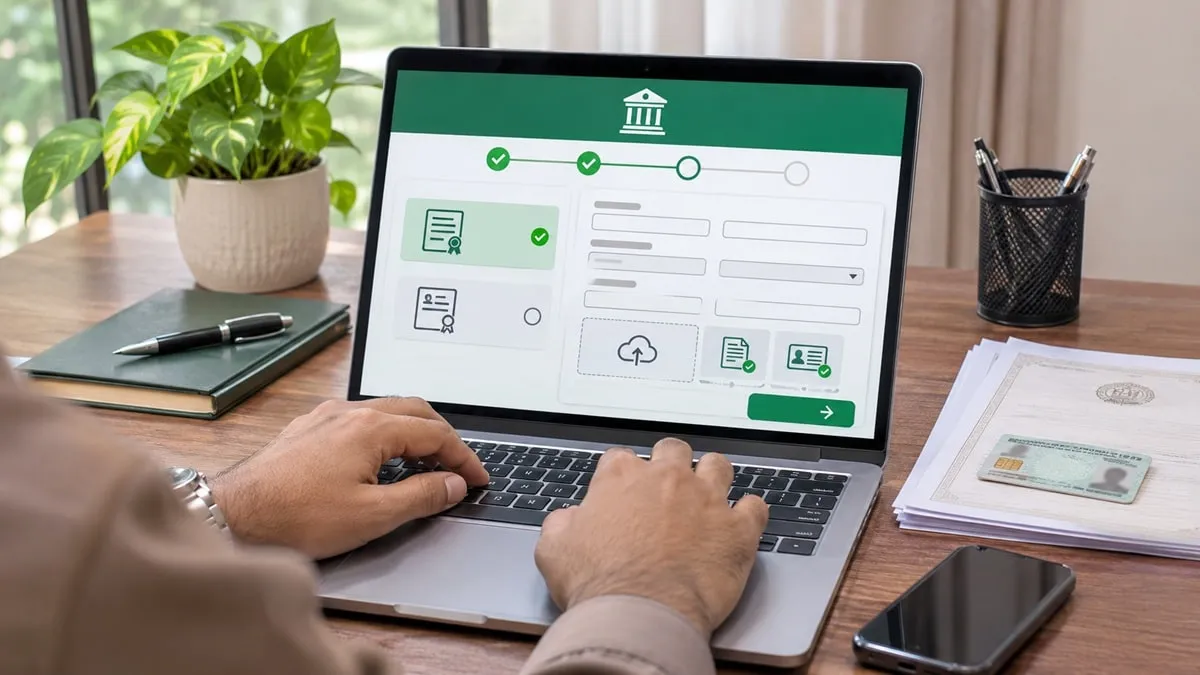
Guide to Applying for Domicile and PRC Online in Sindh
The Sindh government has launched an online application system for domicile certificates and Permanent Residence Certificates, known as PRCs, allowing Karachi residents to apply from home without visiting government offices. The new E-Domicile and PRC Portal allows applicants to register online, verify their identity through facial recognition, upload documents, pay the required fees, and track their applications.
Sindh Chief Secretary Asif Hyder Shah inaugurated the service on November 17, 2026. According to the provincial government, the initiative aims to simplify the process of obtaining residence certificates and reduce delays at government offices.
Who Can Apply for Domicile and PRC Online in Sindh
The online service is being introduced in phases, starting with selected districts of Karachi. The portal's main page currently lists the following districts: Karachi East, Karachi Central, and Karachi South. However, some sections of the website still list only Karachi East and Karachi Central. Residents of Karachi South should therefore confirm the availability of the service before paying any application fee.
The government has advised residents of other districts not to submit applications until the service becomes available in their areas. Applicants from ineligible districts may lose their application fees and face account restrictions. Citizens must check their specific locality status carefully before starting the digital registration procedure to avoid administrative penalties.
Step by Step Instructions to Apply Online
Karachi residents in eligible districts can follow these steps to apply through the new portal.
Step 1: Visit the Official Website
Open the Sindh government's E-Domicile and PRC Portal at https://www.sindhdomicileportal.gos.pk.
Step 2: Register Your Account
Select the registration option and create an account using your CNIC and mobile number. Complete the required verification process to activate your account.
Step 3: Select the Required Certificate
Choose the service you want to apply for. The portal offers applications for Domicile Certificates, PRC-C, and PRC-D.
Step 4: Complete Identity Verification
Follow the instructions for identity verification, including the facial recognition process. The portal may direct applicants to use its mobile application for certain steps.
Step 5: Fill Out the Application Form
Enter your personal information, residential address, and other required details. Review the information carefully before proceeding.
Step 6: Upload Required Documents
Upload clear copies of the documents requested by the system. Make sure your personal details match the information provided in the application.
Step 7: Pay the Application Fee
Pay the prescribed fee using the available online payment option or bank challan, as directed by the portal.
Step 8: Submit and Track Your Application
Review your completed form and submit the application. Keep your application reference number so you can track its progress online.
Documents Required for Online Domicile and PRC Applications
According to the official portal, applicants should prepare the following documents:
- Computerized National Identity Card (CNIC)
- Father's or guardian's CNIC
- Passport-size photograph
- Utility bill
- Residence certificate
- Academic document
Ensuring that these files are scanned clearly and saved in the correct format before initiating the web submission prevents errors. Any mismatch between uploaded documents and form fields can result in processing delays or rejection by the reviewing officers.
How to Track Your Domicile or PRC Application
The Sindh government has introduced an online tracking facility to help applicants monitor their requests. Residents can visit https://www.sindhdomicileportal.gos.pk/track and enter their 13-digit application ID or CNIC to check the status of their applications. The system allows applicants to follow the verification process and view updates about their requests.
According to the government, the relevant deputy commissioner's office will examine the submitted documents and make a decision after completing the required verification. The portal will also maintain digital records of approved certificates, allowing authorized institutions to verify their authenticity. This digital database reduces fraudulent paperwork and speeds up background checks for employment and educational admissions.
Background and Digital Transformation in Sindh
For decades, obtaining official residence papers required citizens to stand in long queues at local administrative offices. Intermediaries and manual filing systems often created backlogs, bureaucratic hurdles, and opportunities for corruption. Transitioning these services to an electronic platform represents a major shift in public service delivery across Pakistan.
The integration of facial recognition technology marks a secure method for confirming applicant identity remotely. By connecting users directly to government databases via secure web protocols, the administration aims to minimize human error and physical contact. Similar digital initiatives are being explored across other provincial departments to modernize governance and public records.
Impact on Citizens and Local Administration
Students applying for university admissions and job seekers requiring urgent documentation benefit immensely from this web-based workflow. Eliminating physical visits saves time and travel expenses for families residing across Karachi. Citizens no longer need to depend on third-party agents to navigate municipal paperwork.
For local administrative offices, digital submissions streamline internal file sorting and verification protocols. Deputy commissioners can review submissions electronically, cutting down processing windows. As the platform expands to cover more districts, the overall burden on municipal buildings will decrease significantly.
Future Rollout Phases and Next Steps
The provincial administration plans to extend the E-Domicile and PRC Portal beyond Karachi to other divisions of Sindh in upcoming phases. Officials are monitoring system performance and server loads during the initial deployment in Karachi East, Karachi Central, and Karachi South. Public announcements will guide residents of remaining districts when their local portals go live.
Users must stay updated through official government channels and avoid unverified third-party websites offering similar services. Proper compliance with territorial restrictions ensures that applicants do not forfeit fees or compromise personal data security.





