As the festive season approaches, households across the country prepare to enjoy seasonal treats, social gatherings, and hearty meals. Maintaining health and fitness goals during this period often proves challenging, but a structured approach can make a noticeable difference before the New Year begins. The third and final instalment of the 3/3/3 plan offers practical methods to shed up to 2lb a week through manageable lifestyle adjustments rather than restrictive diets.
Weight management is influenced heavily by our immediate surroundings, especially when social calendars fill up with mince pies, celebratory drinks, and large family spreads. Designed to counter these temptations without requiring extreme measures, this phase focuses on sustainable habits, three targeted workouts, and sensible dietary rules. Following the guidance consistently since September puts individuals on track to drop up to 2st before Christmas Day arrives.
How to Eat Smart During the Festive Season
The core philosophy of this programme removes the need to count calories or completely overhaul daily eating habits. Previous phases introduced by Healthspan nutritionist Rob Hobson, author of The Low Appetite Cookbook, emphasised increasing protein at breakfast, incorporating low-calorie volume foods, and boosting fibre intake with mixed seeds and nuts. The final stage builds on these foundations by addressing common pitfalls that cause people to derail during winter festivities.
Controlling portions without resorting to strict food deprivation helps maintain steady progress while still enjoying seasonal treats. Small adjustments in how snacks are consumed prevent mindless eating during family film nights or social events. Experts advise transferring items like crisps, nuts, crackers, or chocolate from large packets into a separate bowl or plate before consumption. This simple visual boundary stops continuous snacking from large bags and encourages mindfulness regarding portion sizes.
Why Eating Slowly Aids Weight Loss
Busy schedules often lead to rushed meals, but slowing down the pace of eating offers proven benefits for weight control. Studies show that individuals consume fewer calories during a meal when they take their time. This habit does not require counting chews or adhering to rigid food rules, but rather placing cutlery down between mouthfuls, pausing longer between bites, or setting a twenty-minute timer to extend the meal.
Extending meal times proves particularly helpful when dining out at restaurants or holiday parties, as it provides enough time for the brain to register fullness before overeating occurs. This simple pacing strategy can prevent the temptation to order heavy desserts. Maintaining structure during weekends also supports ongoing goals, preventing the common pattern of disciplined eating during the working week followed by excessive overindulgence from Friday night through Monday morning.
Maintaining Healthy Weekend Habits
Weekends often encourage a relaxed approach to food and daily routines, which can stall progress. While social outings and meals out increase in the run-up to Christmas, keeping a few core routines active preserves momentum. Maintaining a normal breakfast schedule instead of indulging in a massive weekend fry-up, ensuring vegetables accompany lunch, and keeping up regular daily step counts provide stability without making individuals feel restricted.
Experts strongly advise against starving oneself in anticipation of a big evening meal or social event, as compensatory restriction frequently leads to a severe binge later. Eating normally throughout the day keeps blood sugar stable and prevents impulsive overeating. A modest amount of dietary structure helps navigate the festive calendar without feeling trapped on a strict diet.
Cardiovascular Workouts for the Christmas Period
Physical activity during winter requires efficiency, especially when schedules fill up with shopping and social commitments. Personal trainer Will Duru, founder of the fitness app 12Reps, designed three distinct workouts tailored specifically for the busy Christmas season. These sessions combine high-intensity cardiovascular movements with bodyweight exercises designed to torch fat in minimal time. Participants should choose three days each week to complete a session, ensuring at least one rest day between workouts.
Alongside these routines, aiming for eight to ten thousand steps per day supports overall daily energy expenditure. The workouts use an interval structure, requiring forty-five seconds of continuous effort followed by a thirty-second rest period for each exercise, repeated for a total of four rounds.
Workout One Routine and Instructions
The first routine focuses on foundational plyometric and core stability movements executed in high-intensity intervals. Participants perform four rounds of four distinct exercises, working for forty-five seconds and resting for thirty seconds between each movement.
- Squat jumps: Drop down into a squat, then jump up, straightening your legs, before landing back down into a squat.
- Plank with shoulder taps: Get into a high plank position, with hands directly under your shoulders and your body in a straight line, resting on your toes. Take your left hand, keeping your body as still as possible, and tap your right shoulder. Place your left hand back down and repeat with your right hand, tapping your left shoulder while squeezing your core.
- Alternating reverse lunge and knee drive: Stand tall, step back with your left leg and drop into a lunge, both knees bent. As you rise up, drive your left knee up to hip height or higher and stand tall, balancing on your right leg. Step down and repeat on the other side.
- Burpees or walk-out burpees: Start standing then squat down, place your hands on the floor, jump feet back into a high plank, jump feet forward and then jump up into the air and return to standing. Remove the jump by stepping feet back and forward if preferred.
Workout Two Routine and Instructions
The second session introduces elevated heel positions and complex transitions to test cardiovascular endurance and lower body strength. Each movement lasts for forty-five seconds, followed by a thirty-second rest period across four complete rounds.
- Heel raised squats: Raise your heels by stepping on a book or platform of similar height. With feet at hip-width apart, bend both knees and push your hips back before dropping down into a squat, pausing, then pushing up through your feet to rise.
- Lunge jumps: Stand tall, jump up and land with your left foot in front and right foot behind, dropping down into a lunge with both knees bent. Jump up from the lunge, switch legs in the air, and land with your right foot in front and left behind.
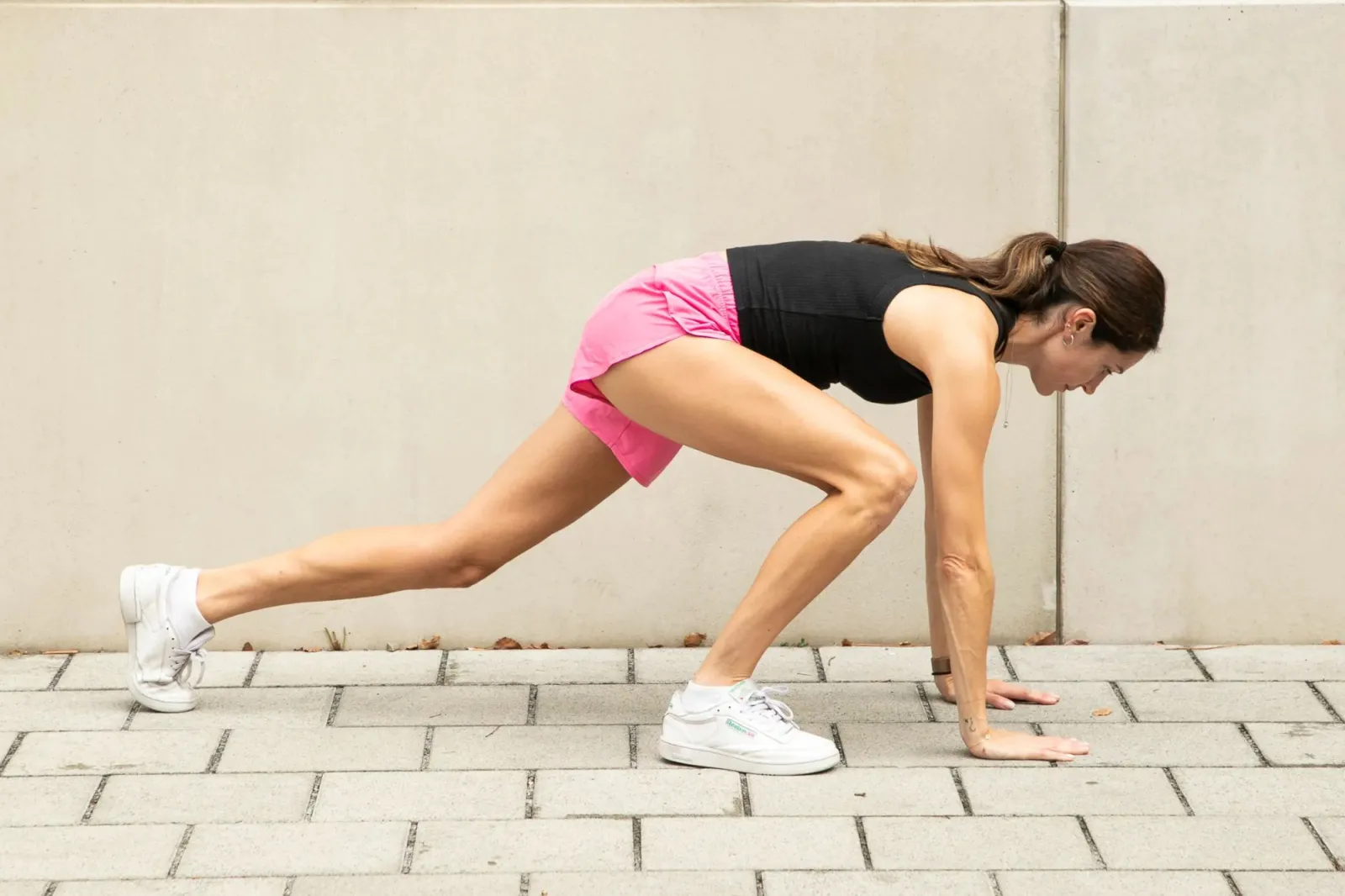
- Mountain climbers with shoulder taps: Get into a high plank position, with hands directly under your shoulders and your body in a straight line. Drive your left knee to your right elbow, step back, drive your right knee to your left elbow, and tap each alternating shoulder.
- Press-ups with pike: In a high plank position, bend your elbows and lower your chest to the floor to do a press-up. Push your hips up and back into a downward dog or upside-down V shape upon rising, then lower back down to plank.
Workout Three Routine and Instructions
The final workout targets core rotational strength and explosive plyometrics to complete the weekly training schedule. Maintaining form throughout the forty-five-second working intervals ensures maximum benefit before the thirty-second recovery break.
- Hip dips: Get into a low plank, with your elbows directly under your shoulders and your body in a straight line resting on your toes. Lower your hips down to the left, then use your core muscles to bring them back through the centre and down to the right.
- Frog jumps: Get into a low squat with your hands on the floor, jump your feet back into a high plank, then quickly jump your feet forward and return to the low squat.
- Plank up and down: Start in a high plank, lower your right arm down onto your forearm, repeat on the left side, then push yourself back up so your right hand returns to the floor and repeat.
- Pogo jumps: Stand tall with your arms by your side, jumping up and down off the floor while landing gently on the balls of your feet with each repetition.