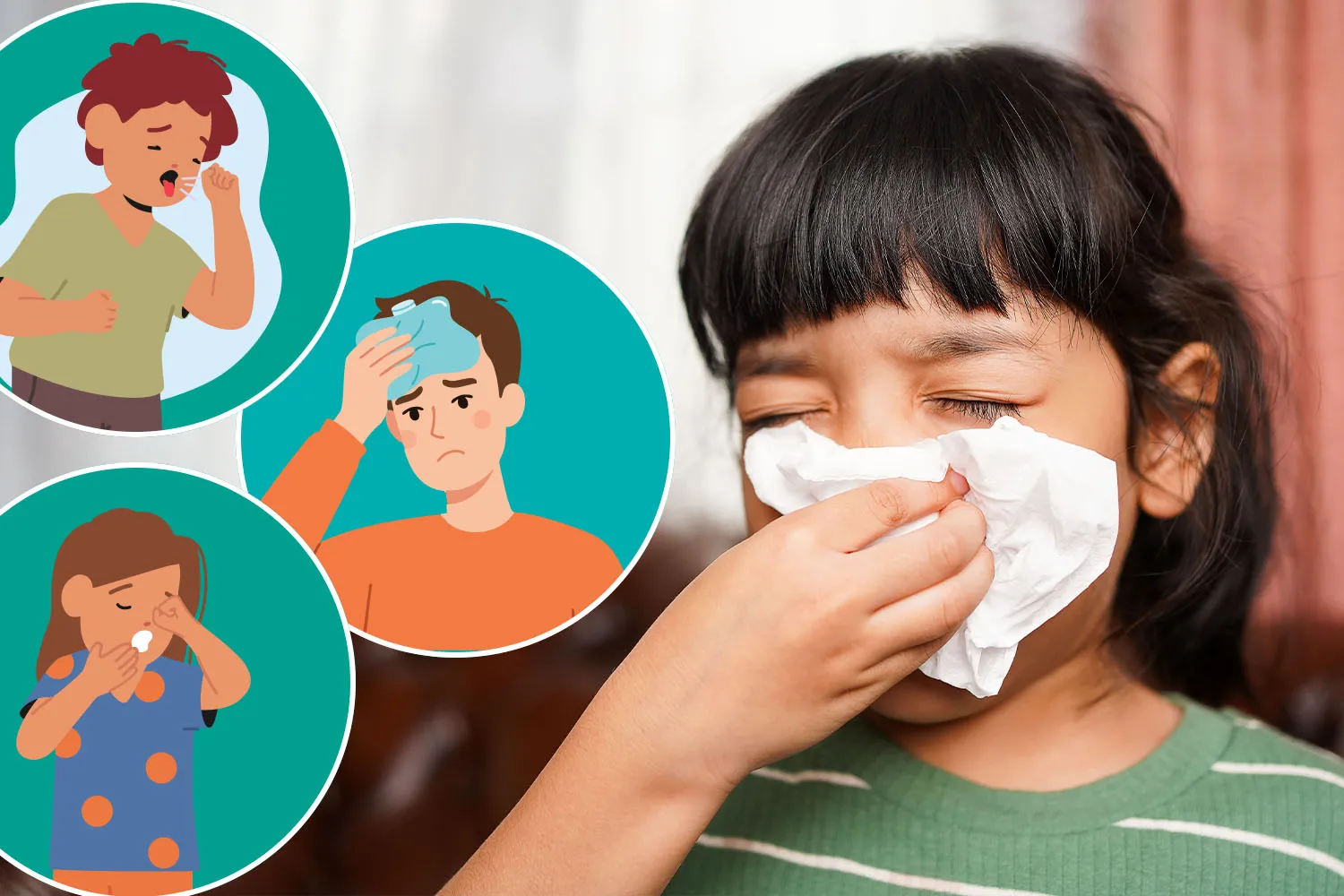
During the colder months, households across the country frequently contend with common seasonal illnesses. A runny nose or a mild cough in young children often seems like standard winter sickness, but public health officials urge vigilance against a widespread copycat virus known as respiratory syncytial virus, or RSV.
While this pathogen frequently presents with symptoms nearly identical to a standard cold, it carries the potential to trigger severe respiratory distress in infants and vulnerable populations. Recent data from the UK Health Security Agency shows that infections are slowly climbing, leading to heightened concern among medical professionals as hospital admissions tick upward.
Understanding Respiratory Syncytial Virus and Its Impact on Children
Respiratory syncytial virus is an extremely common infection that typically affects nearly all children by the time they reach their second year. For most young individuals, the illness remains mild, generating familiar signs like sneezing, a blocked nose, and a low-grade cough that resolves without medical intervention.
However, the infection can progress rapidly into more severe medical conditions, particularly in babies under the age of one year. According to the UK Health Security Agency, recent surveillance data covering the week leading up to October 25 highlighted an increase in positive laboratory tests, rising to 1.5 per cent from 0.9 per cent the previous week.
Hospital admissions for illnesses related to this pathogen also climbed to a rate of 0.52 per 100,000, compared with 0.31 per 100,000 in the prior week. Emergency department attendances for acute bronchiolitis, a chest infection affecting infants that causes breathing difficulties, remained stable and below seasonally expected levels according to the agency.
Expert Insights on Vulnerable Groups and Severe Complications
Medical specialists emphasize that certain infants face a substantially higher risk of experiencing severe complications from the virus. Dr Raj Arora, a general practitioner at The Fairmont Windsor Park and founder of The Facebible, explains that the pathogen is dangerous primarily for young children because it can cause bronchiolitis.
Official guidance from the National Health Service notes that bronchiolitis often requires hospital-level treatment to monitor and support a child's breathing. Furthermore, the infection can pave the way for serious lung conditions such as pneumonia, which demands prompt medical evaluation.
Dr Arora adds that premature infants and those with underlying health conditions are at higher risk of severe illness. Globally, public health authorities recognize the virus as a leading cause of infant mortality, underscoring the importance of early recognition by caregivers.
How to Tell the Difference Between a Cold and RSV
Distinguishing a harmless winter cold from a developing respiratory syncytial virus infection requires careful observation of initial symptoms and their progression. Milder signs of the virus include a runny or blocked nose, a persistent cough, sneezing, general tiredness, and a high temperature indicated by a hot back or chest, sweatiness, and shivering.
Babies who contract the bug may also display increased irritability and feed significantly less than usual. Dr Arora notes that while most common colds resolve within one to two weeks with supportive care, parents must watch for symptoms that escalate rather than improve over time.
The National Health Service advises parents to monitor for specific warning signs that suggest the illness is worsening. These red flags include a cough that grows progressively worse, shortness of breath, faster breathing rates, long pauses between breaths, difficulty feeding in babies, a loss of appetite in older children, and noisy breathing or wheezing.
When to Seek Emergency Medical Attention
Recognizing the exact moment when a child requires urgent hospital care can prevent life-threatening outcomes. Dr Arora stresses that parents must watch for difficulty breathing, high fevers, poor feeding, or extreme lethargy in infants, as these situations require immediate medical intervention.
When symptoms escalate severely, caregivers must know the exact thresholds for emergency action. The National Health Service provides clear criteria for calling emergency services:
- Your child is having difficulty breathing, which may include grunting noises, long pauses in their breathing or their tummy sucking under their ribs
- You have severe difficulty breathing, such as gasping, choking or not being able to get words out
- You or your child is floppy and will not wake up or stay awake
- You or your child's lips or skin are turning very pale, blue or grey, noting that on brown or black skin this may be easier to see on the palms of the hands
- Your child is under five years old and has a temperature below 36C
Experts remind parents that their own intuition remains a vital tool, and anyone who feels their child is seriously unwell should trust their judgment and seek help.
Prevention Strategies and Vaccination Rollouts
Public health strategies to curb the spread of the virus focus on hygiene practices and targeted immunization programmes introduced by health authorities. Dr Arora advises practicing good hand hygiene, ensuring young children wash their hands frequently, and discouraging them from touching their eyes, nose, or mouth without washing first.
Additional preventive measures include avoiding close contact with individuals who are currently sick and using available vaccines. An immunization programme specifically for pregnant women was introduced in England in September 2024 to provide vulnerable newborns with early protection against severe disease.
Expectant mothers can receive this jab from 28 weeks of pregnancy until delivery. Additionally, older adults aged 75 to 79, individuals who turned 80 after September 1, 2024, and adults aged 65 to 74 with chronic respiratory conditions or suppressed immune systems are eligible for free NHS vaccination.