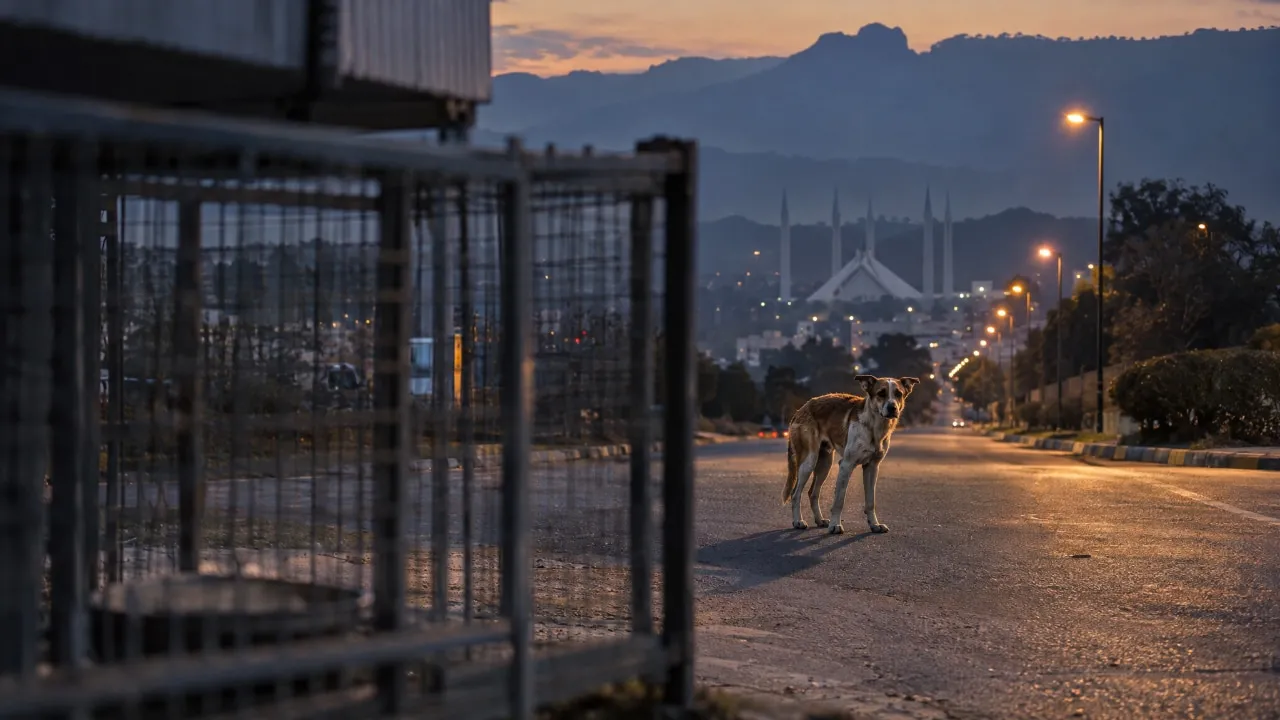
Islamabad High Court Directs CDA to Address Stray Dog Menace
The Islamabad High Court has referred a petition seeking the removal of stray dogs from residential and public areas in the federal capital to the Capital Development Authority, directing its chairman and the chief commissioner to hear the petitioner and decide the matter. Justice Ayaz Shaukat heard the petition, filed by advocate Sajjad Baloch, in the wake of the death of an International Islamic University student who was bitten by a stray dog.
This judicial intervention brings public attention to a long-standing urban governance challenge in the capital territory. Municipal authorities face mounting pressure to balance public safety concerns with animal welfare standards. The court order requires local administrators to directly engage with the petitioner to formulate a practical response.
Tragic Death Sparks Urgent Legal Action
The petition stated that Sufyan Abbasi, a student at the Islamic University, died after being bitten by a stray dog, a tragedy it cited as proof that immediate measures are needed to control the growing threat. The sudden loss of a university student in this manner shocked the local community and accelerated legal scrutiny regarding municipal responsibilities.
Family members, student bodies, and civic groups expressed outrage over the lack of preventative measures prior to the incident. Public discussions quickly centered on how municipal agencies track and manage stray animal populations across different sectors of the city.
Current Conditions on Islamabad Streets
The petition painted a grim picture of the capital's streets:
- Roads, parks and public places are filled with stray dogs
- The stray dog population has grown at an alarming and uncontrolled rate
- Several dog-bite incidents have already been reported
- The situation poses a threat to the lives of residents
Residents across various residential sectors report feeling unsafe when walking outdoors, particularly during early morning hours and after sunset. Children and elderly citizens face the highest vulnerability when navigating neighborhood parks and commercial zones.
Proposed Solutions by the Petitioner
The petitioner wants stray dogs removed from residential areas and public places and relocated to designated shelters across Islamabad. Establishing secure animal shelters represents a significant logistical undertaking that requires dedicated funding, medical supplies, and trained personnel.
Animal welfare advocates and municipal planners often debate the feasibility of mass relocation versus trap-neuter-vaccinate programs. The court directive forces the Capital Development Authority to evaluate these competing strategies directly in consultation with legal representation.
Role of the Capital Development Authority
The court has now directed the CDA chairman and chief commissioner to hear the petitioner and resolve the matter. The Capital Development Authority serves as the primary municipal corporation responsible for civic amenities, urban planning, and environmental sanitation in the federal capital.
Historically, municipal responses to stray animal complaints relied on reactive culling operations, which faced severe condemnation from animal rights activists. Modern municipal management standards increasingly emphasize humane population control methods, though implementation remains inconsistent due to resource constraints.
Impact on Residents and Public Safety
Public health risks associated with uncontrolled stray animal populations extend beyond physical injuries. Rabies prevention requires immediate medical intervention, including expensive immunoglobulin treatments and multi-dose vaccines, placing a financial burden on victims and local health clinics.
Local businesses near public parks also report declining foot traffic as cautious citizens avoid areas known for high concentrations of stray animals. Addressing this issue directly impacts tourism, daily commutes, and community well-being throughout the urban center.
Next Steps for Municipal Authorities
Following the court instruction, the Capital Development Authority leadership must schedule formal hearings with advocate Sajjad Baloch to review the submitted evidence. Official decisions regarding shelter construction, funding allocation, and field operations will emerge from these administrative reviews.
Observers will monitor whether the municipal administration establishes a transparent timeline for mitigating the risks highlighted in the petition. Compliance with the judicial directive remains mandatory for the agency leadership.





