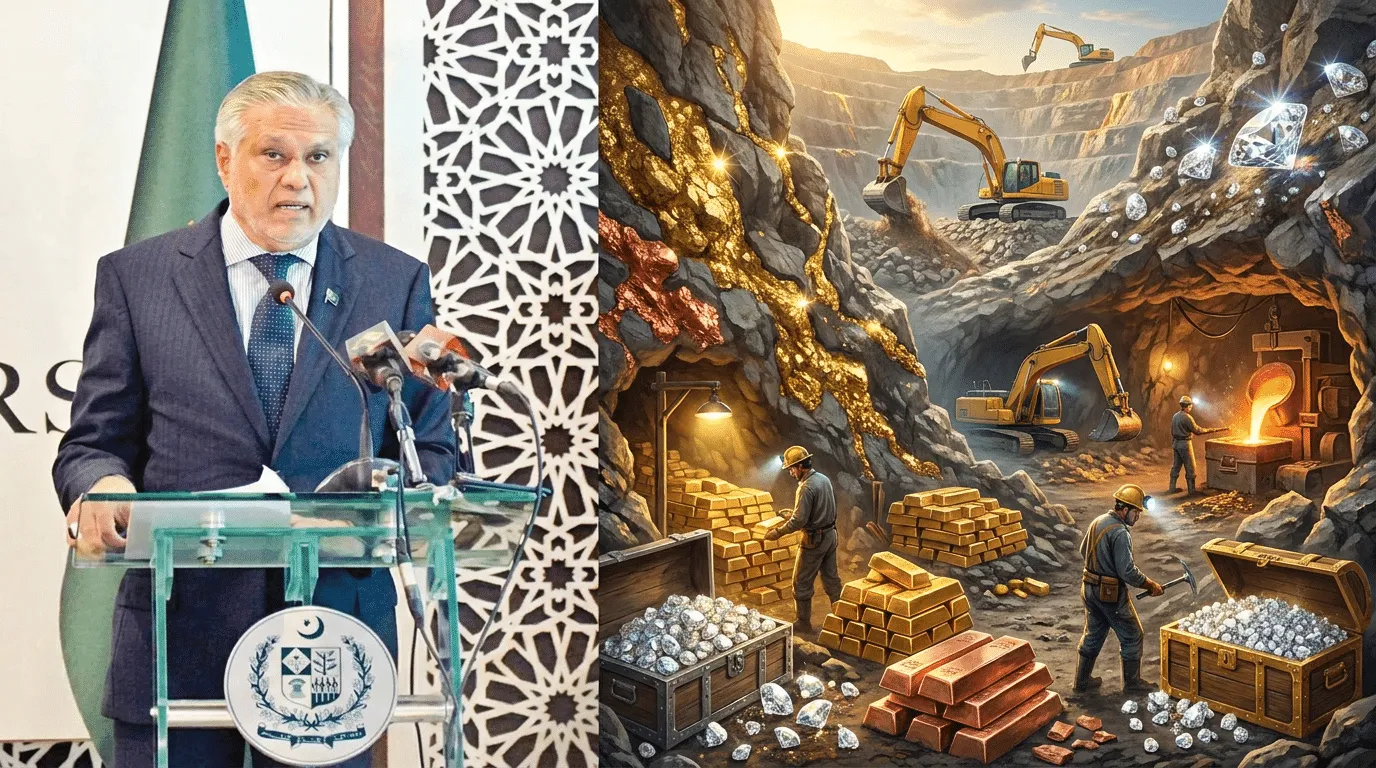
Pakistan Estimates Mineral and Hydrocarbon Wealth at $10 Trillion
Deputy Prime Minister and Foreign Minister Ishaq Dar has estimated the total value of Pakistan's minerals, hydrocarbons, and other natural resources at between $8 trillion and $10 trillion. Speaking at a ceremony in Karachi on Friday, he described this valuation as the most conservative estimate available for the country's vast underground and offshore assets. This announcement comes as Pakistan seeks to harness its untapped resource potential through international partnerships and advanced scientific exploration.
The high-level gathering in Karachi marked the official arrival of the Oruç Reis, a specialized Turkish seismic research vessel that reached the port on Thursday. The ship is due to conduct critical offshore oil and gas exploration work off the coast of Pakistan. Officials from both nations view the deployment of the vessel as a major step forward in addressing national energy demands and developing domestic resource extraction capabilities.
Arrival of the Oruç Reis in Karachi Port
During the ceremony, Ishaq Dar welcomed the leadership and professionals of Turkish Petroleum, alongside the captain, crew, and seismic research team of the Oruç Reis. He characterized the arrival of the vessel as a historic moment for bilateral cooperation in the energy sector. The mission combines Turkish scientific expertise with the operational experience and capabilities of national energy companies in Pakistan to advance offshore exploration efforts.
The deployment of the research vessel is the tangible result of closer diplomatic and economic ties between Islamabad and Ankara. Pakistan wants a long term energy partnership with Turkiye covering offshore exploration, minerals, and renewable energy, according to the Deputy Prime Minister. He noted that three memorandums of understanding have already been signed between the relevant agencies of both countries to formalize this cooperation.
What the Seismic Survey Means for Future Energy Plans
The primary objective of the Oruç Reis is to collect detailed geological data from beneath the seabed. Ishaq Dar stated that the information gathered by the vessel could significantly improve the understanding of offshore geological formations and provide a stronger foundation for future exploration plans. As he noted during his address, every successful journey of exploration begins with knowledge.
However, officials also managed expectations regarding the immediate outcomes of the mission. Offshore exploration is complex, expensive, and inherently uncertain, and a seismic survey cannot guarantee an immediate commercial discovery. Even so, policymakers maintain that no discovery can be made without initial seismic work, and the government is proceeding with confidence, responsibility, and the prayers of the people.
Environmental Standards and Maritime Safety
As offshore activities begin, the government has stressed the need for strict adherence to safety and environmental protocols. Ishaq Dar stated that all offshore activities must meet the highest standards of maritime safety and environmental protection. He emphasized that the territorial waters of the country represent both a vital economic asset and a sacred national trust that must be protected during industrial operations.
To ensure long-term success, the government has called for deep institutional collaboration between the two nations. Pakistani geologists and engineers are expected to work closely with their Turkish counterparts throughout the survey. Furthermore, universities and research institutions in both countries are encouraged to build lasting partnerships in marine science, geoscience, and offshore engineering to train the next generation of technical experts.
Government Support and Facilitation for Turkish Team
The state apparatus has pledged full backing to the visiting Turkish delegation and the crew of the Oruç Reis. Ishaq Dar assured the Turkish team that the government of Pakistan would provide every appropriate facilitation required for the smooth execution of the vessel's mission. This administrative support aims to remove bureaucratic hurdles and ensure that technical teams can focus entirely on data collection and analysis.
By combining financial estimates of up to $10 trillion in natural wealth with active offshore surveying, Pakistan is positioning its energy sector for potential transformation. While commercial extraction remains a distant goal dependent on the findings of the current survey, the arrival of the Oruç Reis signals a proactive approach to discovering and using domestic hydrocarbons and marine resources.





