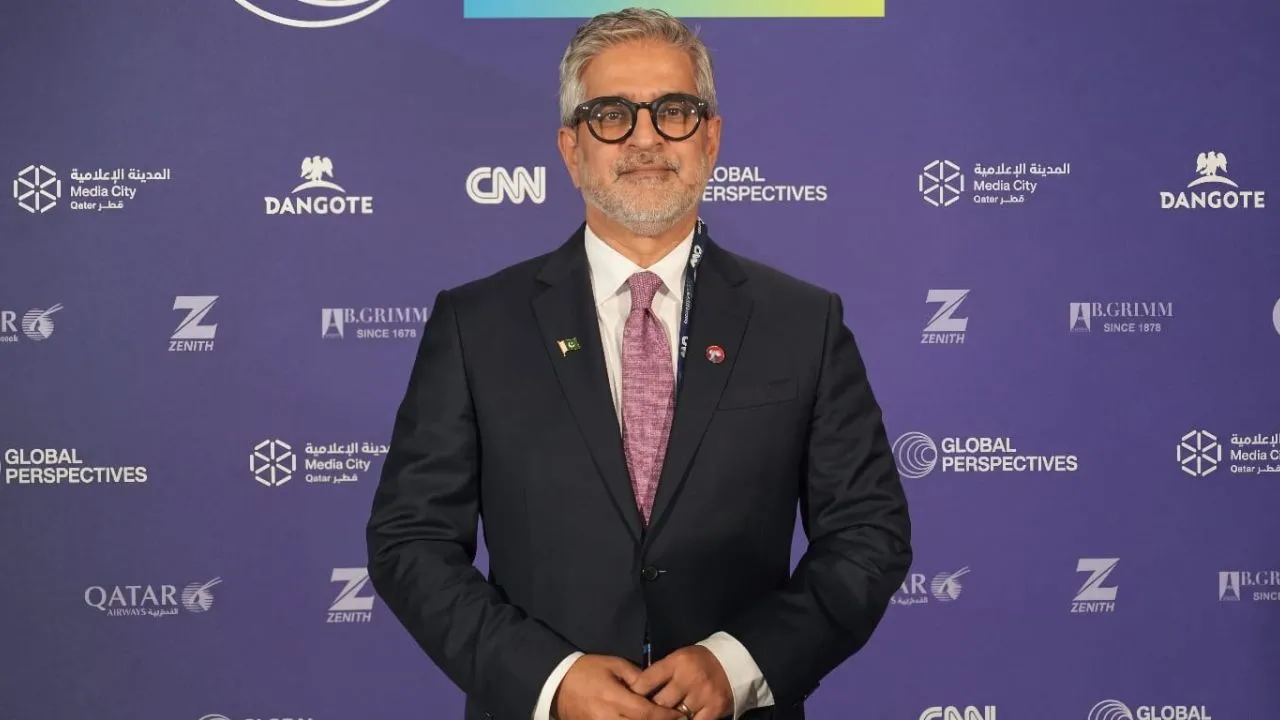
Nations must guarantee that local populations play an active part in building and forming artificial intelligence instead of merely consuming foreign tech, according to JazzWorld CEO Aamir Ibrahim during CNN Global Perspectives in Doha, Qatar. He stated that true artificial intelligence sovereignty goes past mere technical ownership so that people can contribute to the intelligence impacting their daily routines, institutions, and markets.
During a panel called "The Sovereign Stack," Ibrahim questioned standard definitions of artificial intelligence sovereignty that focus heavily on data location, hardware, and local models. While these elements matter, true independence also demands that residents take part in building artificial intelligence and guiding its use.
"In AI, we talk about the human-in-the-loop approach. At the country level, we need a citizen-in-the-loop approach," Ibrahim said, emphasizing that people must have a meaningful role in shaping the technology that influences their lives.
Referencing the five-tier artificial intelligence structure shared by NVIDIA CEO Jensen Huang, Ibrahim pointed out that nations encounter distinct limitations regarding power supplies, processors, hardware, models, and software. Although duplicating every tier independently might prove unrealistic for developing nations like Pakistan, establishing local processing power, technical skills, and building capabilities remains vital. Global alliances can bridge divides, yet nations still need the capacity to build their own models, software, and proprietary rights.
He warned that importing foreign technology should not equate to surrendering the vision that guides a nation's destiny. Pakistan must shift past mere consumption toward active creation, building platforms that capture domestic dialects, cultural backgrounds, and financial priorities while allowing local academics, programmers, and companies to engage in the worldwide artificial intelligence market.
Within JazzWorld, this goal appears in its work to form artificial intelligence skills across its online network. The company also partners with public officials and universities to boost domestic capabilities, understanding that a strong home ecosystem demands cooperation across businesses, research groups, and government bodies.
Ibrahim also pointed to trust as an essential condition for true independence in this sector. Although data storage rules and protection stay critical, keeping records inside national boundaries fails to ensure the technology benefits a nation. Confidence relies equally on data practices, the viewpoints embedded in systems, and output reliability.
"Technology gives you capability. Transparency lends credibility to that capability. But trust is ultimately what determines whether you have earned the right to remain at the table," he said, underscoring the importance of responsible AI development and deployment.
Ibrahim connected independence to the widening intelligence gap separating people who leverage technology for employment and creation from those left behind. Without wider availability of tools, abilities, and hardware, developing markets might constrain the innovation required for local growth. Empowering residents to act as creators, developers, and founders instead of mere consumers remains essential for a competitive national market.
The panel, led by CNN anchor Eleni Giokos, featured global figures from technology and infrastructure fields, including DataVolt CEO Rajit Nanda, McLarty Associates director Dr. Mohammed Soliman, Mal founder Abdallah Abu Sheikh, EDGE Group and TACTICA AI representative Dr. Chaouki Kasmi, Qatar Science & Technology Park president Rama Chakaki, and QAI chairman and managing director H.E. Abdulla AlMisnad.