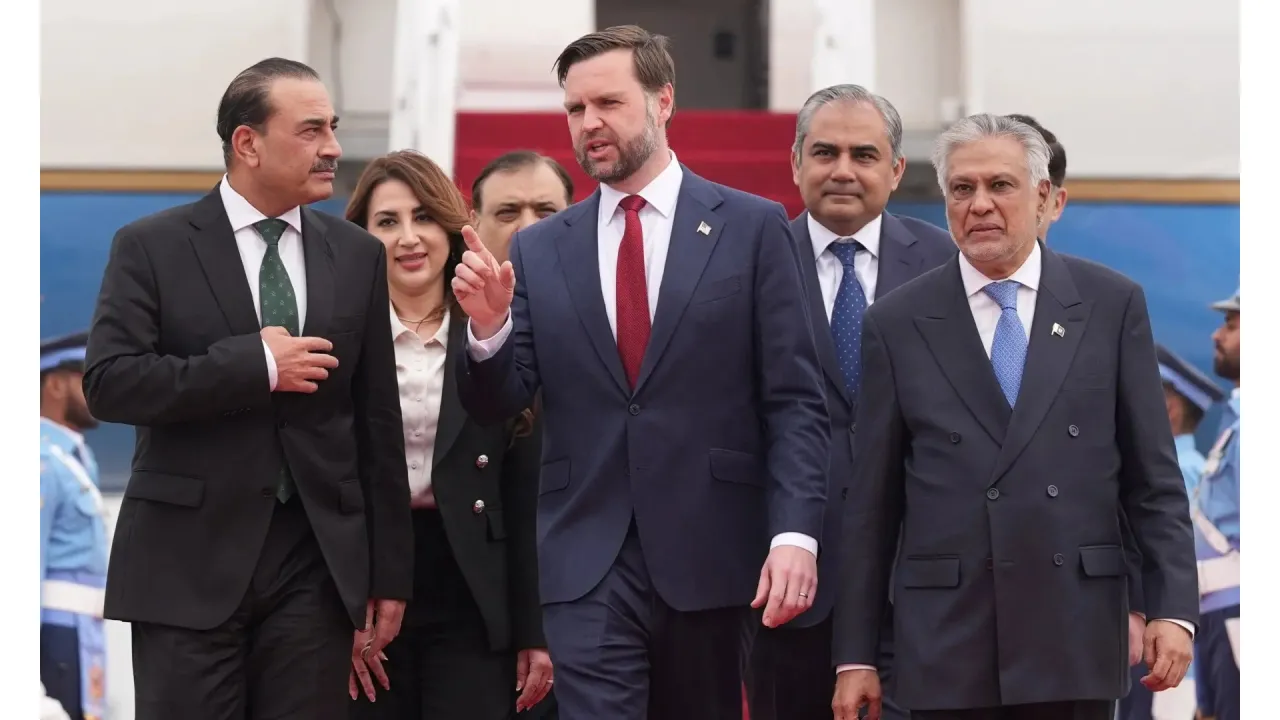
United States Vice President JD Vance has maintained an almost daily communication channel with Pakistan Army Chief, Field Marshal Asim Munir, as Washington pushes for a fresh ceasefire and a potential nuclear agreement involving Iran. Media reports published by Axios brought this high-level diplomatic outreach to light, detailing how the American administration relies on intermediaries to reopen dialogue with Tehran.
Vance has personally assumed direct command of these confidential diplomatic initiatives over the preceding two weeks. Alongside Pakistan, Qatar is serving a pivotal function in trying to bridge the gap between Washington and Tehran, using regional diplomatic channels to restart formal talks.
Why JD Vance and Asim Munir Are Talking Daily About Iran
The diplomatic engagement involves frequent phone calls and secure messages between the American vice president, the Pakistani military leader, and Qatari Prime Minister Sheikh Mohammed bin Abdulrahman Al-Thani. These consultations have explored the logistics of organizing a working-level technical meeting between American and Iranian representatives very soon, though planners have not yet finalized a specific date or venue for such a gathering.
This behind-the-scenes push reflects a high-stakes effort by the current White House to avoid broader military escalation in the Middle East. By leveraging relationships with Islamabad and Doha, Washington hopes to establish a reliable backchannel with Iranian authorities who remain deeply suspicious of direct American overtures.
Pakistan and Qatar as Diplomatic Intermediaries
Pakistan is no stranger to mediating between the United States and Iran, having built a diplomatic track record in earlier rounds of talks. Vance previously headed the American negotiating delegation during an April summit focused on Iran held in Islamabad. His personal involvement at that time helped lay the groundwork for a memorandum of understanding between Washington and Tehran that materialized in June.
Following the Islamabad summit, Vance traveled to lead the United States team during subsequent direct discussions with Iranian counterparts in Switzerland. That diplomatic breakthrough resulted in a formal commitment from Tehran to permit United Nations nuclear inspectors to access its atomic facilities. Unfortunately, that momentum dissolved after the Islamic Revolutionary Guard Corps resumed hostile attacks on commercial shipping lanes.
The Trump Administration Strategy on Iran Diplomacy
The active participation of the American vice president places these negotiations at the very peak of the administration hierarchy. Other key figures involved in the diplomatic push include White House envoy Steve Witkoff alongside presidential adviser and family member Jared Kushner, both of whom are contributing to the strategy.
As part of this outreach two weeks ago, Vance dispatched a formal letter addressed to Mohsen Rezaei, who serves as the secretary of Iran's Supreme National Security Council. The correspondence proposed an immediate restart of direct bilateral talks. Iranian leadership reportedly received the message as a constructive signal, viewing it as a viable pathway to re-engage diplomatically.
President Donald Trump has permitted these diplomatic tracks to move forward while maintaining a hardline posture. Speaking to reporters on Friday, Trump acknowledged that Washington remained in communication with Tehran. At the same time, the Pentagon keeps military forces postured to resume active strikes should the president decide to abandon the diplomatic track.
Obstacles and Military Friction in US Iran Negotiations
Despite active backchannels, observers note that progress remains difficult and incremental. Qatari Prime Minister Sheikh Mohammed remarked on Friday that his government has worked closely with pragmatists inside the American administration who seek to contain hostilities and avert a wider regional conflagration.
He observed that talks persisted even after the recent American midterm elections, although bureaucratic distractions temporarily slowed the tempo of negotiations. The Qatari prime minister remains convinced that the White House desires a peaceful resolution and that a diplomatic accord stays within reach.
President Trump also addressed the mediation efforts during a Friday conversation with Qatari Emir Sheikh Tamim bin Hamad Al-Thani. During the call, the Qatari leader stressed the necessity of sustained communication to safeguard energy transit routes and maritime navigation across critical waterways.
Recent Military Incidents Complicate Ceasefire Efforts
Even as diplomats trade proposals, ongoing military friction threatens to derail the peace process. On Friday, the United States military executed a retaliatory strike against an anti-aircraft missile launcher located on Iran's Qeshm Island inside the Strait of Hormuz. The military action followed an incident where the launcher allegedly targeted an American fighter jet in the area, an event that President Trump confirmed to the public.
These parallel tracks of diplomacy and kinetic military action define the current phase of relations. While Vance and Munir coordinate diplomatic maneuvers, military commanders remain on high alert. The ultimate outcome depends on whether the renewed backchannel talks can overcome deep-seated mistrust and recent military clashes before escalation takes over.