Gilgit-Baltistan (GB) Chief Minister Amjad Hussain on Saturday inaugurated an online system for registering traders who want tax exemption on goods imported from China through the Khunjerab Pass for local consumption.
What Is the GB Traders Registration and Exemption System?
The GB Traders Registration and Exemption System (GBTERS) was launched at a ceremony at the Chief Minister Secretariat. GB Finance Minister Mohammad Ali Akhtar, Minister for Local Bodies Zulfiqar Ali Murad, Industries, Commerce and Labour Department Director Shahid Ali and other officials attended.
GBTERS is a web-based portal that collects applicant details, verifies company or partnership registration, and issues a digital certificate confirming eligibility for the tax-free scheme. The system is designed to make the process transparent, reduce paperwork, and limit opportunities for favoritism.
Why the Tax Exemption Matters for GB Traders
The chief minister said GB traders would benefit from the exemption granted by the federal government for Pakistan-China trade through the Khunjerab Pass. He said the GB government introduced the online system to keep the process transparent and prevent any injustice to traders.
He added that the scheme aims to facilitate local traders and residents and promote economic activity in the region. Applicants must have a registered company or partnership firm.
Background: Federal Tax Relief for Khunjerab Imports
Last year, Prime Minister Shehbaz Sharif approved the recommendations of a high-level committee to exempt income tax, sales tax and federal excise duty on goods GB residents import from China through the Khunjerab Pass exclusively for local consumption. The Federal Board of Revenue subsequently issued a statutory regulatory order to implement the measures.
The federal government has capped annual tax relief under the scheme at Rs4 billion, covering 2,403 items imported for local consumption. The exemptions will be reviewed every two years.
How the Rs4 Billion Quota Is Managed
Officials told Dawn that the GB government has been tasked with deciding how the Rs4 billion quota will be distributed among local traders importing from China. Local firms and companies will register with the GB Industries and Commerce Department.
Under the current framework, each approved trader receives a proportion of the quota based on the volume and value of their declared imports. The allocation is monitored by the provincial secretary for minerals and industries, who also oversees compliance with the stipulation that goods be for local consumption only.
Explainer: The Khunjerab Pass Trade Corridor
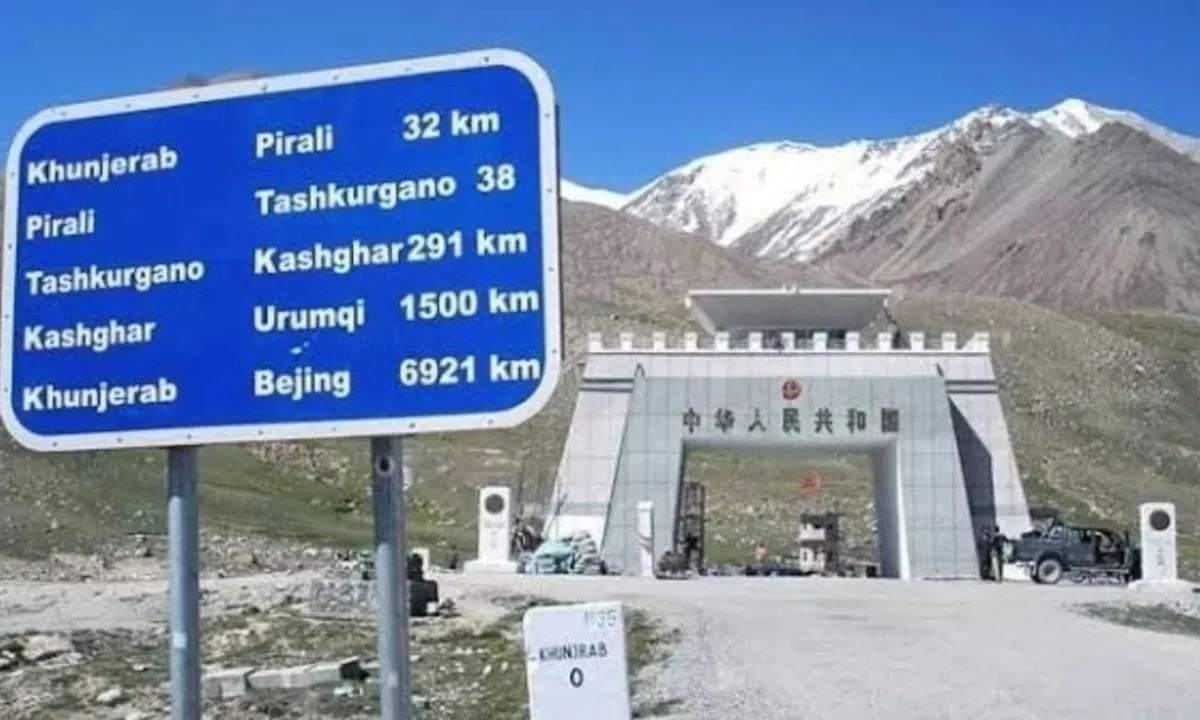
The Khunjerab Pass, at an elevation of 4,693 metres, is the highest paved international border crossing in the world. It links Gilgit-Baltistan with China's Xinjiang region and forms the western terminus of the China-Pakistan Economic Corridor (CPEC). Over the past decade, the pass has become a key conduit for goods such as machinery, construction material, consumer electronics and agricultural inputs.
Because the pass is located within GB's jurisdiction, the provincial administration is responsible for customs clearance, road maintenance and security. The tax-free scheme therefore directly influences the cost structure for businesses that rely on Chinese supplies to serve local markets.
Impact on Local Economy and Businesses
By removing income tax, sales tax and federal excise duty on eligible imports, the scheme reduces the landed cost of goods by up to 17 percent, depending on the tax components applicable to each item. Lower costs enable traders to price products more competitively, expand inventory, and invest in downstream activities such as assembly or value-addition.
Small and medium-sized enterprises, which constitute the bulk of GB's formal sector, stand to gain the most. The exemption also encourages new entrants who previously found the tax burden prohibitive. In the longer term, the increased flow of affordable inputs is expected to stimulate sectors such as construction, tourism services, and agricultural processing.
Future Plans: Trade-Free Zone Proposal
Mr Hussain directed the provincial secretary for minerals and industries to prepare proposals on a priority basis for a trade-free zone in Gilgit. He said the zone would give local and international traders a platform for coordination and the facilities needed to conduct business. The GB government will set it up using its own resources.
The proposed zone would likely include warehousing, customs-clearance offices, and logistics services, creating a hub that could attract investment beyond the immediate border trade. If approved, the zone could complement the tax-free scheme by offering streamlined procedures and shared infrastructure.
What Traders Need to Do Next
Interested traders should gather the following documents before accessing GBTERS:
- Certificate of company or partnership registration issued by the GB Companies Registrar.
- National Tax Number (NTN) and Sales Tax Registration Number (STRN).
- Detailed list of items to be imported, matching the 2,403 items approved under the federal order.
- Proof of intended local consumption, such as sales contracts or distribution agreements.
Once uploaded, the portal generates a reference number. Applicants then wait for verification by the Industries and Commerce Department, after which a digital exemption certificate is issued. The certificate must be presented to customs officials at the Khunjerab border for each shipment.
Monitoring and Review Mechanisms
The statutory regulatory order requires the exemption to be reviewed every two years. The review will assess utilisation of the Rs4 billion quota, compliance with local-consumption rules, and any impact on fiscal revenue. Findings will inform adjustments to the item list, quota size, or eligibility criteria.
In addition, the GB government has pledged periodic audits of GBTERS data to ensure that no trader exceeds their allocated quota and that imported goods are not diverted to other provinces.
Potential Challenges and How They Are Being Addressed
Logistical constraints at the high-altitude border, such as weather-related closures, could limit the flow of goods and affect quota utilisation. The provincial administration is coordinating with the National Highway Authority to improve road maintenance and with the Pakistan Meteorological Department for better forecasting.
Another concern is the risk of fraud if traders misdeclare the purpose of imports. To mitigate this, GBTERS cross-checks declared items against the approved list and requires post-import sales evidence for a sample of shipments.
Conclusion
The launch of GBTERS marks a concrete step toward simplifying cross-border trade for Gilgit-Baltistan's business community. By providing a transparent, online route to claim tax exemption on Chinese imports, the system aligns provincial policy with the federal tax-relief framework and supports the broader economic objectives of the China-Pakistan Economic Corridor.
Traders who meet the registration requirements can now apply immediately, while the provincial government prepares a trade-free zone that could further boost the region's commercial prospects.