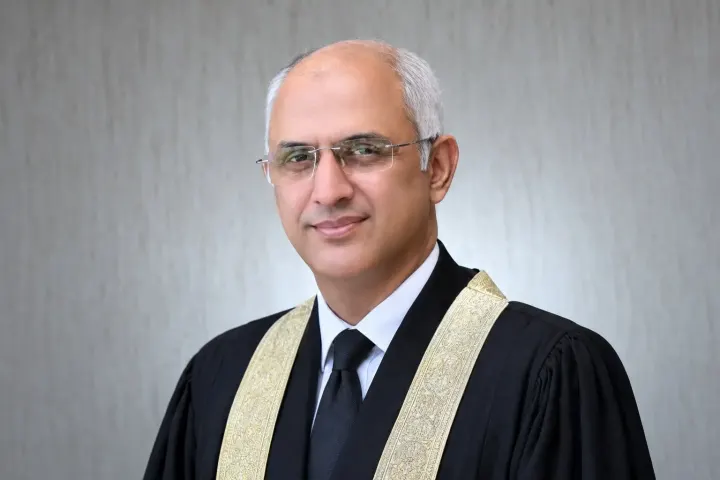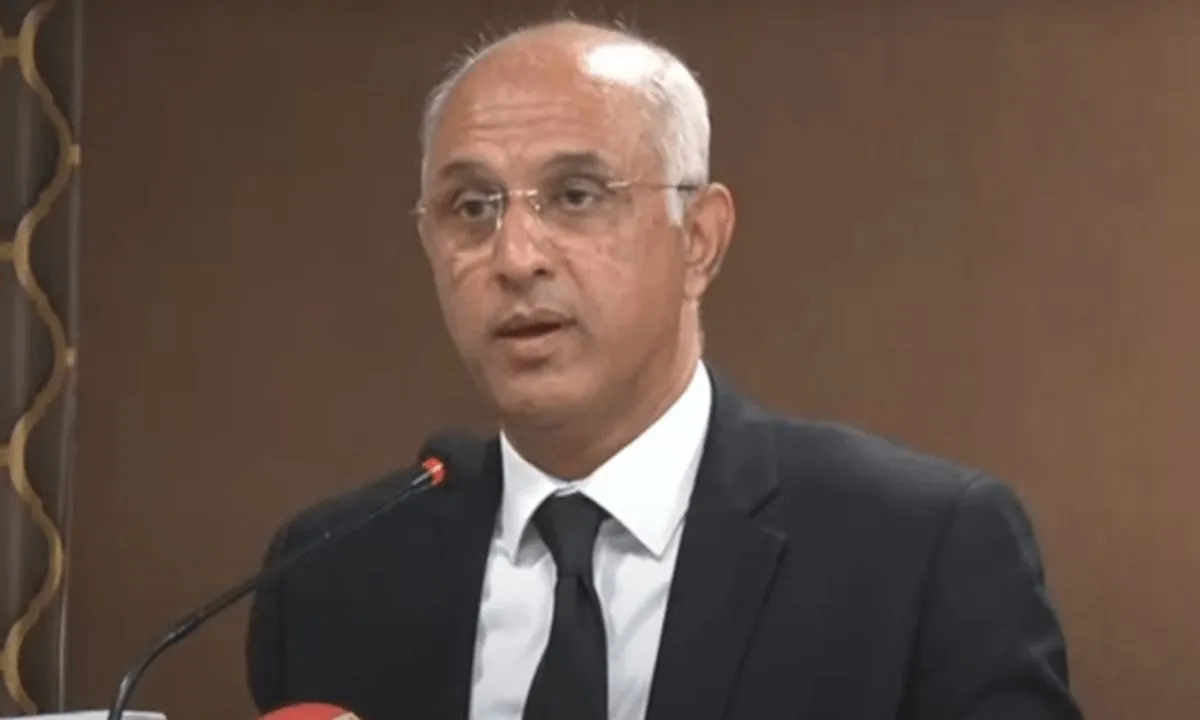
Lahore High Court Justice Mohsin Akhtar Kayani stepped down from his position on Wednesday. He pointed to health concerns following a recent surgery along with matters of conscience. His tenure was originally scheduled to end on February 10, 2032.
In a letter addressed to the president of Pakistan, Kayani stated that the 26th and 27th Constitutional Amendments damaged the independence and institutional integrity of high courts. He noted that expanding executive control over judicial institutions, involving the appointment and transfer of judges, severely damaged public trust in the judiciary and the equity of legal proceedings.
He mentioned that regular litigants, who form the main stakeholders in the justice system, keep suffering while other participants gain advantages from a framework designed to serve citizens. "My conscience does not permit me to continue on the bench," he wrote, stating that judicial positions must stay tied to independence, loyalty to the Constitution, and the defense of human dignity.
Kayani announced plans to resume legal practice to keep serving the public, defending their rights, and encouraging legal awareness. He expressed gratitude to his mentors, judicial colleagues, and relatives for their backing during the discussions that brought him to this choice. He also noted that he resolved more than 23,000 cases throughout his time on the bench at the Islamabad High Court and the Lahore High Court.
Transfer and seniority dispute
Kayani served as the senior puisne judge of the Islamabad High Court and anticipated elevation to chief justice. Yet, the relocation of Chief Justice Sardar Muhammad Sarfraz Dogar from the Lahore High Court, alongside two judges originating from the Sindh and Balochistan high courts, prompted him to contest the inter-high court relocations. The constitutional bench of the Supreme Court validated the moves, including the transfer of Dogar.
Kayani and additional senior judges from the Islamabad High Court later petitioned the Supreme Court regarding administrative authority used by Chief Justice Dogar. They claimed the office transformed into a monocracy and allowed the exclusion of judges from rosters arbitrarily.
He moved to the Lahore High Court on April 29 and took up a post at the principal seat in Lahore, where he dropped in seniority to the 12th position on the list. The court assigned him no division bench duties. Prior to his resignation, he traveled back to the twin cities to handle a single bench at the Rawalpindi registry under a revised duty roster.
Education and career
Kayani originated from Islamabad. He finished his foundational schooling at FG Boys High School and obtained his degree from FG College for Men in 1989.
He completed an LLB at the University of the Punjab in 1994, an MA in Political Science in 1996, an LLM at Karachi University in 2003, and an MSc in Pakistan Studies in 2005. He also holds a postgraduate diploma focused on human rights from the University of Peshawar, partnered with the Norwegian Institute of Human Rights at the University of Oslo.
Authorities enrolled him as an advocate in district courts during 1995, the high court in 1997, and the Supreme Court in 2009. He received an appointment as an Islamabad High Court judge on December 23, 2015.
Prior to his judicial appointment, he worked as joint secretary for the Islamabad District Bar Association between 1998 and 1999, and as general secretary from 2002 to 2003. He held the presidency of the Islamabad High Court Bar Association spanning 2013 to 2014.
Data from the Lahore High Court website shows he presided over major cases, specifically those concerning enforced disappearances, and pushed for legislative changes featuring severe punishments for enforced disappearances.