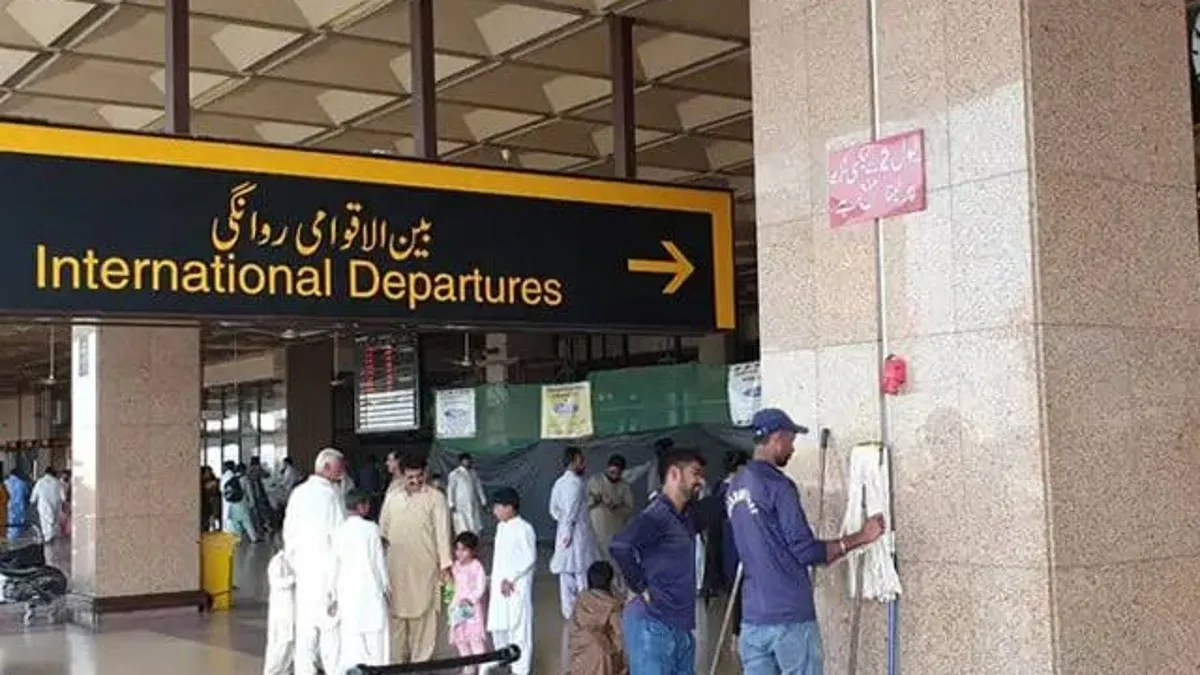
Karachi and Lahore International Airports Ready for Sale
Pakistan has signed a financial advisory agreement with an EY Middle East-led consortium to prepare Jinnah International Airport in Karachi and Allama Iqbal International Airport in Lahore for outsourcing, marking another step in the government's privatisation programme.
The Privatisation Commission and the consortium signed the Financial Advisory Services Agreement in Islamabad. The signing ceremony was witnessed by Adviser to the Prime Minister on Privatisation and Privatisation Commission Chairman Muhammad Ali, along with senior commission officials.
The EY team was represented by Andre Olivenca of EY International and Zeeshan Hussain.
EY Consortium to Advise on Airport Outsourcing
Under the agreement, the EY Middle East-led consortium will provide technical, financial, legal, environmental, and commercial advisory services to support the proposed transactions. The government plans to bring in private sector expertise for the operation, management, commercial development, and optimization of both airports through concession or management contracts.
The consortium will assist in structuring and implementing the transactions in line with international best practices, with the process expected to be transparent, competitive, and market-driven. The government said the agreement marks an important milestone in its privatisation programme and reflects its commitment to improving the efficiency, service quality, and long-term sustainability of both airports through private sector participation.
The process is also intended to ensure transparency, competitiveness, and value for the people of Pakistan. Outsourcing state-owned infrastructure assets represents a major policy shift for the nation, aimed at injecting capital and modern management techniques into public utilities without selling the underlying land or sovereign ownership.
Background of Pakistan International Airport Outsourcing
The decision to outsource major aviation hubs stems from years of financial strain and operational inefficiencies within state-run entities. Governments in developing nations often turn to private concessionaires to upgrade terminal facilities, expand passenger capacity, and boost non-aeronautical revenues from retail and cargo operations. International financial institutions have long recommended public-private partnerships for large infrastructure projects to reduce the fiscal burden on the national budget.
Similar models have been successfully implemented across various emerging economies, where global airport operators introduce advanced baggage handling systems, digital check-in counters, and improved retail spaces. These transformations typically require substantial upfront capital investments that governments struggle to finance independently. By partnering with experienced foreign and domestic operators, the state hopes to transform domestic transit points into regional aviation hubs.
How the Financial Advisory Services Agreement Works
A Financial Advisory Services Agreement serves as the foundational legal and technical contract between a government and a consulting firm or consortium. In this capacity, the EY Middle East-led group will conduct comprehensive asset valuations, draft bidding documents, and evaluate legal frameworks to protect public interests. They will also design the bidding structure to attract reputable global airport operators.
Advisers must ensure that environmental and social safeguards are maintained throughout the transaction lifecycle. This involves assessing current labor standards, compliance with international aviation safety regulations, and environmental impact studies. Their recommendations will determine whether the assets are offered under long-term concessions or direct management contracts.
Impact on Passengers, Businesses, and Workers
The transition toward private sector participation directly impacts travelers, local vendors, and airport staff. Passengers can anticipate upgraded terminal amenities, shorter wait times, and improved customer service standards once private operators take over daily management. Local businesses operating inside the terminals may experience revised leasing structures and modernized commercial zones.
Airport employees often voice concerns regarding job security during structural reforms. Government officials usually negotiate labor protection clauses within concession agreements to safeguard existing jobs and pension rights for a transitional period. Clear communication between labor unions, the Privatisation Commission, and the advisory consortium remains essential to mitigate industrial unrest.
Next Steps in the Privatisation Programme
Following the signing of the agreement in Islamabad, the EY consortium will begin drafting transaction structures and conducting detailed feasibility studies for both facilities. The Privatisation Commission will review these proposals before issuing international expressions of interest and inviting competitive bids from qualified airport management firms.
Observers will monitor the bidding timeline, transparency measures, and the specific terms of the concession contracts. The success of this initiative will likely influence future government plans regarding the outsourcing of other aviation facilities and state-owned enterprises across the country.