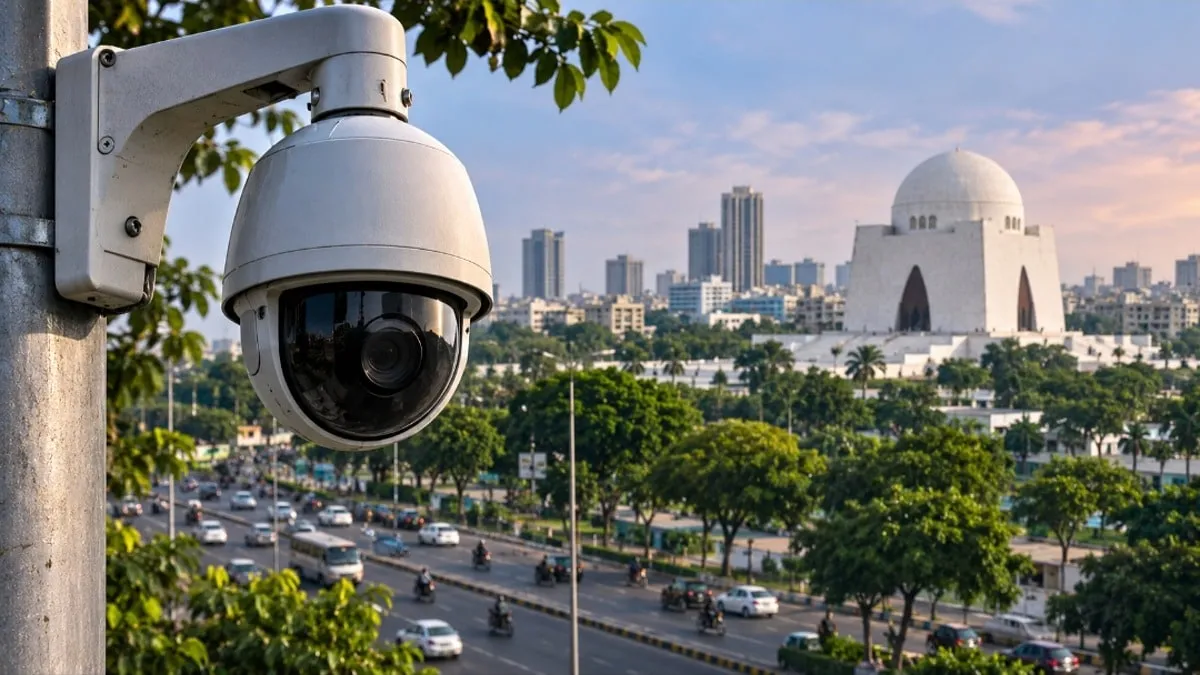
The Sindh Cabinet has approved the release of Rs. 5.766 billion for the second phase of the Karachi Safe City Project, setting an 18-month deadline for its completion.
What Does Phase Two of the Karachi Safe City Project Entail?
Phase two will see the installation of more than 2,300 surveillance cameras across the metropolis. The rollout includes:
- 870 cameras for general public-area monitoring
- 1,300 cameras equipped with Automatic Number Plate Recognition (ANPR) and facial-recognition technology
- 80 cameras dedicated to traffic-law enforcement
These devices will be positioned at strategic points such as market districts, transport hubs, and high-density residential zones to broaden coverage and improve response times.
How the Project Is Funded and Managed
The cabinet's decision follows a meeting on Thursday, during which Senior Minister Sharjeel Memon confirmed that the funding will be drawn from the allocated Rs. 5.766 billion. The overall project budget stands at Rs. 9.406 billion, according to a statement released by the Chief Minister's House.
The contract for the equipment and installation is valued at Rs. 8.871 billion and is being executed through a government-to-government arrangement with the National Radio and Telecommunication Corporation (NRTC). No private firm has been awarded the contract, a point emphasized by Minister Memon to address concerns about transparency.
Who Is Overseeing Implementation?
Chief Minister's directive places Home Minister Ziaul Hassan Lanjar in charge of day-to-day supervision. Lanjar has been instructed to monitor progress closely and ensure that the system becomes fully operational within the stipulated 18-month window.
Why the Karachi Safe City Project Matters
When complete, the Safe City initiative aims to install nearly 10,000 cameras at more than 2,000 locations throughout Karachi. The extensive network is designed to:
- Deter criminal activity through visible surveillance
- Provide law-enforcement agencies with real-time visual intelligence
- Facilitate faster identification of traffic violations and accidents
- Support forensic investigations with high-resolution footage and plate-recognition data
Karachi, Pakistan's largest city, faces challenges ranging from traffic congestion to rising crime rates. Enhanced monitoring is expected to improve public safety, streamline traffic management, and bolster confidence among residents and businesses.
Historical Context of the Safe City Initiative
The Safe City concept was first introduced in Pakistan in the early 2010s, with pilot installations in Islamabad and Lahore. Those early projects demonstrated the utility of integrated CCTV systems, prompting several provinces to adopt similar schemes. Sindh's version began with a first phase that installed approximately 3,500 cameras, focusing on high-risk neighborhoods and major thoroughfares.
Phase one laid the technical groundwork, including the establishment of a central monitoring hub staffed by trained operators. Lessons learned, such as the need for reliable power backup and secure data storage, have shaped the design of phase two.
Technical Overview of the New Cameras
The 1,300 ANPR and facial-recognition cameras will use AI-driven analytics capable of matching license plates and faces against databases maintained by the police and traffic authorities. These systems can flag stolen vehicles, identify wanted individuals, and alert officers to traffic violations automatically.
General-surveillance cameras will operate in 1080p resolution, with night-vision capabilities to ensure round-the-clock coverage. Traffic-enforcement units will be paired with signal-control software to capture violations at intersections and generate electronic citations.
Potential Challenges and Public Concerns
While officials highlight security benefits, civil-rights groups have raised questions about privacy, data protection, and oversight. Pakistan's current privacy framework does not comprehensively regulate facial-recognition use, prompting calls for clear guidelines on data retention, access controls, and audit mechanisms.
Technical challenges include ensuring uninterrupted power supply in a city prone to load-shedding, integrating new cameras with existing infrastructure, and training personnel to operate sophisticated analytics platforms.
What Comes Next for the Safe City Project?
The next milestones include:
- Finalizing procurement contracts with NRTC within the next month
- Beginning installation of the 2,300 cameras by the end of the current quarter
- Testing ANPR and facial-recognition software in pilot zones before city-wide rollout
- Establishing a public-information portal to disclose system specifications and data-use policies
Progress reports are expected to be presented to the Sindh Cabinet at quarterly intervals, with a comprehensive performance review scheduled at the end of the 18-month period.
Practical Takeaways for Karachi Residents
Citizens can anticipate increased police visibility in areas where new cameras are installed. Drivers should expect automated traffic-violation notices if their vehicles are captured by the ANPR units. For businesses, the expanded surveillance network may reduce theft and improve insurance assessments.
Community groups are encouraged to engage with municipal authorities to understand data-privacy safeguards and to provide feedback on camera placement to avoid unnecessary intrusion into private spaces.





