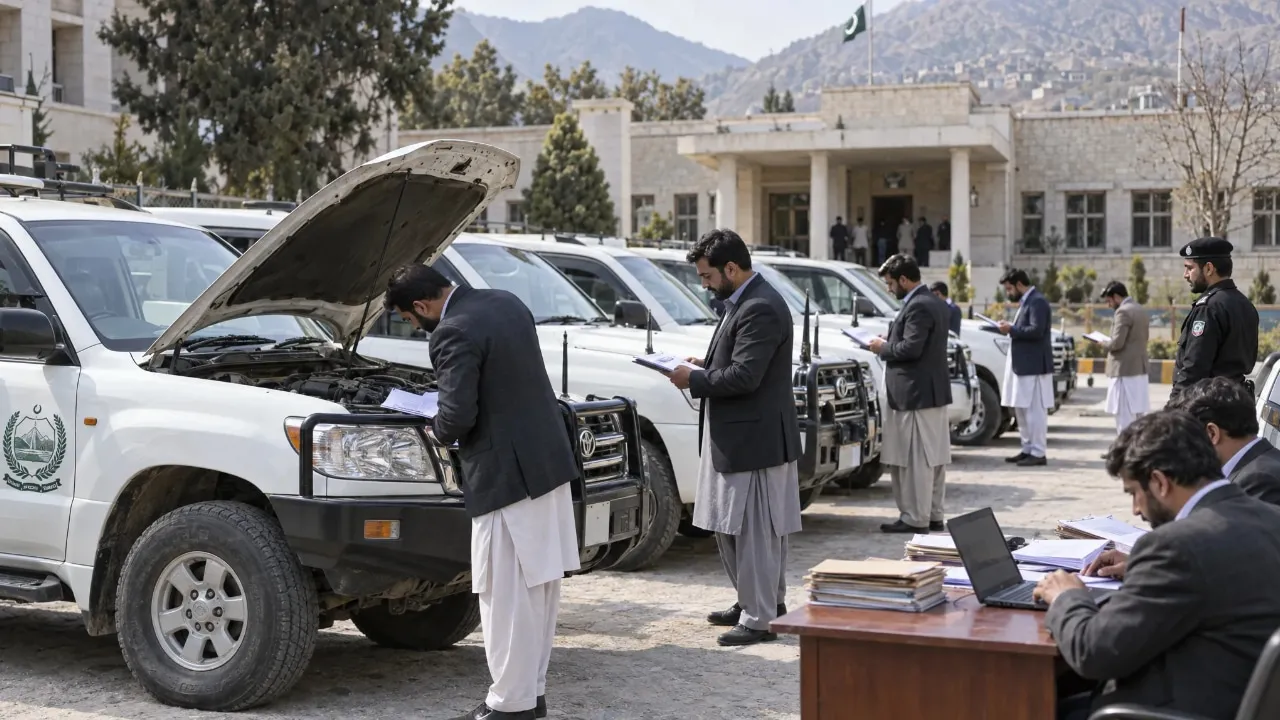
Khyber Pakhtunkhwa Starts Province-Wide Audit of Official Vehicles
The Khyber-Pakhtunkhwa Local Government and Rural Development Department has launched a province-wide review of government vehicles allotted to local government institutions to identify unauthorized use, illegal retention, and violations of prescribed entitlement rules. This sweeping administrative check targets municipal administrations across the region to verify the current custody of all state-owned transport assets. Public resources require strict oversight, making this inventory a vital step toward administrative accountability in local governance.
At the direction of the Governor's Adviser for Local Government, Communications and Works, Asif Rafiq, Secretary, Local Council Board, Khizar Hayat Khan has instructed all Tehsil Municipal Administrations (TMAs) to submit complete records of government-owned vehicles without delay. The directive applies directly to municipal offices throughout the province, demanding immediate compliance from local administrative heads. Officials must compile and forward comprehensive documentation regarding every automobile registered under their departmental purview.
What Information TMAs Must Provide in the Vehicle Audit
Under the directives, all TMAs have been asked to provide details of the total number of official vehicles in their possession, the names and designations of officers and other officials to whom these vehicles have been allotted, and whether the allocations are in accordance with the relevant rules and regulations. Local administrators must account for every single unit assigned to their department, matching the physical assets against official paperwork. Transparency in asset distribution forms the core objective of this phase, requiring clear identification of every user currently operating state property.
Administrative accountability within local bodies has long remained a subject of public interest. Municipal resources are funded by taxpayers, and the proper utilization of official transport directly impacts public service delivery. By demanding precise designations and allocation records, the Local Council Board intends to create a transparent ledger of all municipal automobiles currently deployed in the field.
Scrutiny of Vehicles Held by Former Local Representatives
The scrutiny will also cover vehicles provided to former elected local government representatives during their tenure, particularly former tehsil chairmen and mayors. Elected officials often receive official transport to carry out their duties while in office. However, regulations dictate that these assets must be returned immediately once a term concludes and a representative steps down from public office.
The department has sought details of the number of vehicles allotted to these former office-holders, their current status, their location, and the individuals presently using them. Investigators want to know if municipal assets remain parked at private residences or if unauthorized family members are driving them. Tracking the physical whereabouts of each transport unit helps authorities establish a clear picture of how public property is handled after political tenures end.
Tracing Unauthorized Retention and Private Use
The authorities will specifically examine whether former elected representatives returned vehicles allotted to them to the respective local government institutions after completing their terms. Past administrations have occasionally faced accusations of retaining official perks long after leaving office. This review checks past compliance against current physical inventories to catch any discrepancies.
Any vehicle still retained by a former office-holder or being used by an unauthorized individual will be scrutinized to determine the legal grounds for its continued possession. The exercise aims to identify vehicles allotted without proper approval, as well as those being retained by government officials beyond their prescribed entitlement. The department has made it clear that vehicles found in violation of the applicable rules will be taken back and appropriate action initiated against those responsible.
Official Stance on Recovering Public Assets
Secretary Local Council Board Khizar Hayat Khan said the review was intended to establish the legal entitlement of every officer and official using a government vehicle. Administrative rules specify exact categories of civil servants and elected figures who qualify for transport allocations based on their pay scale and responsibilities. Ensuring adherence to these thresholds prevents administrative overreach and unauthorized perks.
He said vehicles held beyond the permissible entitlement or being used by unauthorized persons would be recovered to ensure that public resources were used strictly in accordance with the rules. In his letter, the secretary termed the matter important and directed all concerned authorities to furnish the required information immediately, stressing that there should be no unnecessary delay in submitting the records.
Protecting the National Exchequer from Unnecessary Expenditure
The initiative is aimed at preventing the misuse of public assets, ensuring transparency in the distribution of government vehicles and protecting the national exchequer from unnecessary expenditure. When unauthorized individuals drive official cars, the public treasury bears the cost of fuel, maintenance, and vehicle depreciation without receiving any administrative benefit. Eliminating these unauthorized expenses frees up funds for actual municipal development projects.
Local government institutions across Khyber-Pakhtunkhwa now face a strict deadline to complete their record-checking processes. As reports arrive from various TMAs, the Local Council Board will analyze the data to initiate vehicle recoveries wherever rules have been breached. Public administration observers will watch the outcome of this audit to see how effectively the department reclaims state property from unauthorized users.





