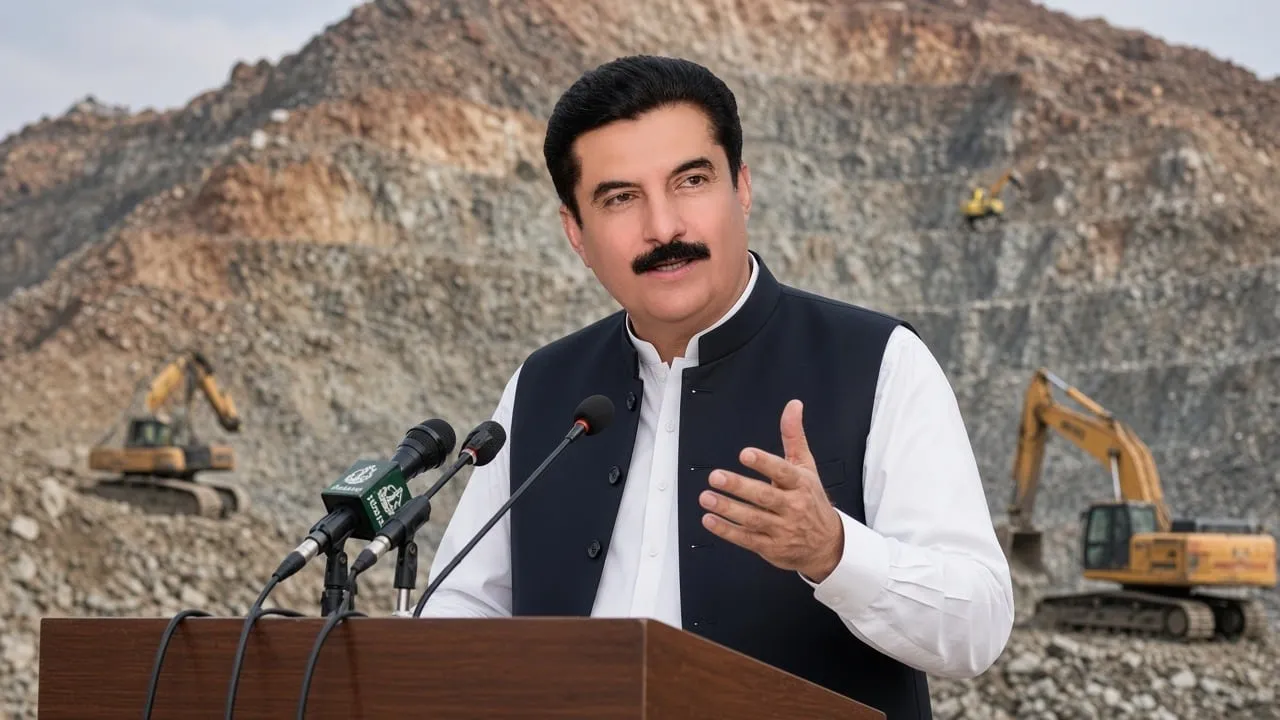
Khyber Pakhtunkhwa Governor Faisal Karim Kundi announced on Saturday that all gold mining operations in the province are suspended and every existing gold mining lease has been cancelled. The decision, taken at a press conference in Peshawar, follows a series of attacks linked to illegal mining and the governor's claim that such activity finances terrorism.
Kundi said the crackdown is intended to stop illegal extraction that, in his view, channels most of its profit to extremist groups. The move comes just a month after the governor had publicly invited foreign investors to partner with the province on mineral projects.
What Prompted the Sudden Policy Reversal?
In October, Governor Kundi travelled to the Pakistan Minerals Investment Forum in Islamabad and urged international firms to consider joint ventures in KP's mineral sector. He promised a one-window facility to streamline approvals, positioning the province as a new frontier for mining investment. Within weeks, a deadly attack in Kohat involving a DSP and ten police officers shifted the narrative from attraction to security.
The attack, which occurred while police were returning from an operation targeting illegal mining sites, left the governor under pressure to demonstrate a firm response. Kundi subsequently named twelve politicians he alleged were supporting the illicit trade, and he framed the suspension as a necessary step to protect both provincial revenue and national security.
How the Governor's Order Affects Existing Operations
At the press briefing, Kundi gave leaseholders and contractors a strict one-week deadline to withdraw all heavy machinery from active mining zones. Any equipment that remains after the deadline will be seized by provincial authorities. He also announced that fines will now be imposed in line with existing mining law, replacing the earlier practice of magistrates levying penalties of Rs. 25,000 to Rs. 30,000.
The governor provided detailed figures on the scale of illegal activity in Kohat's Blocks C and D. According to his statements, the operations involve approximately 8,350 trucks, 3,660 excavators, 1,600 dumpers and around 50,000 labourers. He estimated that about 90 kilogrammes of gold are extracted each month from these sites.
Why Illegal Mining Is Considered a Terrorism Funding Source
Kundi claimed that 80 percent of the profits from illegal gold mining are smuggled across the border into Afghanistan, where they are allegedly used to finance terrorist activities. While the governor did not provide independent verification of the figure, the claim aligns with broader security concerns in the region, where cross-border smuggling of natural resources has been linked to militant financing.
The governor's statement reflects a long-standing narrative in Pakistan's security policy that illicit resource extraction can fuel insurgency. The Federal Government has previously highlighted the need to curb illegal mining in the northern areas, citing environmental degradation and loss of state revenue as additional concerns.
Legal and Institutional Response: Commission and Task Force
To institutionalise the crackdown, Kundi announced the formation of a judicial commission headed by a retired Peshawar High Court judge. The commission's mandate is to investigate allegations of corruption, political patronage and the financial flow of mining proceeds. In parallel, a task force named after the martyred DSP Haider Zaman will draft a new mining strategy within three weeks.
The task force is expected to review existing mining legislation, propose tighter licensing procedures, and recommend mechanisms for community monitoring. By naming the task force after a fallen officer, the governor signalled a symbolic commitment to honouring those who lost their lives in the fight against illegal mining.
Background: Mining in Khyber Pakhtunkhwa
Khyber Pakhtunkhwa is rich in mineral resources, including gold, copper, marble and gemstones. Historically, mining in the province has been fragmented, with a mix of formal licences and informal, often illegal, extraction. The provincial government has struggled to balance economic development with environmental protection and security concerns.
In recent years, the provincial administration introduced a one-window system to simplify the approval process for legitimate investors. The system was designed to reduce bureaucratic delays, attract foreign capital and generate employment. However, the lack of robust monitoring mechanisms has allowed illegal operators to flourish, especially in remote districts such as Kohat.
Explainer: How Mining Leases Work in Pakistan
Under the Mines and Minerals Development Act 1995, any entity wishing to explore or extract minerals must obtain a lease from the provincial government. The lease outlines the area, duration, royalty rates and environmental obligations. Leases are typically granted after a feasibility study, environmental impact assessment and public consultation.
Illegal mining occurs when operators either work without a lease, exceed the limits of an existing lease, or fail to pay the required royalties. Provincial authorities can impose fines, confiscate equipment and, in severe cases, revoke the lease. Enforcement has historically been weak due to limited resources and political interference.
Impact on Stakeholders
The governor's order directly affects several groups:
- Leaseholders and contractors: They must remove costly machinery within a week or face seizure, potentially incurring significant financial loss.
- Labourers: An estimated 50,000 workers in Kohat's Blocks C and D could lose daily wages if mining activities cease abruptly.
- Local businesses: Suppliers of fuel, food and equipment to mining sites may see a sharp decline in demand.
- Potential foreign investors: The abrupt policy shift may raise concerns about regulatory stability in KP.
- Security agencies: The crackdown aligns with broader counter-terrorism objectives, but it also requires additional resources for enforcement.
What Comes Next: Timeline and Next Steps
The governor gave a clear timeline for the immediate actions: machinery must be cleared within seven days, and fines will be applied according to law. The judicial commission is expected to begin hearings shortly, though no specific start date was announced. The task force has a three-week deadline to produce a revised mining strategy, after which the provincial cabinet will review and potentially adopt the recommendations.
Stakeholders are advised to monitor official notifications from the KP Chief Minister's office and the provincial mining department for detailed procedural guidelines. The federal Ministry of Energy and Minerals may also issue complementary directives, given the national security implications.
Practical Takeaways for Residents and Businesses
Anyone directly involved in mining activities should immediately inventory equipment, secure transport permits and engage legal counsel to assess liability under the new fines regime. Labourers seeking alternative employment are encouraged to approach local employment offices, as the provincial government has pledged to facilitate skill-training programmes for displaced workers.
Investors should review the terms of any pending agreements and seek clarification on the status of licences that were granted after October's investment pitch. Legal experts suggest that contracts may be renegotiated or terminated based on force-majeure clauses, but each case will depend on the specific wording of the lease.
Broader Implications for Pakistan's Mineral Policy
The KP governor's decisive action could set a precedent for other provinces grappling with illegal mining and security concerns. If the judicial commission uncovers substantial evidence of political patronage, it may trigger wider anti-corruption investigations at the federal level. Conversely, the abrupt suspension of all gold mining could deter future foreign investment, prompting the federal government to reconsider its approach to mining reforms.
Analysts note that a balanced policy, one that safeguards security while offering clear, enforceable rules for legitimate investors, will be essential for Pakistan to fully harness its mineral wealth.
International Reaction
While no foreign government has issued an official statement, industry observers in the United Kingdom, China and the United Arab Emirates are reportedly reassessing their interest in KP's mining sector. Trade bodies have highlighted the need for transparent licensing and consistent enforcement as key factors for investment decisions.
The governor's earlier invitation to foreign firms, coupled with the promise of a one-window facility, had generated optimism among potential investors. The sudden reversal underscores the volatility that can arise when security considerations intersect with economic policy.
Conclusion
Governor Faisal Karim Kundi's suspension of gold mining and cancellation of leases marks a dramatic shift in Khyber Pakhtunkhwa's mineral policy. By linking illegal extraction to terrorism financing, the governor has framed the crackdown as a national security imperative. The coming weeks will reveal how the judicial commission and task force shape the province's mining future, and whether the province can reconcile security goals with the need for sustainable economic development.





