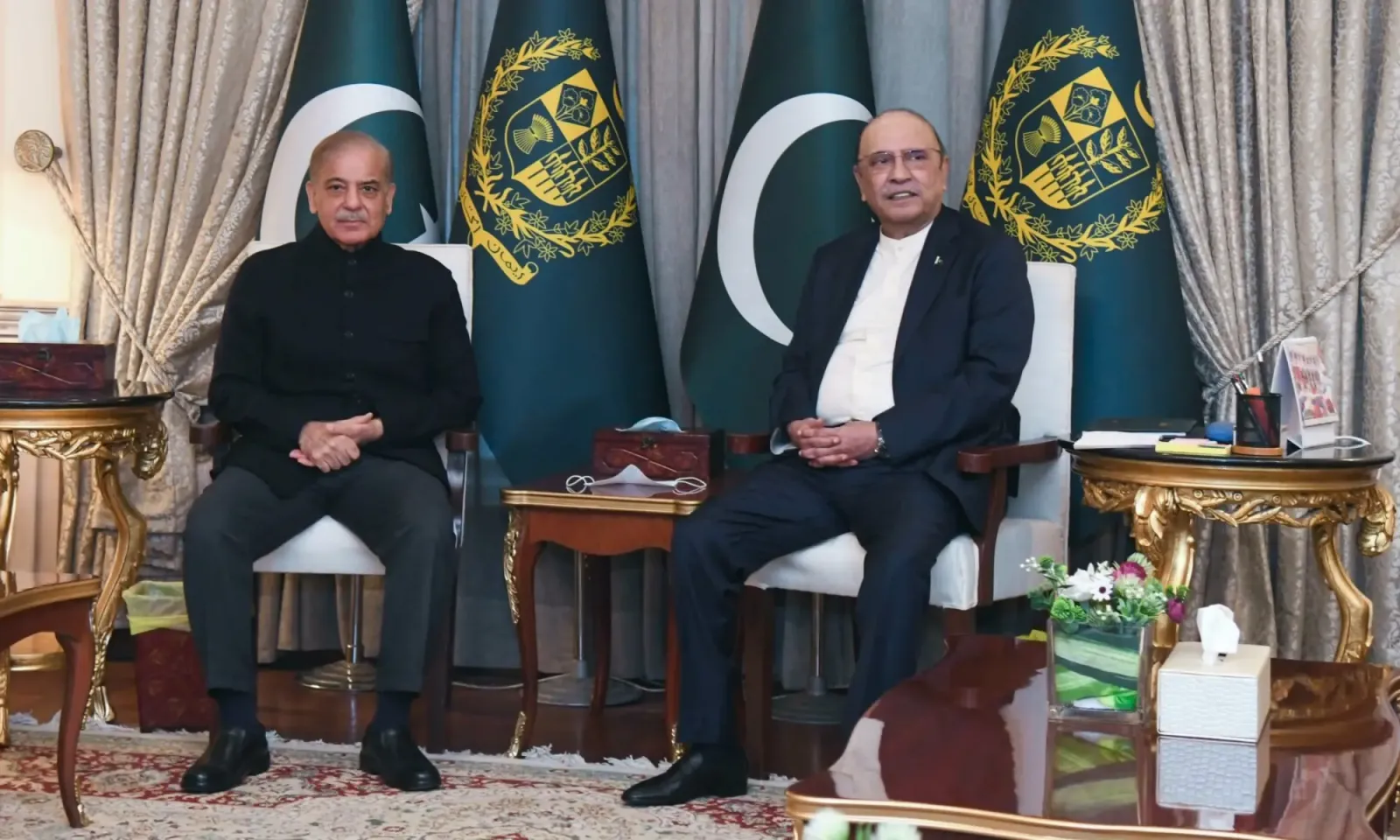
President Asif Ali Zardari met Prime Minister Shehbaz Sharif at the latter's residence in Model Town, Lahore, where the two leaders held detailed talks on the country's overall political, economic and security situation.
The meeting also covered cooperation between the coalition parties, continued consultation among allies and progress on public welfare projects.
Why the Lahore Meeting Matters for Pakistan's Coalition Government
The gathering of Pakistan's two largest coalition partners - the Pakistan Peoples Party (PPP) and the Pakistan Muslim League-Nawaz (PML-N) - signals a concerted effort to maintain a unified front ahead of critical fiscal and legislative deadlines. Historically, coalition dynamics in Pakistan have been fragile, with frequent rifts over resource allocation, policy priorities and leadership disputes. By meeting in a private setting, President Zardari and Prime Minister Sharif aimed to bypass partisan posturing and focus on shared objectives.
Both leaders reiterated a commitment to consult each other on key political and economic matters, a practice that dates back to the 2018 coalition agreement that brought the two parties together after a period of intense electoral competition. The continued dialogue is intended to smooth legislative processes in the National Assembly, where coalition support is essential for passing the 2024 budget and upcoming economic reform bills.
What Was Discussed About the Türkiye Visit and COP31
According to the Government of Pakistan, the prime minister gave the president a warm welcome on his arrival. During the conversation, PM Shehbaz Sharif briefed President Zardari on his recent diplomatic tour of Türkiye and his participation in the 31st Conference of the Parties (COP31) to the United Nations Framework Convention on Climate Change.
The Türkiye visit, undertaken in early October, focused on deepening trade ties, securing energy cooperation and exploring joint infrastructure projects under the China-Pakistan Economic Corridor (CPEC) framework. Sources close to the ministry of foreign affairs said the talks resulted in a memorandum of understanding on renewable-energy technology transfer, a sector both leaders consider vital for reducing Pakistan's reliance on imported fossil fuels.
At COP31, held in Sharm El-Sheikh, Egypt, Pakistan presented its updated Nationally Determined Contribution (NDC), pledging to increase renewable-energy capacity to 30 % of total generation by 2030. The prime minister's brief to the president highlighted the diplomatic leverage gained at the conference, including potential financing from the Green Climate Fund for a series of solar-park projects in Sindh and Punjab.
Economic Stability: The Core of the Joint Agenda
Both leaders reaffirmed their resolve to work together for economic stability and to speed up development in the country. The conversation touched on several pressing economic challenges: high inflation, a widening current-account deficit, and the need for structural reforms demanded by the International Monetary Fund (IMF).
In May, President Zardari directed steps to ease inflationary pressure, a move that included a temporary reduction in customs duties on essential food items and a coordinated effort with the State Bank of Pakistan to adjust the policy rate. The Lahore meeting reviewed the impact of those measures, noting a modest decline in headline inflation from 38 % in April to 35 % in September, according to the Pakistan Bureau of Statistics.
Prime Minister Sharif outlined a three-pronged economic plan: (1) accelerate public-welfare projects such as the Benazir Income Support Programme (BISP) and the Ehsaas initiative, (2) fast-track infrastructure development under CPEC to create jobs and improve logistics, and (3) pursue fiscal consolidation by broadening the tax base and curbing non-priority spending. The president expressed support for each pillar, emphasizing the need for transparent implementation to retain public confidence.
Who Attended the Meeting and What Their Roles Indicate
The meeting was attended by National Assembly Speaker Sardar Ayaz Sadiq, former prime minister Raja Pervez Ashraf, Senator Saleem Mandviwalla, Law Minister Azam Nazeer Tarar, PM's Adviser Rana Sanaullah, and MNA Mian Hamza Shehbaz Sharif. Their presence underscores the breadth of the coalition's institutional backing.
Sardar Ayaz Sadiq, as speaker, plays a pivotal role in managing parliamentary business, ensuring that coalition-backed bills receive priority scheduling. Former prime minister Raja Pervez Ashraf, a senior PPP figure, provides historical perspective on coalition negotiations and offers counsel on navigating intra-party dissent.
Senator Saleem Mandviwalla, known for his work on foreign-policy committees, is likely to monitor the implementation of the Türkiye and COP31 agreements, while Law Minister Azam Nazeer Tarar will oversee any legislative changes required to enact economic reforms.
Adviser Rana Sanaullah, tasked with political affairs, will coordinate communication between the president's office and the prime minister's secretariat, ensuring that decisions made in Lahore translate into actionable policies across ministries.
Background: Coalition Politics in Pakistan Since 2018
Pakistan's political landscape has been shaped by shifting alliances, especially after the 2018 general election, which produced a fragmented parliament. The PPP-PML-N coalition emerged as a pragmatic solution to prevent a single-party dominance and to provide a stable governing majority. Over the past six years, the alliance has weathered several crises, including the 2022 economic downturn, the COVID-19 pandemic, and recurring security challenges along the western border.
Key to the coalition's durability has been the personal rapport between senior leaders. President Zardari, a former president himself, has historically acted as a mediator, using his constitutional authority to convene parties and resolve disputes. Prime Minister Sharif, the son of former prime minister Nawaz Sharif, brings a legacy of infrastructure-focused governance, which aligns with the coalition's development agenda.
Impact on Citizens and Businesses
The outcomes of the Lahore talks are expected to affect everyday Pakistanis in several concrete ways. Accelerated public-welfare projects will likely expand cash-transfer schemes, providing immediate relief to low-income households. Infrastructure projects under CPEC, such as the expansion of the Karachi-Lahore Motorway, promise to reduce transportation costs for businesses, potentially lowering prices of goods across the supply chain.
On the macro level, a stable coalition improves investor confidence, which can attract foreign direct investment (FDI) in sectors like renewable energy and textiles. The joint emphasis on climate-friendly initiatives may open new financing streams from international climate funds, further supporting green-energy projects that create jobs and reduce energy import bills.
What Comes Next: Timeline and Next Steps
Following the Lahore meeting, both offices have outlined a short-term action plan. Within the next two weeks, the prime minister's economic team will submit a revised fiscal policy paper to the president for approval. This paper will detail tax-reform measures, targeted subsidies, and a roadmap for public-welfare disbursements.
In parallel, the foreign-affairs ministry will circulate a briefing note on the Türkiye memorandum of understanding, outlining implementation timelines for renewable-energy technology transfer. The climate-policy unit will prepare a progress report on COP31 commitments, to be presented at the upcoming National Climate Change Council meeting scheduled for early December.
Legislatively, the coalition aims to introduce a joint economic-stability bill in the National Assembly by the end of the year, seeking a two-thirds majority to pass key IMF-required reforms. The speaker, Sardar Ayaz Sadiq, has indicated that the bill will be placed on the priority agenda for the upcoming parliamentary session.
Observers note that the coalition's ability to deliver on these promises will be tested by upcoming provincial elections in early 2025, where both parties will seek to maintain their voter bases while demonstrating effective governance.
Practical Takeaways for Readers
For ordinary citizens, the most immediate benefit may be an expansion of cash-transfer programs and a potential slowdown in price hikes for essential commodities. Business owners should monitor the upcoming fiscal policy paper for changes in tax rates and subsidies that could affect operating costs.
Investors and analysts are advised to watch the progress of the renewable-energy memorandum with Türkiye, as successful implementation could signal new investment opportunities in Pakistan's green-energy sector.
Overall, the Lahore meeting reflects a concerted effort by Pakistan's top political leaders to present a united front, stabilize the economy and fulfill international climate commitments, all while navigating the complex terrain of coalition politics.