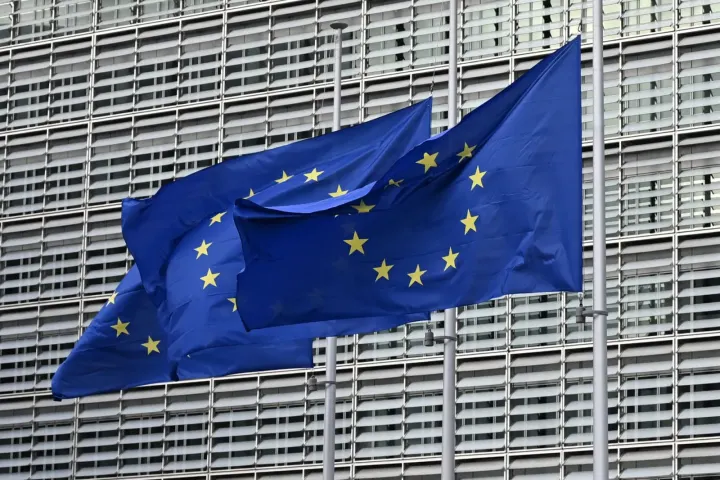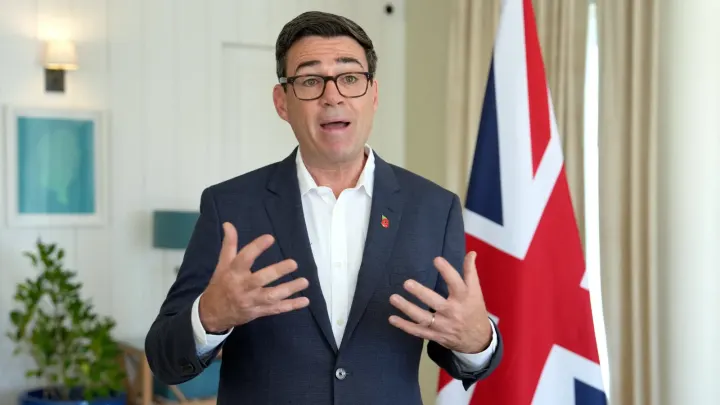
Labour leader Andy Burnham has reignited calls for an "honest discussion" about restoring free movement between the United Kingdom and the European Union, a stance that appears at odds with the party's election promise not to re-introduce free movement in this Parliament.
The renewed focus on Brexit comes as Burnham faces pressure from within his own party and from the broader electorate to address what many see as more immediate challenges, including border security and the soaring welfare bill.
What Burnham Said About Re-joining the EU
During his pre-premiership campaign, Burnham publicly stated that he wanted to see Britain re-join the European Union within his lifetime. Since becoming prime minister, he has continued to press for a dialogue on the possibility of restoring free movement as part of a closer relationship with the bloc.
Burnham's position is grounded in the belief that re-joining the EU could help put Britain back on a path to growth. He argues that many of the country's current ills can be traced back to Brexit, and that a reversal would unlock economic benefits.
Labour's Election Promise on Free Movement
Labour's election manifesto explicitly promised not to bring back free movement during the current parliamentary term. The pledge was intended to reassure voters who supported the party's broader social agenda but were wary of a full return to EU rules.
Burnham's current rhetoric therefore creates a tension between his personal ambition and the party's publicly stated policy. Critics within Labour argue that any shift could be perceived as a breach of trust, potentially alienating swing voters who voted for the promise of a stable post-Brexit stance.
Internal Party Opposition: Lisa Nandy's Warning
Close ally and senior Labour figure Lisa Nandy warned yesterday that any move toward re-joining the EU would involve trade-offs. Nandy emphasized that while re-integration might bring economic benefits, it could also require concessions on sovereignty, regulatory alignment, and budget contributions.
Her caution reflects a broader concern among Labour backbenchers who fear that an aggressive Brexit reversal could fracture the party's left-wing factions, many of whom view the original departure from the EU as a victory for progressive values.
The Upcoming UK-EU Summit
A major UK-EU summit scheduled for the end of November places additional pressure on Burnham. The summit's agenda includes negotiating new agreements on food standards and youth mobility, both of which have domestic political relevance.
Food standards have been a contentious issue since Brexit, with UK producers seeking greater market access while consumer groups demand high safety standards. Youth mobility, meanwhile, concerns students and young professionals who rely on exchange programmes and work-travel schemes that were curtailed after the UK left the EU.
Burnham's call for an "honest discussion" may be an attempt to leverage the summit to secure incremental gains without committing to full free movement. However, the lack of clarity on what compromises he is prepared to make leaves both allies and opponents uncertain.
Potential Political Calculus
From a political perspective, a tougher line on Brexit could unite Labour's left-wing factions and backbenchers who are eager to reverse the freedoms Britain gained by leaving the EU. This unity could strengthen Burnham's standing within the party and present a clear alternative to the Conservative government's handling of post-Brexit trade.
Nevertheless, without a clear campaign capable of persuading millions of voters, the debate risks becoming a talking point with little practical impact. The public, according to recent polling, appears increasingly fatigued by ongoing Brexit debates and more concerned with everyday issues such as cost-of-living pressures and public services.
Risks of Over-Emphasising Brexit
Focusing heavily on Brexit could divert attention from pressing matters that dominate the public agenda. Border security remains a contentious topic, with illegal migration and smuggling concerns prompting calls for stronger enforcement.
The welfare bill, which has ballooned in recent years, is another area where many voters demand decisive action. Critics argue that Burnham's preoccupation with EU re-integration may siphon political capital away from these urgent policy areas.
In the short term, talking about Brexit may generate media coverage and rally certain voter blocs, but the risk is that it exhausts a public that simply wants the government to "get on with running the country."
What Comes Next for Labour and the Brexit Question
At present, it remains unclear what concrete steps Burnham will take following the November summit. No official timeline has been announced for any formal policy shift, and the Labour Party has not released a detailed roadmap for how it would manage a potential return to free movement.
Observers suggest that the next weeks will reveal whether Burnham's rhetoric translates into legislative proposals or remains confined to political positioning. Watch for statements from the Treasury, the Department for International Trade, and the Home Office, as any move toward EU re-integration would require coordination across multiple ministries.
Practical Takeaways for Readers
- If you are a UK citizen concerned about immigration policy, keep an eye on Home Office briefings for any changes to border controls.
- Businesses involved in food export or import should monitor the outcome of the November summit for potential regulatory alignment.
- Students and young professionals interested in EU exchange programmes should follow the Department for Education's updates on youth mobility agreements.
In sum, Labour's renewed focus on Brexit reflects internal party dynamics and a strategic gamble to differentiate itself from the Conservatives. Whether that gamble pays off will depend on how the party balances the desire for EU re-integration with the electorate's demand for concrete solutions to everyday problems.