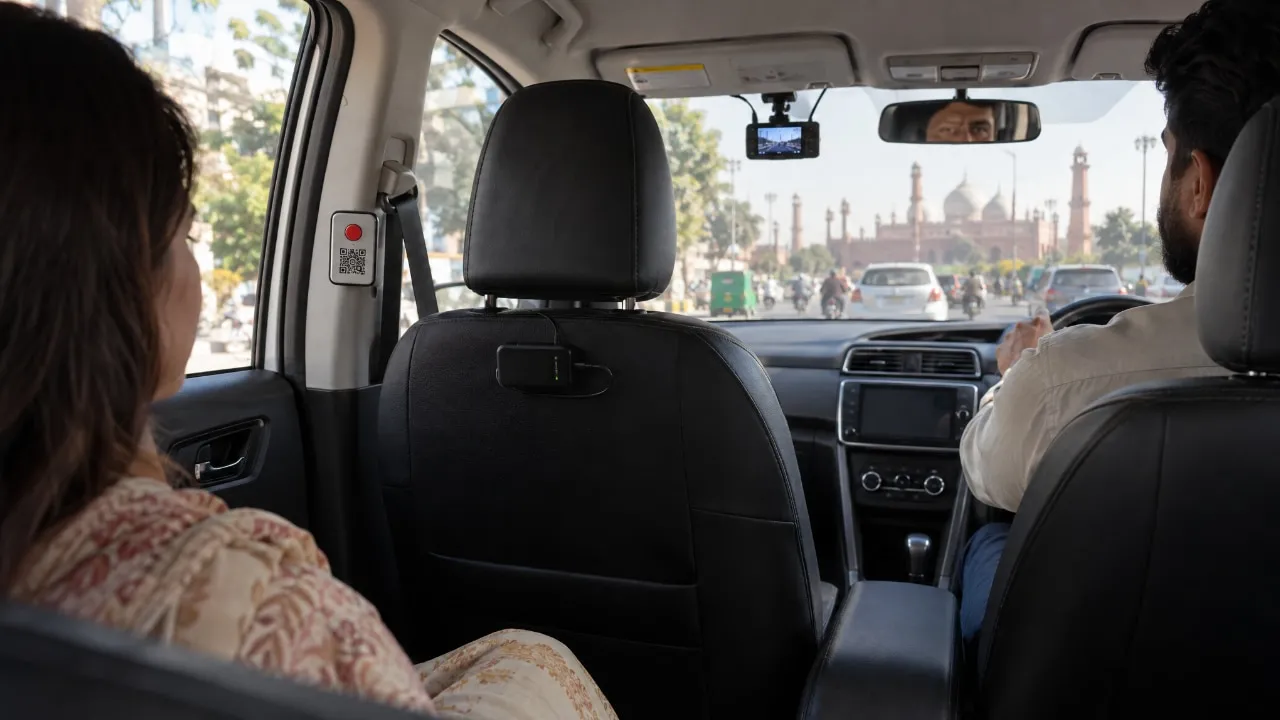
Lahore Traffic Police Order Safety Upgrades for Ride-Hailing Vehicles
Lahore traffic police have directed ride-hailing companies to install dashcams, tracking devices, and QR-based panic buttons in their vehicles, part of a broader push to improve passenger safety. The directives were issued by Chief Traffic Officer (CTO) Lahore Abdul Raheem Shirazi, who said drivers with serious criminal records would not be allowed to operate online cabs.
The traffic police have decided to take action against online cab services that fail to adopt the required safety features. Abdul Raheem Shirazi said modern camera systems would help prevent crime and assist in investigations into road accidents, while advanced tracking systems would improve the monitoring of passengers and drivers. The use of modern technology would help provide safer and better travel facilities, the CTO said.
Background on Ride-Hailing Safety Regulations in Lahore
The rapid expansion of app-based transportation networks transformed urban mobility across Pakistan in recent years. While these services brought immense convenience to daily commuters, they also introduced new regulatory challenges for municipal authorities and law enforcement agencies. Ensuring accountability among digital platform operators became a priority for local administrators seeking to protect the public.
Traffic management departments previously focused primarily on physical infrastructure and manual enforcement of motor vehicle laws. The integration of technology into public transport oversight represents a shift toward digital regulation. Authorities now use technological mandates to address security concerns that traditional policing methods cannot easily reach.
How Dashcams and Tracking Systems Work
Modern camera systems installed inside cabins record continuous video feeds during trips. These recordings serve as a deterrent against unlawful behavior from both passengers and drivers. In the event of a collision, the footage provides objective evidence for traffic investigators to determine fault quickly and accurately.
Advanced tracking systems rely on global positioning technology to maintain real-time location data for every active vehicle. Dispatchers and monitoring units can track routes and verify that drivers remain on designated paths. This constant visibility discourages unauthorized deviations and ensures rapid response capabilities if an emergency arises.
The Role of QR-Based Panic Buttons in Emergencies
Quick Response codes placed inside the vehicle cabin offer an immediate digital link to emergency services. Passengers can scan these codes using a smartphone to trigger an alert if they feel threatened or unsafe. This silent alarm system notifies authorities without alerting a potentially dangerous driver.
Integrating digital panic mechanisms directly into the passenger experience empowers commuters to take immediate action. The technology bridges the gap between traditional emergency phone numbers and modern app-based travel. Law enforcement agencies receive precise location details simultaneously with the distress signal.
Screening Drivers and Blocking Criminal Records
Chief Traffic Officer Abdul Raheem Shirazi emphasized that background checks form a critical pillar of the new security framework. Drivers with serious criminal records face a complete ban from registering with online cab platforms. This vetting process aims to prevent individuals with violent or predatory histories from gaining access to vulnerable passengers.
Implementing rigorous screening requires close cooperation between ride-hailing companies and municipal record-keeping bureaus. Platforms must verify identification documents and police clearance certificates before activating driver accounts. Removing compromised individuals from the networks reduces the risk of onboard incidents significantly.
Enforcement Actions Against Non-Compliant Cab Services
Regulatory mandates require strict enforcement mechanisms to achieve high compliance rates among commercial operators. Traffic authorities possess the authority to penalize or suspend platforms that miss implementation deadlines. Fleet owners and independent drivers must adapt to the new standards or face administrative penalties.
Field officers will check vehicles during routine checkpoints and special inspection drives across the city. Operators found operating without the required hardware face immediate legal consequences. This uncompromising stance demonstrates the commitment of law enforcement to public security standards.
Impact on Commuters and the Ride-Hailing Industry
Everyday commuters stand to benefit from increased accountability and visible security measures within hired transport. Passengers using online platforms can book trips with greater confidence regarding their personal safety. The presence of monitoring equipment reassures travelers who rely on these services for late-night or solitary journeys.
Ride-hailing companies must invest in the mandated equipment and update their operational protocols accordingly. While compliance incurs financial costs for operators, the long-term benefit includes enhanced public trust and brand credibility. Meeting official security benchmarks protects businesses from liability and regulatory shutdowns.





